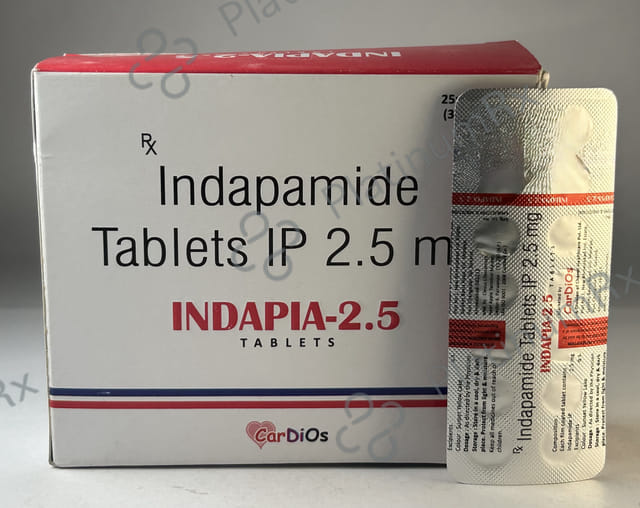
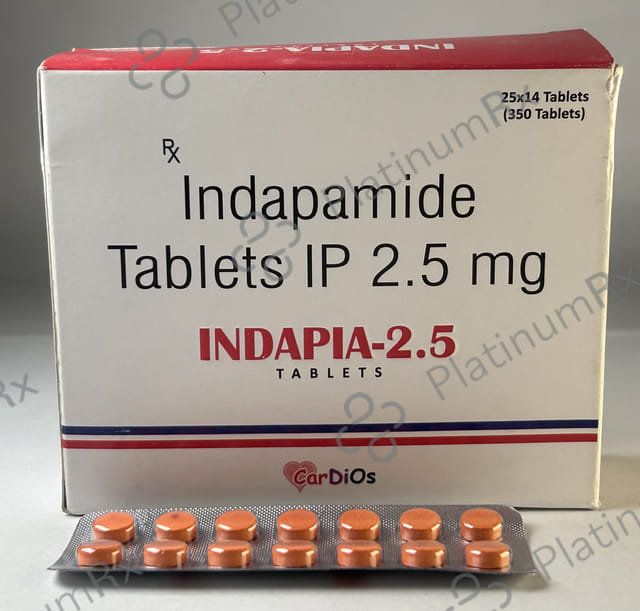
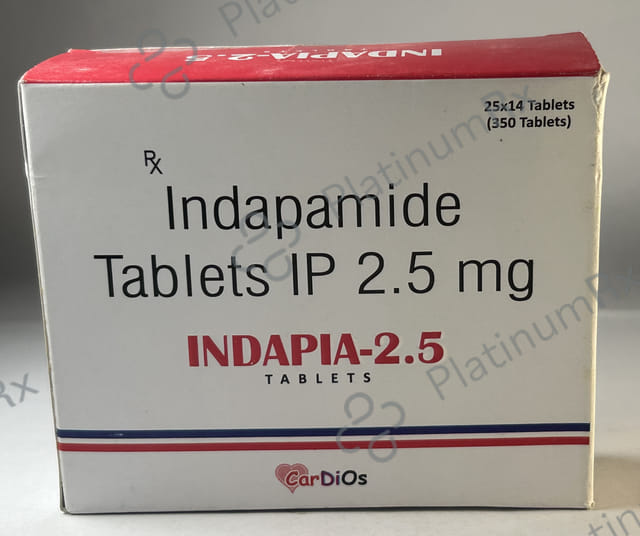
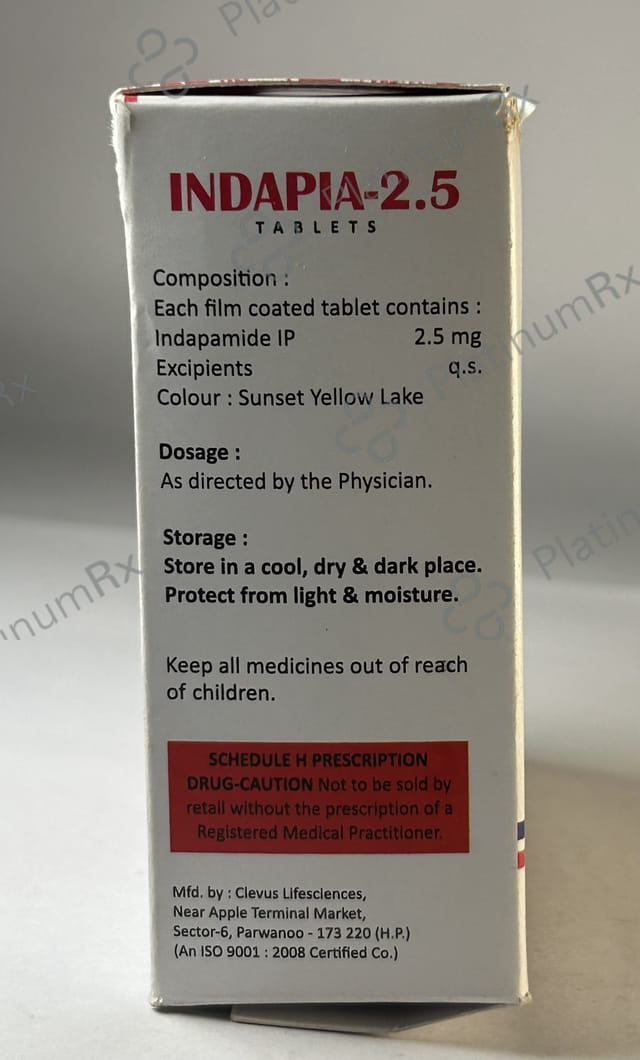
Diurix 2.5mg Tablet

Diurix 2.5mg Tablet contains indapamide, a thiazide-like diuretic used primarily in the management of hypertension and oedema associated with heart failure. It works by inhibiting sodium reabsorption in the distal convoluted tubule of the kidney, increasing urinary excretion of sodium and water. Unlike conventional thiazide diuretics, indapamide also has direct vasodilatory properties that contribute independently to blood pressure reduction. Always use Diurix 2.5mg Tablet exactly as directed by your doctor.
Written by: Srishti Bhukta, B. Pharma
Reviewed by: Dr. Varinderjeet Kaur, MBBS
Last updated on: 03-06-2026
Delivery by
...

WHO GMP Certified
Long Expiry (>8 Months)
15 Days Easy Returns
Medicine Comparison

Genuine Medicine
Pay On Delivery
Secure Payment


More About Diurix 2.5mg Tablet
Quick Summary
Diurix 2.5mg Tablet contains indapamide, a thiazide-like diuretic used primarily in the management of hypertension and oedema associated with heart failure. It works by inhibiting sodium reabsorption in the distal convoluted tubule of the kidney, increasing urinary excretion of sodium and water. Unlike conventional thiazide diuretics, indapamide also has direct vasodilatory properties that contribute independently to blood pressure reduction. Always use Diurix 2.5mg Tablet exactly as directed by your doctor.
Detailed Description
Diurix 2.5mg Tablet contains indapamide, a sulphonamide-derived thiazide-like diuretic with both diuretic and direct vascular effects, making it distinct from conventional thiazide diuretics.
Indapamide inhibits the sodium-chloride cotransporter in the distal convoluted tubule, reducing sodium and water reabsorption and increasing urinary output. This reduces plasma volume and cardiac preload, contributing to blood pressure reduction.
In addition to its diuretic action, indapamide exerts a direct vasodilatory effect on vascular smooth muscle by blocking calcium influx and reducing vascular reactivity to pressor agents such as noradrenaline and angiotensin II. At lower antihypertensive doses, this vasodilatory mechanism predominates over the diuretic effect, providing sustained blood pressure control with minimal fluid and electrolyte disturbance compared to higher-dose thiazide therapy.
Indapamide is lipophilic and extensively bound to plasma proteins and vascular smooth muscle, giving it a prolonged duration of action suitable for once-daily dosing. It also has favourable metabolic properties, with a more neutral effect on glucose and lipid metabolism than conventional thiazides.
Uses of Diurix 2.5mg Tablet
The uses of Diurix 2.5mg Tablet are as follows:
Hypertension
Diurix 2.5mg Tablet is used as first-line or adjunctive treatment for high blood pressure in adult patients.
Oedema Associated with Heart Failure
It reduces fluid retention and oedema by promoting sodium and water excretion.
Isolated Systolic Hypertension in Elderly Patients
It is particularly well-studied for reducing systolic blood pressure and cardiovascular risk in elderly hypertensive patients.
Hypertension in Diabetic Patients
Its relatively neutral metabolic profile makes it preferable to conventional thiazides in patients with diabetes.
Combination Antihypertensive Therapy
It is used alongside ACE inhibitors, angiotensin receptor blockers, or calcium channel blockers for additive blood pressure control.
Benefits of Diurix 2.5mg Tablet
Here are the benefits of Diurix 2.5mg Tablet:
- Dual Mechanism of Action: Combines diuretic and direct vasodilatory properties for effective and sustained blood pressure reduction.
- Metabolically Neutral: Indapamide has a more favourable effect on glucose and lipid metabolism compared to conventional thiazide diuretics.
- Sustained Once-Daily Action: Its lipophilicity and protein binding support consistent 24-hour blood pressure control.
- Cardiovascular Risk Reduction: Well-established evidence supports its role in reducing stroke and cardiovascular events in hypertensive patients.
- Well Tolerated at Low Doses: Lower doses provide effective antihypertensive action with reduced risk of electrolyte disturbance.
Side Effects of Diurix 2.5mg Tablet
Like all medicines, Diurix 2.5mg Tablet may cause side effects in some individuals.
Common Side Effects
- Hypokalaemia: Reduced potassium levels may occur with regular use and require monitoring.
- Dizziness or Light-Headedness: Particularly on standing, due to blood pressure reduction.
- Increased Urination: Expected with the diuretic action of indapamide.
- Headache: Mild headache may develop during early treatment.
Uncommon Side Effects
- Hyponatraemia: Low sodium levels may occur, particularly in elderly patients.
- Muscle Cramps: Electrolyte disturbances may cause muscle discomfort.
- Nausea: Mild gastrointestinal discomfort may occur in some individuals.
Serious Side Effects (Require Immediate Medical Attention)
- Severe Electrolyte Disturbance: Marked hypokalaemia or hyponatraemia may cause cardiac arrhythmias or neurological symptoms.
- QT Interval Prolongation: Electrolyte imbalances induced by indapamide may increase the risk of arrhythmias.
- Severe Allergic Reaction: Swelling of the face, lips, or throat with difficulty breathing requires urgent medical care.
- Acute Renal Impairment: Excessive fluid loss may reduce renal perfusion in susceptible patients.
Always consult your doctor if side effects persist or worsen.
Directions for Use
To ensure safe use:
- Use exactly as prescribed by your doctor.
- Usually taken orally once daily, preferably in the morning to avoid nocturnal diuresis.
- Take at the same time each day for consistent blood pressure control.
- Swallow tablets whole unless otherwise instructed.
- Do not discontinue without consulting your doctor.
How it works
Diurix 2.5mg Tablet lowers blood pressure through two complementary mechanisms.
Indapamide inhibits the sodium-chloride cotransporter in the distal convoluted tubule, reducing tubular reabsorption of sodium and chloride. The resulting increase in urinary sodium and water excretion reduces plasma volume, venous return, and cardiac output, lowering blood pressure.
At antihypertensive doses, indapamide also directly relaxes vascular smooth muscle by inhibiting calcium influx through voltage-gated channels and reducing sensitivity to vasoconstrictor agents. This vascular effect reduces peripheral resistance independently of the diuretic action, providing sustained and smooth blood pressure reduction.
Safety Advice for Diurix 2.5mg Tablet

Allergy
Caution
Inform your doctor of any known allergy to sulphonamides or thiazide diuretics before use, as cross-sensitivity may occur.

Breastfeeding
Unsafe
Indapamide is not recommended during breastfeeding. Consult your doctor for a suitable alternative.

Pregnancy
Unsafe
Indapamide is not recommended during pregnancy due to the risk of foetal electrolyte disturbance and reduced placental perfusion.

Driving
Caution
Dizziness and hypotension, particularly during early treatment, may impair driving ability.

Alcohol
Caution
Alcohol may enhance the blood pressure lowering effect and worsen dizziness and hypotension.

Liver
Caution
Use carefully in hepatic impairment as electrolyte disturbances may precipitate hepatic encephalopathy. Consult your doctor.

Kidney
Caution
Use carefully in renal impairment. Indapamide may be less effective and increase the risk of electrolyte disturbance in reduced renal function

Children
Limited information
Safety and dosing in children has not been fully established. Use only if advised by a specialist.

Elderly patients
Caution
Elderly patients are at increased risk of hypotension, hyponatraemia, and falls. Close monitoring of electrolytes and blood pressure is advised.
Quick Tips for Diurix 2.5mg Tablet
A few practical measures can help improve treatment outcomes and ensure safe use of Diurix 2.5mg Tablet:
- Take in the morning: Taking indapamide in the morning reduces the likelihood of nocturnal diuresis disrupting sleep.
- Monitor electrolytes regularly: Periodic blood tests to check potassium and sodium levels are important during long-term treatment.
- Rise slowly from lying or sitting: Postural hypotension is more likely during early treatment or after dose adjustment.
- Maintain adequate fluid intake: Avoid excessive fluid restriction, which may compound the diuretic effect and increase electrolyte disturbance risk.
- Inform your doctor of all medicines: Several medicines interact with indapamide through electrolyte or blood pressure mechanisms.
Storage Advice
Proper storage is important to maintain the stability and effectiveness of Diurix 2.5mg Tablet:
- Store at room temperature: Keep away from heat, moisture, and direct sunlight.
- Keep in original packaging: Protects tablets from humidity and light.
- Keep out of reach of children: Store safely to prevent accidental ingestion.
- Check expiry before use: Do not use after the expiry date printed on the packaging.
Drug-Food Interaction
Diurix 2.5mg Tablet may generally be taken without strict dietary restrictions. However:
- Avoid excessive alcohol: Enhances blood pressure lowering and increases dizziness and hypotension risk.
- Maintain adequate dietary potassium: A diet containing potassium-rich foods such as bananas and leafy vegetables helps offset potassium loss from diuresis.
- Limit excessive sodium intake: A low-sodium diet complements the antihypertensive effect of indapamide.
Interactions with Other Drugs
Diurix 2.5mg Tablet may interact with the following medicines:
- Lithium: Indapamide reduces lithium excretion, raising the risk of lithium toxicity. Close monitoring is required.
- NSAIDs: May reduce the antihypertensive and diuretic effects of indapamide and increase the risk of renal impairment.
- QT-Prolonging Medicines: Hypokalaemia induced by indapamide may potentiate the arrhythmia risk of other QT-prolonging agents.
- Potassium-Depleting Medicines: Concurrent use of corticosteroids or other diuretics may compound hypokalaemia.
- Antidiabetic Medicines: Indapamide may mildly impair glycaemic control, potentially requiring dose adjustments.
Drug-Disease Interactions
Diurix 2.5mg Tablet should be used carefully in the following conditions:
- Hypokalaemia or Hyponatraemia: Pre-existing electrolyte disturbances may be worsened by indapamide.
- Gout: Indapamide may raise uric acid levels and precipitate gout attacks in susceptible individuals.
- Diabetes Mellitus: Although metabolically more neutral than conventional thiazides, blood glucose monitoring is advisable.
- Hyperaldosteronism: Indapamide may be less effective in primary hyperaldosteronism due to aldosterone-driven sodium retention.
- Hepatic Encephalopathy: Electrolyte disturbances from diuretic use may precipitate or worsen hepatic encephalopathy.
Daily Dose
Usually taken as a single oral dose of 1.5 mg to 2.5 mg once daily in the morning as directed by your doctor. Dose depends on the indication and the specific formulation.
What If You Forget to take Diurix 2.5mg Tablet?
If a dose is missed, take it as soon as remembered. Do not double the dose to make up for a missed one.
FAQ
Fact Box
Therapeutic Class
Antihypertensive / Diuretic
Action Class
Sodium-Chloride Cotransporter Inhibitor + Vasodilator
Chemical Class
Sulphonamide-Derived Thiazide-like Diuretic
Habit Forming
No
Disclaimer
PlatinumRx is committed to providing reliable and accurate information to support informed customer decisions. However, all information made available on the Platform, including product descriptions, comparisons, and other content, is provided solely for general informational purposes. Such information is not intended to diagnose, prevent, treat, or cure any medical condition, nor should it be relied upon as a substitute for professional medical advice, diagnosis, or treatment.
Editorial Policy
Customers also bought








Health Articles









More Medicines By Manufacturer
More Medicines With Salt
Top Selling Medicines
Top Selling Devices