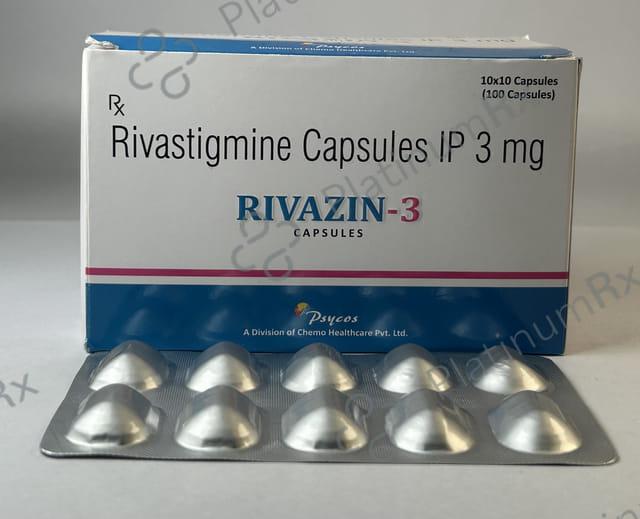
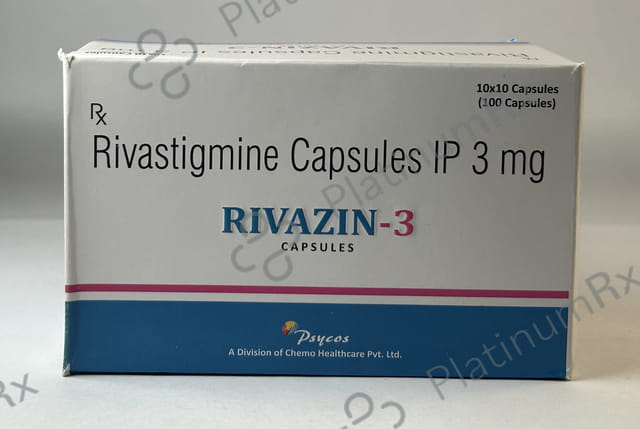
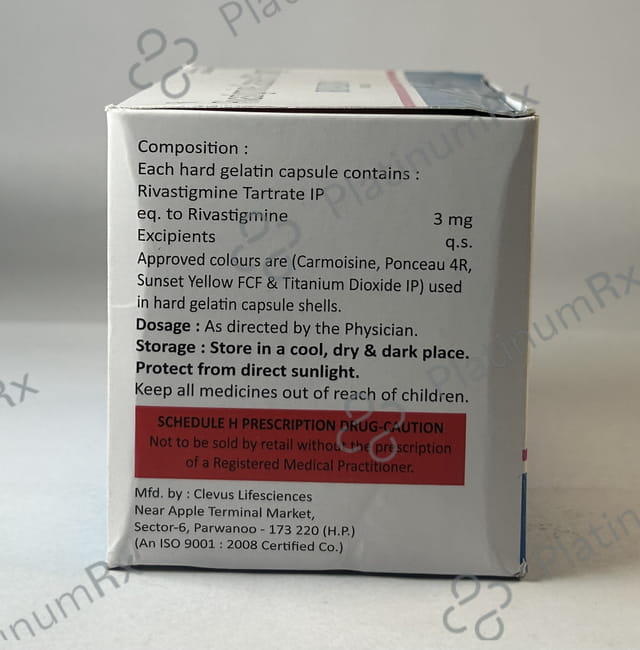
Rivagtrip 3mg Capsule 10s

Rivagtrip 3mg Capsule 10s is a prescription medicine used to manage mild to moderate dementia in adults with Alzheimer's disease or Parkinson's disease. It belongs to a group of medicines known as cholinesterase inhibitors. In dementia, brain cells gradually produce less acetylcholine, a natural chemical messenger vital for memory, attention, and clear thinking. By preventing the breakdown of this chemical messenger, Rivagtrip 3mg Capsule 10s improves signal transmission between surviving nerve cells. While it cannot repair damaged brain tissue or reverse dementia, it helps stabilize mental functioning, maintain daily self-care skills, and slow the decline of cognitive abilities under proper medical supervision.

Delivery by
...

WHO GMP Certified
Long Expiry (>8 Months)
15 Days Easy Returns
Medicine Comparison

Genuine Medicine
Pay On Delivery
Secure Payment

LegitScript Certified Online Pharmacy


More About Rivagtrip 3mg Capsule 10s
Quick Summary
Rivagtrip 3mg Capsule 10s is a prescription medicine used to manage mild to moderate dementia in adults with Alzheimer's disease or Parkinson's disease. It belongs to a group of medicines known as cholinesterase inhibitors. In dementia, brain cells gradually produce less acetylcholine, a natural chemical messenger vital for memory, attention, and clear thinking. By preventing the breakdown of this chemical messenger, Rivagtrip 3mg Capsule 10s improves signal transmission between surviving nerve cells. While it cannot repair damaged brain tissue or reverse dementia, it helps stabilize mental functioning, maintain daily self-care skills, and slow the decline of cognitive abilities under proper medical supervision.
Detailed Description
Rivagtrip 3mg Capsule 10s is an oral and transdermal prescription medication formulated to manage cognitive symptoms in people living with mild to moderate Alzheimer's disease or dementia associated with Parkinson's disease. Memory loss, confusion, and difficulty with everyday tasks occur in these neurodegenerative disorders because specialized nerve cells in the brain degenerate, resulting in a marked deficiency of acetylcholine. Acetylcholine is a key neurotransmitter responsible for communication between brain cells involved in memory formation, reasoning, and focus.
The active molecule functions as a pseudo-reversible inhibitor of two vital enzymes in the central nervous system: acetylcholinesterase and butyrylcholinesterase. By blocking these enzymes from breaking down acetylcholine, Rivagtrip 3mg Capsule 10s allows acetylcholine to accumulate and remain active longer at nerve synapses. This enhanced signaling helps preserve mental clarity, improves attention, and supports the patient's capacity to perform essential daily activities such as bathing, dressing, and eating independently.
Rivagtrip 3mg Capsule 10s is available in multiple dosage forms, including oral capsules, oral liquid solutions, and transdermal patches. The transdermal patch delivers the medication continuously through the skin over twenty-four hours, providing steady blood levels and helping avoid the sudden stomach irritation often linked with oral pills. Therapy must always start at a low dose under close medical oversight, followed by gradual dose escalation every few weeks. This slow step-up schedule gives the body time to adjust and significantly lowers the chance of stomach upset.
Because neurodegenerative conditions are progressive, Rivagtrip 3mg Capsule 10s does not reverse existing brain damage or arrest the fundamental disease process. Regular medical reviews are necessary to assess effectiveness, monitor body weight, and track cardiac rhythm. Caregivers should closely oversee medication schedules, ensure proper patch rotation or food timing, and watch for any sudden shifts in physical movement or emotional state.
Benefits of Rivagtrip 3mg Capsule 10s
- Dual Enzyme Inhibition: Unlike some older dementia drugs that target only one enzyme, Rivagtrip 3mg Capsule 10s inhibits both acetylcholinesterase and butyrylcholinesterase, providing comprehensive protection against the breakdown of acetylcholine in the brain.
- Approved for Parkinson's Disease Dementia: Rivagtrip 3mg Capsule 10s is clinically evaluated and approved to treat dementia occurring in people with Parkinson's disease, addressing cognitive decline while allowing doctors to monitor motor symptoms.
- Improved Daily Functional Independence: By sustaining acetylcholine levels, Rivagtrip 3mg Capsule 10s helps patients maintain basic daily living abilities, such as communicating, eating, grooming, and following simple daily routines.
- Multiple Convenient Dosage Options: Available as oral capsules, an oral liquid solution, and a once-daily transdermal skin patch, Rivagtrip 3mg Capsule 10s provides flexible administration for patients who struggle with swallowing difficulties or severe stomach upset from pills.
- Slows Mental Decline: Regular, long-term use helps stabilize memory scores, enhances mental focus, and delays the worsening of behavioral and cognitive symptoms in mild to moderate stages of dementia.
Side Effects of Rivagtrip 3mg Capsule 10s
- Common Side Effects (Usually Mild and may lessen with continued use)
- Nausea and vomiting
- Loss of appetite (anorexia)
- Weight loss
- Diarrhea
- Heartburn, stomach discomfort, or indigestion
- Dizziness or lightheadedness
- Headache
- Mild fatigue, drowsiness, or general weakness
- Tremor or shaky hands
- Application site redness, itching, or irritation (when using skin patches)
- Serious Side Effects (Seek Urgent Medical Attention)
- Extrapyramidal symptoms (a group of movement problems including pronounced muscle stiffness, involuntary tremors, slowed body movements, or worsening of Parkinson's disease motor control)
- Cholinergic crisis (a dangerous state caused by severe cholinergic drug excess, marked by profuse sweating, heavy drooling, muscle twitching, severe vomiting, extreme weakness, and breathing failure)
- Abnormally slow heart rate (bradycardia) or heart rhythm disturbances such as fainting and heart block
- Severe dehydration resulting from persistent vomiting or diarrhea
- Black, tarry stools, coffee-ground vomit, or persistent severe abdominal pain signaling stomach ulcers or gastrointestinal bleeding
- Severe allergic contact dermatitis or generalized skin rash with blisters, peeling, or facial swelling
- Seizures or sudden convulsions
- New or worsening confusion, severe agitation, or visual hallucinations
- Difficulty urinating or urinary tract obstruction
Directions for Use
Take Rivagtrip 3mg Capsule 10s exactly as directed by your treating physician. If taking oral capsules or liquid solutions, consume the medicine twice daily, once with morning breakfast and once with the evening meal. Taking oral doses with food reduces common stomach upset, nausea, and indigestion. Swallow oral capsules whole with a full glass of plain water. Do not chew, crush, bite, or open the capsules, as altering the pill can cause the medicine to release too quickly. If using the oral liquid form, measure the exact dose using the oral dosing syringe provided in the package, and swallow it directly or mix it into a small glass of water, cold fruit juice, or soda.
If using the transdermal patch, apply one patch once every twenty-four hours to clean, dry, hairless, intact skin on the upper back, lower back, upper arm, or chest. Press the patch down firmly with the palm of your hand for at least thirty seconds so the edges stick securely. Never apply a new patch to red, broken, or irritated skin, and always rotate application sites daily to prevent skin irritation. Do not cut the patch into smaller pieces. Remove the previous day's patch before applying a fresh one to avoid accidental overdosing. Maintain a consistent routine by taking or applying Rivagtrip 3mg Capsule 10s at the same time each day, and do not stop treatment abruptly without medical supervision.
How it works
Rivagtrip 3mg Capsule 10s belongs to the pharmacological group of centrally acting, pseudo-reversible cholinesterase inhibitors. In a healthy human brain, the neurotransmitter acetylcholine is released by cholinergic nerve endings to transmit electrical signals across synapses, which are the tiny communication gaps between nerve cells. Acetylcholine is essential for learning, short-term memory, attention, and sensory perception. Once acetylcholine delivers its signal, it is quickly broken down by two enzymes: acetylcholinesterase (AChE), located mainly in brain synapses and red blood cells, and butyrylcholinesterase (BuChE), present in glial cells and brain tissue.
In disorders such as Alzheimer's disease and Parkinson's disease dementia, cholinergic neurons undergo progressive degeneration. As these nerve cells die off, the production and release of acetylcholine decline sharply, creating an imbalance that leads to cognitive decline, memory impairment, and confusion.
Rivagtrip 3mg Capsule 10s exerts its therapeutic effect by binding to the active catalytic sites of both acetylcholinesterase and butyrylcholinesterase enzymes. Because it carbamylates the active site of the enzyme, it dissociates very slowly over several hours, which is why it is termed a pseudo-reversible inhibitor. By inhibiting both AChE and BuChE, Rivagtrip 3mg Capsule 10s blocks the degradation of acetylcholine. This allows the surviving cholinergic neurons to maintain higher concentrations of acetylcholine in the synaptic cleft for longer periods. The resulting increase in cholinergic receptor stimulation improves signal transmission across the cerebral cortex and hippocampus, which helps preserve cognitive performance and stabilize daily functional abilities.
Safety Advice for Rivagtrip 3mg Capsule 10s

Pregnancy
Limited information
Rivagtrip 3mg Capsule 10s should be used during pregnancy only if clearly prescribed by a doctor after evaluating potential risks and benefits. While animal studies have not demonstrated direct fetal malformations, adequate clinical studies in pregnant women are not available. Women of childbearing potential should discuss family planning and reliable contraception with their healthcare provider before beginning treatment.

Breastfeeding
Limited information
It is not known whether Rivagtrip 3mg Capsule 10s passes into human breast milk. Because many drugs are excreted in breast milk and the potential for cholinergic adverse effects in nursing infants exists, breastfeeding is generally not recommended during treatment unless specifically advised by a physician.

Alcohol
Limited information
Avoid consuming alcohol while taking Rivagtrip 3mg Capsule 10s. Alcohol can intensify dizziness, drowsiness, balance problems, and stomach irritation, and it can worsen underlying confusion and cognitive impairment.

Driving
Limited information
Rivagtrip 3mg Capsule 10s can cause dizziness, drowsiness, blurred vision, and lightheadedness, particularly during initial dose titration. Patients should not drive, operate heavy machinery, or participate in potentially dangerous tasks until they know how the medicine affects their alertness.

Kidney
Limited information
Use with caution in patients with moderate to severe renal impairment. While dose adjustments may not always be required for mild kidney dysfunction, close medical monitoring is advised during dose titration because kidney clearance may be reduced.

Liver
Limited information
Caution is required in patients with mild to moderate hepatic impairment, as decreased liver function can lead to increased drug exposure. Dosing should be carefully titrated under medical supervision. The medication is not recommended in severe liver failure.

Children
Limited information
The safety and effectiveness of Rivagtrip 3mg Capsule 10s in children and adolescents under eighteen years of age have not been established. It is not indicated for pediatric use.

Elderly patients
Limited information
Elderly individuals frequently use Rivagtrip 3mg Capsule 10s for dementia, but they are more susceptible to side effects including nausea, weight loss, syncope (fainting), and slow heart rate. Careful dose titration and regular monitoring of weight and pulse are recommended.
Quick Tips for Rivagtrip 3mg Capsule 10s
- Always take oral capsules or liquid doses with food to minimize nausea and stomach upset.
- If using skin patches, rotate application sites every day and never apply a fresh patch to the exact same skin area within fourteen days.
- Remove the old transdermal patch before putting on a new one to prevent drug buildup and overdose.
- Monitor your body weight once every week and report significant, unintended weight loss to your doctor.
- Do not stop taking Rivagtrip 3mg Capsule 10s suddenly; if treatment is interrupted for more than three days, contact your doctor before restarting because re-titration from the lowest dose may be needed.
- Rise slowly from sitting or lying positions to reduce dizziness and prevent accidental falls.
- Keep a daily medication tracker or ask a family caregiver to supervise daily doses to avoid missed or repeated pills.
Storage Advice
Store Rivagtrip 3mg Capsule 10s capsules and transdermal patches at room temperature between 20°C and 25°C (68°F to 77°F), with brief excursions permitted between 15°C and 30°C (59°F to 86°F). Keep oral solution bottles standing upright at controlled room temperature and do not freeze. Keep all packaging tightly closed, away from direct sunlight, excessive heat, and moisture. Store transdermal patches sealed inside their protective pouches until immediately before application. Keep all forms of Rivagtrip 3mg Capsule 10s safely out of the sight and reach of children and household pets.
Drug-Food Interaction
Food significantly affects oral Rivagtrip 3mg Capsule 10s by slowing its absorption rate, which delays peak blood levels and substantially reduces stomach upset and nausea. For this reason, oral forms should always be consumed with food, preferably during breakfast and dinner. Avoid alcoholic beverages, as alcohol combines with the central nervous system effects of Rivagtrip 3mg Capsule 10s to increase sedation, dizziness, and cognitive disorientation. There are no known direct interactions with common fruit juices or caffeinated beverages, but maintaining a balanced diet with adequate fluids and dietary fiber helps counter potential digestive disturbances.
Interactions with Other Drugs
- Anticholinergic Medications (such as atropine, oxybutynin, tolterodine, and trihexyphenidyl): These drugs oppose the cholinergic action of Rivagtrip 3mg Capsule 10s, reducing the clinical effectiveness of both treatments.
- Other Cholinergic Agonists or Cholinesterase Inhibitors (such as donepezil, galantamine, neostigmine, and bethanechol): Combining Rivagtrip 3mg Capsule 10s with other cholinergic drugs produces additive effects, significantly increasing the risk of severe nausea, cramping, and cholinergic crisis.
- Beta-Blockers (such as atenolol, metoprolol, and propranolol): Concurrent use can produce additive bradycardia (excessively slow heart rate) and conduction abnormalities, increasing the likelihood of fainting (syncope) or heart block.
- Metoclopramide: Combining Rivagtrip 3mg Capsule 10s with metoclopramide increases the risk of extrapyramidal movement disorders, such as severe tremors, muscle stiffness, and involuntary facial spasms.
- Neuromuscular Blocking Agents (such as succinylcholine): Rivagtrip 3mg Capsule 10s inhibits cholinesterase enzymes and can prolong muscle relaxation induced by succinylcholine during general anesthesia.
- Nonsteroidal Anti-Inflammatory Drugs (NSAIDs, such as ibuprofen, naproxen, and diclofenac): Because Rivagtrip 3mg Capsule 10s increases gastric acid secretion, taking it alongside NSAIDs elevates the risk of peptic ulcers and gastrointestinal bleeding.
Drug-Disease Interactions
- Sick Sinus Syndrome and Cardiac Conduction Defects: Rivagtrip 3mg Capsule 10s increases vagal tone (nerve activity that naturally slows cardiac rhythm), which can cause severe bradycardia (slow heart rate), sinus arrest (temporary pause in heartbeat), or heart block, especially in patients with pre-existing conduction disorders.
- Peptic Ulcer Disease or Active Gastrointestinal Bleeding: Increased cholinergic activity stimulates gastric acid secretion, worsening peptic ulcers and raising the risk of gastrointestinal hemorrhage.
- Asthma and Chronic Obstructive Pulmonary Disease (COPD): Cholinergic stimulation promotes bronchoconstriction and increases bronchial secretions, which may aggravate respiratory symptoms in people with reactive airway disease.
- Parkinson's Disease and Movement Disorders: Although approved for Parkinson's disease dementia, Rivagtrip 3mg Capsule 10s can worsen motor symptoms such as resting tremors, muscle rigidity, and bradykinesia (abnormal slowness of voluntary movements) in vulnerable patients.
- Urinary Tract Obstruction and Benign Prostatic Hyperplasia (BPH / non-cancerous enlarged prostate): Cholinomimetic agents (medicines that increase acetylcholine action) can increase bladder muscle tone, potentially triggering or worsening urinary outflow obstruction.
- Seizure Disorders: Cholinomimetic drugs carry a low potential to induce generalized convulsions, requiring cautious monitoring in patients with a history of epilepsy.
- Significantly Low Body Weight: Patients with low body weight are at heightened risk of severe anorexia, persistent nausea, and dangerous additional weight loss.
Daily Dose
The dosage of Rivagtrip 3mg Capsule 10s must be individualized by a registered medical practitioner based on the condition treated, patient tolerance, and the formulation used.
- For oral capsules or oral liquid solution: Treatment typically begins at 1.5 mg taken twice daily with meals (total 3 mg per day). If well tolerated after a minimum of two to four weeks, the doctor may increase the dose to 3 mg twice daily (total 6 mg per day), and subsequently to 4.5 mg twice daily (total 9 mg per day), up to a maximum recommended dose of 6 mg twice daily (total 12 mg per day).
- For transdermal patches: Treatment typically begins with a 4.6 mg/24-hour patch applied once daily. After a minimum of four weeks of good tolerance, the dose may be increased to 9.5 mg/24 hours, which is the standard effective maintenance dose. If clinically indicated and well tolerated, the physician may further increase the dose to a maximum of 13.3 mg/24 hours. Never modify, double, or escalate doses without explicit medical instructions from your doctor.
Overdose
An overdose of Rivagtrip 3mg Capsule 10s causes excessive accumulation of acetylcholine throughout the body, precipitating a life-threatening cholinergic crisis. Symptoms of acute toxicity include severe nausea, profuse vomiting, involuntary salivation, heavy sweating, stomach cramps, diarrhea, dangerously low heart rate (bradycardia), low blood pressure (hypotension), muscle twitching, severe muscle weakness that can impair breathing, dizziness, confusion, seizures, collapse, and loss of consciousness.
In any suspected overdose, immediately contact local emergency medical services or a national poison control center. Discontinue Rivagtrip 3mg Capsule 10s right away, and if a skin patch is present, peel it off immediately and wash the area with soap and water. Emergency hospital management focuses on general supportive care, respiratory support, and continuous cardiac monitoring. Intravenous tertiary anticholinergics such as atropine sulfate may be administered under medical supervision to counteract peripheral cholinergic symptoms.
What If You Forget to take Rivagtrip 3mg Capsule 10s?
If you forget to take an oral dose of Rivagtrip 3mg Capsule 10s, take it as soon as you remember with a snack or meal. However, if it is almost time for your next scheduled dose, skip the missed dose entirely and resume your regular dosing schedule. Do not take two doses at once or take extra medicine to make up for a missed pill.
If using transdermal patches, apply a new patch as soon as you realize the oversight, and change it at your normal scheduled time the next day. Never apply two patches at the same time. If your treatment with Rivagtrip 3mg Capsule 10s has been interrupted for three or more consecutive days, do not restart taking your previous dose on your own. Contact your doctor immediately, as treatment must usually be restarted at the lowest initial dose and gradually titrated upward again to prevent severe vomiting and gastrointestinal complications.
When to contact doctor
Seek emergency medical attention or contact your doctor immediately if you notice any of the following red-flag symptoms:
- Persistent, severe vomiting or severe diarrhea leading to extreme thirst, dry mouth, or dark urine
- Fainting spells, dizziness upon standing, or an abnormally slow, irregular pulse
- Black, tarry bowel movements or vomit that resembles dark coffee grounds
- Severe, worsening tremors, involuntary muscle movements, or extreme muscle stiffness
- Difficulty breathing, persistent wheezing, or chest tightness
- Inability to pass urine or painful urinary retention
- Seizures, sudden confusion, extreme agitation, or seeing things that are not there (hallucinations)
- Widespread skin blistering, peeling, or severe swelling of the face, lips, tongue, or throat
FAQ
References
- Rivastigmine: StatPearls (2023-05-01)
- DailyMed: Rivastigmine Tartrate Capsule Label (2023-09-15)
- MedlinePlus: Rivastigmine (2020-11-15)
- Rivastigmine: Summary of Product Characteristics (2021-03-24)
- Rivastigmine (2022-01-20)
Fact Box
Therapeutic Class
Anti-dementia
Action Class
Acetylcholinesterase and Butyrylcholinesterase Inhibitor
Chemical Class
Carbamate Derivative
Habit Forming
No
Disclaimer
PlatinumRx is committed to providing reliable and accurate information to support informed customer decisions. However, all information made available on the Platform, including product descriptions, comparisons, and other content, is provided solely for general informational purposes. Such information is not intended to diagnose, prevent, treat, or cure any medical condition, nor should it be relied upon as a substitute for professional medical advice, diagnosis, or treatment.

Customers also bought









More Medicines By Manufacturer
More Medicines With Salt
Top Selling Medicines
Top Selling Devices