


More About Bromocriptine
Quick Summary
Bromocriptine is a prescription medicine that acts like dopamine, a natural chemical messenger in the brain. Its active ingredient is bromocriptine mesylate (also spelled mesilate). It is a lab-modified form of ergot alkaloids, which are natural substances from a fungus that grows on grains. Doctors use it to lower high levels of prolactin, a hormone that controls breast milk production. High prolactin can cause missed periods, unexpected breast milk discharge, infertility and low sex drive. Bromocriptine also treats prolactin-producing tumours of the pituitary gland (a small hormone-making gland at the base of the brain), acromegaly (a condition caused by too much growth hormone) and Parkinson's disease. In some countries, a special low-dose form is approved for type 2 diabetes.
Detailed Description
Bromocriptine belongs to a group of medicines called dopamine agonists. These medicines copy the action of dopamine. Dopamine does different jobs in different parts of the body, so Bromocriptine can help with several conditions that seem unrelated.
In the pituitary gland, dopamine normally holds back the release of prolactin. When prolactin is too high (hyperprolactinaemia), women may have irregular or missing periods, milk leaking from the breasts and trouble getting pregnant. Men may have low sex drive and erection problems. Bromocriptine lowers prolactin, which often brings back normal periods and fertility. In many people with a non-cancerous prolactin-producing tumour (prolactinoma), it can also shrink the tumour.
In acromegaly, Bromocriptine can lower growth hormone levels, either alone or alongside surgery or radiation. In Parkinson's disease, it helps with stiffness, slowness and tremor, either alone or together with levodopa. A special quick-release form is used in some countries, along with diet and exercise, to improve blood sugar control in adults with type 2 diabetes. It is not for type 1 diabetes or diabetic ketoacidosis (a dangerous build-up of acids in the blood).
The usual tablets are taken by mouth, generally with food to reduce stomach upset. Doctors usually start with a low dose and raise it slowly. This helps reduce early side effects such as nausea and dizziness.
Bromocriptine needs medical supervision. It can cause a sudden drop in blood pressure, especially after the first doses. Some people fall asleep suddenly during daily activities, and some develop strong urges such as gambling or overeating. With long-term use, scarring (fibrosis) of the lungs, heart lining or tissues in the belly has been reported. Fertility can return quickly, so women should talk with their doctor about the right kind of birth control. Do not stop Bromocriptine suddenly, especially if you take it for Parkinson's disease.
Benefits of Bromocriptine
- Lowers high prolactin levels - Bromocriptine reduces prolactin, which can help bring back regular periods and stop unwanted breast milk discharge.
- Can restore fertility - By correcting high prolactin, it can help both women and men with fertility problems caused by this hormone.
- Can shrink pituitary tumours - In many people with prolactinomas, it lowers hormone levels and can reduce tumour size, sometimes avoiding the need for surgery.
- Helps control acromegaly - It can lower growth hormone and ease symptoms, either alone or with other treatments.
- Improves Parkinson's symptoms - It helps with stiffness, slow movement and tremor, and can be used with levodopa to smooth out daily symptom swings.
- Several uses from one medicine - Because it acts on dopamine receptors in different parts of the body, one medicine can treat several hormone and movement conditions.
Side Effects of Bromocriptine
Common Side Effects (Usually Mild)
Many of these lessen as your body adjusts.
- Nausea and vomiting
- Headache
- Dizziness or light-headedness
- Tiredness or drowsiness
- Stuffy nose
- Constipation, diarrhoea or stomach cramps
- Loss of appetite
- Dizziness on standing up quickly (a mild form of orthostatic hypotension)
Serious Side Effects (Seek Urgent Medical Attention)
- Severe low blood pressure (orthostatic hypotension) - fainting or near-fainting, mostly after the first doses. Orthostatic hypotension means your blood pressure drops when you stand up.
- Sudden sleep attacks - falling asleep without warning during activities such as eating, talking or driving.
- Impulse control disorders - new or strong urges you find hard to control, such as gambling, spending, binge eating or a higher sex drive.
- Hallucinations and confusion - seeing or hearing things that are not there. This is more likely in older adults and people with Parkinson's disease.
- Uncontrolled movements (dyskinesia) - jerky or twisting movements, especially when taken with levodopa.
- Fibrosis - thickening and scarring of tissue around the lungs (pleural fibrosis), the heart (pericardial fibrosis) or at the back of the belly (retroperitoneal fibrosis). Warning signs include ongoing cough, shortness of breath, chest pain, back or side pain, or swelling of the legs.
- Heart valve problems - reported with ergot-type dopamine agonists. Warning signs include breathlessness, a fast or uneven heartbeat, or swelling.
- Neuroleptic malignant syndrome-like reaction - a rare but dangerous reaction that can happen if the medicine is stopped suddenly or the dose is cut sharply, especially in Parkinson's disease. Signs are high fever, very stiff muscles, confusion, sweating and a fast heartbeat.
- Narrowing of blood vessels in the fingers and toes (Raynaud's phenomenon) - fingers or toes turning white, blue or numb in the cold.
- Stroke, seizures or heart attack - rare, and reported mainly in women after childbirth. Watch for severe headache, vision changes, chest pain, fits or sudden weakness.
- Clear watery fluid from the nose - in people with large pituitary tumours, this can happen as the tumour shrinks and needs urgent review.
- Stomach bleeding - black stools or vomiting blood, especially in people with acromegaly who have had stomach ulcers.
Directions for Use
- Take Bromocriptine exactly as your doctor prescribes, at the times you have been told.
- Take it with food or a meal. This helps reduce nausea, which is common at the start.
- The first dose is often taken at bedtime, lying down, because some people feel dizzy or faint after their first dose.
- Swallow the tablet whole with a glass of plain water. Do not crush, chew or break it unless your doctor or pharmacist says the tablet can be split.
- Take it at the same times each day, and keep the link with meals the same every time.
- Stand up slowly from sitting or lying down, especially in the first few weeks.
- Keep taking it even when you feel well. Conditions like high prolactin and Parkinson's disease need ongoing treatment.
- Do not stop it suddenly or change the dose on your own. Your doctor will guide any changes.
How it works
Bromocriptine is a lab-modified medicine based on ergot alkaloids, which are natural substances from a fungus. It works mainly by switching on dopamine D2 receptors. A receptor is like a lock on the surface of a cell, and dopamine is the key. Bromocriptine fits this lock and copies dopamine's action.
In the pituitary gland: The cells that make prolactin (called lactotrophs) are normally kept quiet by dopamine coming from the brain. When Bromocriptine switches on D2 receptors on these cells, prolactin release falls. Over time, this can also shrink prolactin-producing tumours. With prolactin back to normal, the hormones that control ovulation and sperm production can work properly again.
In acromegaly: In healthy people, dopamine tends to raise growth hormone. In people with acromegaly it works the other way, and Bromocriptine lowers growth hormone release from the abnormal pituitary cells.
In the brain's movement centres: In Parkinson's disease, the nerve cells in a brain area called the substantia nigra slowly die. These cells normally send dopamine to the striatum, the part of the brain that controls movement. The dopamine receptors in the striatum are still there, and Bromocriptine switches them on directly, so it does not depend on the damaged nerve cells. This helps restore smoother movement. It also has a weak blocking effect on D1 receptors (another type of dopamine receptor) and on alpha-adrenergic receptors (receptors that help keep blood vessels narrowed and blood pressure up). This partly explains why it can lower blood pressure.
In diabetes (special low-dose form): A quick-release form taken in the morning is thought to reset the body's daily dopamine rhythm in the brain. This lowers excess sugar and fat production by the body and improves blood sugar control.
Safety Advice for Bromocriptine

Pregnancy
Limited information
Bromocriptine is usually stopped once pregnancy is confirmed, unless your doctor decides you need it (for example, to control a large pituitary tumour). Fertility can return quickly on this medicine. If you do not want to become pregnant, use a barrier method such as condoms or a diaphragm, not birth control pills, because pills can raise prolactin. Tell your doctor right away if you miss a period or think you are pregnant. Women with high blood pressure during or after pregnancy (including pre-eclampsia) should not use it.

Breastfeeding
Limited information
Not recommended. Bromocriptine stops breast milk production, so it should not be taken by mothers who want to breastfeed.

Alcohol
Limited information
Avoid or limit alcohol. It can add to the dizziness, drowsiness and low blood pressure caused by Bromocriptine, and some people find they handle alcohol poorly while taking it.

Driving
Limited information
Use caution. Bromocriptine can cause dizziness and sudden sleep attacks without warning. Do not drive or use machines if you feel sleepy or have ever fallen asleep suddenly.

Kidney
Limited information
Use with caution. There is limited information for people with kidney disease, so your doctor may monitor you more closely.

Liver
Limited information
Use with caution. Bromocriptine is broken down mainly by the liver, so liver disease can cause it to build up in the body. Your doctor may adjust the dose.

Children
Limited information
Used only in specific cases, such as pituitary tumours in teenagers, under a specialist. Experience in younger children is limited.

Elderly patients
Limited information
Use with caution. Older adults are more likely to have confusion, hallucinations, falls and low blood pressure. Doctors usually start with lower doses.
Quick Tips for Bromocriptine
- Take Bromocriptine with food to ease nausea.
- Take your first dose at bedtime, lying down, if your doctor advises this.
- Rise slowly from a bed or chair to avoid feeling faint.
- If you do not want to get pregnant, use condoms or another barrier method instead of birth control pills.
- Tell your doctor about sudden sleepiness, new strong urges, or seeing things that are not there.
- Report an ongoing cough, breathlessness, chest pain or back pain.
- Never stop Bromocriptine suddenly, especially if you take it for Parkinson's disease.
- Tell every doctor you see that you take Bromocriptine, especially before starting medicines for mental health conditions (antipsychotics), anti-sickness medicines such as metoclopramide or domperidone, certain antibiotics (erythromycin, clarithromycin) or antifungal and HIV medicines.
Storage Advice
- Store below 25°C (77°F), unless your pack says otherwise.
- Keep in the original, tightly closed container to protect from light and moisture.
- Do not store in the bathroom or near a sink.
- Keep out of the sight and reach of children and pets.
- Do not use after the expiry date. Ask your pharmacist how to dispose of unused tablets safely.
Drug-Food Interaction
- Food: Taking Bromocriptine with meals reduces nausea and stomach upset. Take it the same way with respect to food each day.
- Grapefruit and grapefruit juice: These can slow the liver's breakdown of Bromocriptine, which may raise levels in the blood and increase side effects. Avoid them unless your doctor says otherwise.
- Alcohol: It can make dizziness, drowsiness and low blood pressure worse. Avoid or limit it.
Interactions with Other Drugs
- Antipsychotics (medicines for serious mental health conditions, such as haloperidol, chlorpromazine, risperidone): These block dopamine and can reduce the effect of Bromocriptine. Bromocriptine may also worsen psychosis (losing touch with reality, such as hallucinations or false beliefs).
- Anti-nausea medicines that block dopamine (metoclopramide, domperidone): These can work against Bromocriptine and raise prolactin again.
- Macrolide antibiotics (erythromycin, clarithromycin): These can raise Bromocriptine levels in the blood and increase side effects.
- Antifungals and HIV medicines (ketoconazole, itraconazole, ritonavir): These strongly slow down the breakdown of Bromocriptine in the liver and can greatly increase its levels.
- Other ergot medicines (ergotamine, methylergometrine): Taking these together can increase the risk of blood vessel narrowing and serious side effects. Usually avoided.
- Triptans for migraine (such as sumatriptan): These also narrow blood vessels, so combining them needs caution.
- Blood pressure medicines: These can add to the blood pressure-lowering effect, raising the chance of dizziness and fainting.
- Levodopa and other Parkinson's medicines: Effects add up, which can increase hallucinations, confusion and uncontrolled movements. Doctors often adjust doses.
- Octreotide: This can increase Bromocriptine levels.
- Sympathomimetics (decongestants such as phenylephrine or pseudoephedrine): These can raise blood pressure and should be used with caution, especially after childbirth.
- Birth control pills and other estrogen products: These can raise prolactin and reduce the benefit of Bromocriptine.
Drug-Disease Interactions
- Uncontrolled high blood pressure: Bromocriptine should not be used. This includes high blood pressure during or after pregnancy, such as pre-eclampsia.
- Allergy to ergot medicines: Do not use if you have reacted to ergot alkaloids before.
- Heart disease: Use with caution in people with coronary artery disease (narrowed blood vessels that supply the heart), past heart attack or irregular heartbeat. After childbirth, women with serious heart conditions should not take it.
- Heart valve disease or past fibrosis: Ergot-type medicines can worsen or cause scarring of the heart valves, lungs or belly tissues.
- Mental health conditions: Bromocriptine can worsen psychosis, confusion or hallucinations.
- Stomach ulcers: People with acromegaly and a past ulcer may be at higher risk of stomach bleeding.
- Liver disease: The medicine can build up in the body, so closer monitoring is needed.
- Raynaud's phenomenon: Symptoms in the fingers and toes may get worse.
- Large pituitary tumours: Shrinkage can sometimes cause fluid leaking from the nose or vision changes. These need urgent review.
- Fainting migraines: The diabetes form of Bromocriptine should not be used by people with migraines that cause fainting.
Daily Dose
- Bromocriptine is commonly available as 1.25 mg and 2.5 mg tablets. Capsules and a special low-dose quick-release tablet for diabetes are available in some countries.
- Treatment usually starts with a low dose (often 1.25 mg to 2.5 mg a day, taken with food at bedtime). Your doctor then raises it slowly.
- For high prolactin, the usual daily dose falls between 2.5 mg and 15 mg, split into more than one dose.
- Acromegaly and Parkinson's disease often need higher doses. These are worked out by a specialist, and the total should not be more than 100 mg in a day.
- The quick-release form for type 2 diabetes comes as a 0.8 mg tablet. It is taken once a day, within 2 hours of waking up in the morning, with food. The usual dose is 1.6 mg to 4.8 mg a day, raised slowly by your doctor. Do not swap it with regular Bromocriptine tablets.
- Do not change your dose, take extra tablets, or stop the medicine without speaking to your doctor. Your doctor will set the dose based on your condition, blood tests and how you respond.
Overdose
Taking too much Bromocriptine can cause:
- Severe nausea and vomiting
- Very low blood pressure, severe dizziness or fainting
- Heavy sweating
- Extreme drowsiness or confusion
- Hallucinations
- Yawning repeatedly
If you think someone has taken too much, get emergency medical help straight away, or go to the nearest hospital. Take the medicine pack with you. Hospital staff may give fluids to support blood pressure and watch the heart and breathing closely. Do not try to make the person vomit unless a doctor tells you to.
What If You Forget to take Bromocriptine?
- Take the missed dose with food as soon as you remember.
- If it is almost time for your next dose, skip the missed one and take the next dose at the usual time.
- If you take the morning diabetes form and miss a dose, skip it and take the next dose the following morning as usual.
- Never take two doses at once to make up for a missed one. This can cause sudden low blood pressure and nausea.
- If you have missed several days, speak to your doctor before restarting. You may need to restart at a lower dose.
When to contact doctor
Get medical help urgently if you have:
- Fainting, or severe dizziness when standing
- Falling asleep suddenly during daily activities
- Chest pain, a fast or uneven heartbeat, or shortness of breath
- An ongoing cough, chest pain when breathing, or pain in the back or side
- Swelling in the legs or feet
- A severe headache, blurred vision or other changes in vision
- Seizures, sudden weakness, or trouble speaking
- Hallucinations, confusion or unusual behaviour
- New urges to gamble, spend, eat or have sex that you cannot control
- High fever, very stiff muscles and confusion, especially after a dose change
- Clear watery fluid running from the nose
- Black stools or vomiting blood
- Fingers or toes turning white, blue or numb
- A missed period or a positive pregnancy test
Fact Box
Therapeutic Class
Prolactin inhibitor, antiparkinsonian agent
Action Class
Dopamine D2 receptor agonist
Chemical Class
Ergot alkaloid derivative (ergoline)
Habit Forming
No
Checkout Editorial Policy
Related Medications

Bromocriptine 2.5mg

₹313.3

₹256.2
MRP ₹278.4
Bromocriptine 2.5mg
₹981
₹256.2
MRP ₹278.4
Bromocriptine 2.5mg
₹420.9
₹256.2
MRP ₹278.4
Bromocriptine 2.5mg
₹144
₹256.2
MRP ₹278.4
Bromocriptine 2.5mg
₹120.1
₹256.2
MRP ₹278.4
Bromocriptine 2.5mg
₹137.9
₹256.2
MRP ₹278.4
Bromocriptine 2.5mg
₹93.8
₹256.2
MRP ₹278.4
Bromocriptine 2.5mg
₹103.1
₹256.2
MRP ₹278.4
Bromocriptine 2.5mg
₹256.2
MRP ₹278.4
Bromocriptine 2.5mg

₹450
₹256.2
MRP ₹278.4
Bromocriptine 2.5mg
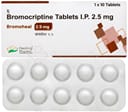
₹217.5
MRP ₹298
Bromocriptine 2.5mg
₹112.5
₹256.2
MRP ₹278.4
Bromocriptine 2.5mg
₹89.1
₹256.2
MRP ₹278.4
Bromocriptine
₹41.2

Bromocriptine 0.8mg
₹51.9
Bromocriptine 10mg
₹144.9
Bromocriptine 0.8mg
₹75
Bromocriptine 1.25mg
₹147.7
Bromocriptine 0.8mg
₹71.3
Bromocriptine 0.8mg
₹66
Bromocriptine 5mg
₹200
Bromocriptine 0.8mg
₹61.9
Bromocriptine 1.25mg
₹132.9
Bromocriptine 1.25mg

₹150
Bromocriptine 5mg
₹210.4