


More About Empagliflozin + Metformin
Quick Summary
Empagliflozin + Metformin is a prescription tablet that joins two diabetes medicines, empagliflozin and metformin (often listed as metformin hydrochloride or metformin HCl), in one pill. It is used along with diet and exercise to lower blood sugar in adults with type 2 diabetes. The twice-daily tablet is also approved for children aged 10 years and older. Empagliflozin helps the kidneys pass extra sugar out in the urine. Metformin lowers the sugar made by the liver and helps the body respond better to insulin. The empagliflozin part may also lower the risk of heart-related death and heart failure hospital stays in certain adults. Empagliflozin + Metformin is not used for type 1 diabetes.
Detailed Description
Empagliflozin + Metformin brings together two medicines that lower blood sugar in different ways. Having both in one tablet means fewer pills to keep track of for people who need both.
The first ingredient, empagliflozin, belongs to a group called SGLT2 inhibitors. It works in the kidneys. Normally the kidneys pull sugar back out of the urine and return it to the blood. Empagliflozin blocks this, so extra sugar leaves the body in the urine. The second ingredient, metformin, belongs to a group called biguanides. It lowers the amount of sugar the liver makes, reduces the sugar the gut absorbs from food, and helps the body use its own insulin better.
Empagliflozin + Metformin is used with a healthy diet and regular exercise to improve blood sugar control in adults with type 2 diabetes. The twice-daily tablet is also approved for children aged 10 years and older. The empagliflozin in it can also lower the risk of death from heart disease and of hospital stays for heart failure in certain adults. On its own, empagliflozin is also used to lower the risk of kidney disease getting worse, hospital stays for heart failure, and death in certain adults with kidney disease. It helps control diabetes as a long-term treatment, and it is not meant for type 1 diabetes.
The medicine comes in two forms. The regular tablet is usually taken twice a day with meals. The extended-release (XR) tablet releases the medicine slowly and is usually taken once a day with the morning meal.
Empagliflozin + Metformin needs regular medical supervision. Its label carries a boxed warning for a rare but life-threatening problem caused by metformin, called lactic acidosis. The risk is higher with kidney problems, age 65 or older, liver problems, heavy drinking, surgery, and scans that use contrast dye. Your doctor will check how well your kidneys work before and during treatment. You will also have regular blood sugar and HbA1c tests (a blood test that shows your average sugar level over time). The label advises checking vitamin B12 levels every 2 to 3 years, because metformin can lower vitamin B12.
Benefits of Empagliflozin + Metformin
- Two ways of lowering blood sugar. The empagliflozin part removes extra sugar through the urine, while the metformin part cuts the sugar made by the liver and helps insulin work better.
- Fewer tablets to manage. Two diabetes medicines come in a single tablet, and the XR form is taken just once a day.
- Heart protection in certain adults. The empagliflozin in Empagliflozin + Metformin can lower the risk of death from heart disease and of hospital stays for heart failure in certain adults with type 2 diabetes.
- Choice of forms. The twice-daily and once-daily forms come in several strengths, which lets the doctor match the dose to each person.
- Use in older children. The twice-daily tablet is approved for children aged 10 years and older with type 2 diabetes.
Side Effects of Empagliflozin + Metformin
Common Side Effects (Usually Mild and may lessen with continued use)
- Urinating more often, including at night
- Feeling more thirsty
- Urinary tract infections
- Genital yeast infections, especially in women (itching, odour, or white or yellowish discharge)
- Diarrhoea
- Nausea or vomiting
- Gas
- Stomach discomfort or indigestion
- Weakness or low energy
- Headache
- A change in the sense of taste
Serious Side Effects (Seek Urgent Medical Attention)
- Lactic acidosis. This is a rare but life-threatening build-up of lactic acid in the blood caused by metformin. It is the reason Empagliflozin + Metformin carries a boxed warning. Signs include feeling very weak and tired, unusual muscle pain, trouble breathing, stomach problems with nausea, vomiting or diarrhoea, dizziness, a fast or slow heartbeat, and feeling cold, especially in the hands or feet.
- Ketoacidosis (diabetic ketoacidosis). This is a serious condition in which acids called ketones build up in the blood. It can happen with empagliflozin even when blood sugar is not very high. Signs include nausea, vomiting, stomach-area pain, tiredness, and trouble breathing.
- Dehydration and low blood pressure on standing (orthostatic hypotension). Losing too much body fluid can make you feel dizzy, faint, light-headed, or weak, especially when you stand up.
- Serious urinary tract infections. These include kidney infection (pyelonephritis) and infection that spreads to the blood (urosepsis). Signs include burning or painful urination, cloudy, red, pink or brown urine, fever, back pain, nausea, or vomiting.
- Fournier's gangrene (necrotizing fasciitis of the perineum). This is a rare, life-threatening infection of the skin and tissue in the area between and around the genitals and the anus. It needs urgent surgery. Signs include pain or tenderness, swelling, or redness in that area, along with fever or feeling unwell.
- Low blood sugar (hypoglycaemia). This is more likely if Empagliflozin + Metformin is taken with insulin or with sulfonylureas (diabetes medicines that make the body release more insulin). Signs include headache, drowsiness, weakness, irritability, hunger, fast heartbeat, confusion, shaking, dizziness, and sweating.
- Lower limb amputation risk. Empagliflozin can raise the risk of losing a toe, foot, or leg. Report any pain, sores, ulcers, or warm, red, swollen areas on the legs or feet.
- Severe allergic reaction, including angioedema. Angioedema is swelling under the skin. Watch for rash, hives, itching, swelling of the face, lips, tongue or throat, hoarseness, or trouble breathing or swallowing.
- Low vitamin B12. Metformin can lower vitamin B12 levels over time, which your doctor can check with blood tests.
- Chest pain. Get medical help right away if you have chest pain while taking Empagliflozin + Metformin.
Directions for Use
- Follow your prescription. Take Empagliflozin + Metformin exactly as your doctor has told you. Do not take more or less, or take it more often, than prescribed.
- Regular tablet timing. The regular tablet is taken by mouth 2 times each day with meals.
- XR tablet timing. The extended-release tablet is taken once a day with a meal in the morning.
- Swallow the XR tablet whole. Do not break, cut, crush, dissolve, or chew the extended-release tablet.
- Use plain water. Swallow the tablet with a glass of plain water.
- Keep a steady routine. Take Empagliflozin + Metformin at around the same time each day, with your meals.
- Drink enough fluids. Follow your doctor's advice on how much water to drink through the day, because Empagliflozin + Metformin can cause dehydration.
- Keep taking it. Empagliflozin + Metformin helps control diabetes but is a long-term treatment. Keep taking it even if you feel well, and do not stop it without talking to your doctor.
How it works
Empagliflozin + Metformin lowers blood sugar through two separate actions that support each other.
Empagliflozin (SGLT2 inhibitor). The kidneys filter the blood all day. As they do, a transporter called SGLT2 (sodium-glucose co-transporter 2) acts like a pump that pulls sugar back from the filtered fluid into the blood. SGLT2 is the main pump that does this job. Empagliflozin blocks it. As a result, more sugar leaves the body in the urine, and blood sugar comes down. Empagliflozin also reduces how much salt (sodium) the kidneys take back. This action also explains the extra urination, thirst, and positive urine sugar tests that some people notice.
Metformin (biguanide). Metformin works mainly on the liver, the gut, and the body's response to insulin. The liver makes and releases sugar into the blood, and metformin lowers this. It also reduces the amount of sugar absorbed from food in the gut. Finally, it improves insulin sensitivity, meaning the body's own insulin works better at moving sugar out of the blood and into the cells.
Working together. One medicine removes extra sugar through the kidneys, while the other cuts the sugar entering the blood from the liver and gut. The two parts act at different places in the body, so each covers a different source of high blood sugar.
Safety Advice for Empagliflozin + Metformin

Allergy
Limited information
Do not take Empagliflozin + Metformin if you are allergic to empagliflozin, metformin, or any of the ingredients in the tablet. Get emergency medical help right away if you have signs of a serious allergic reaction, such as rash, hives, itching, swelling of the face, lips, tongue or throat, hoarseness, or trouble breathing or swallowing.

Pregnancy
Limited information
The label does not recommend Empagliflozin + Metformin during the second and third trimesters of pregnancy, and the patient guide says it may harm an unborn baby. Tell your doctor if you are pregnant or planning a pregnancy, and call your doctor if you become pregnant while taking it.

Breastfeeding
Limited information
Not recommended. Do not breastfeed while taking Empagliflozin + Metformin.

Alcohol
Limited information
Avoid drinking alcohol often or drinking a lot in a short time (binge drinking). Alcohol raises the risk of lactic acidosis and can change blood sugar levels.

Driving
Limited information
Empagliflozin + Metformin can cause dizziness or light-headedness, and low blood sugar can occur, mainly with insulin or sulfonylureas. Avoid driving if you feel dizzy, shaky, or confused.

Kidney
Limited information
Must not be used in severe kidney disease (eGFR, a blood-test measure of how well your kidneys filter the blood, below 30). Starting it is not recommended when eGFR is below 45. Your doctor will check kidney function before and during treatment.

Liver
Limited information
Not recommended in people with liver problems, because liver disease raises the risk of lactic acidosis.

Children
Limited information
The twice-daily tablet is approved for children aged 10 years and older with type 2 diabetes. The XR tablet is approved for adults only.

Elderly patients
Limited information
People aged 65 or older have a higher risk of lactic acidosis and dehydration. Doctors check kidney function more often in older adults.
Quick Tips for Empagliflozin + Metformin
- Take Empagliflozin + Metformin with meals and a glass of plain water, at the same times each day.
- Swallow the XR tablet whole and do not break, crush, or chew it.
- Drink enough fluids through the day, especially in hot weather, during illness, or after heavy sweating, vomiting, or diarrhoea.
- Get up slowly from lying down, resting your feet on the floor for a few minutes before standing, to avoid dizziness.
- Check your feet every day for sores, cuts, redness, or swelling.
- Keep up with the diet and exercise advice from your doctor.
- Tell your doctor or dentist that you take Empagliflozin + Metformin before any surgery or scan with contrast dye.
- Tell every doctor, dentist, and lab that you take Empagliflozin + Metformin, because it makes urine sugar tests show positive.
- Your doctor may ask you to stop Empagliflozin + Metformin for at least 3 days before surgery or long fasting, so mention any planned procedure early.
- Keep a written list of all your medicines and supplements and carry it with you.
- Wear a diabetes identification bracelet or card in case of an emergency.
- Learn the signs of low blood sugar, ketoacidosis, and lactic acidosis so you can act fast.
Storage Advice
- Store at room temperature between 20°C and 25°C (68°F to 77°F).
- Keep the tablets in their original container, tightly closed.
- Protect from light, excess heat, and moisture. Do not store in the bathroom.
- Keep out of sight and reach of children, and lock safety caps.
- Dispose of unneeded tablets so that children, pets, and other people cannot take them. Do not flush them down the toilet. Ask your pharmacist about a medicine take-back option.
Drug-Food Interaction
- Alcohol. Alcohol increases the effect of metformin on lactic acid and raises the risk of lactic acidosis. It can also lower blood sugar and adds to the risk of ketoacidosis. Avoid frequent or binge drinking.
- Meals. Empagliflozin + Metformin is taken with meals. The regular tablet goes with two meals a day, and the XR tablet with the morning meal.
- Ketogenic diets. A high-fat, low-carbohydrate (ketogenic) diet is a known risk factor for ketoacidosis with empagliflozin. Tell your doctor before starting such a diet.
- Eating or drinking much less than usual. Skipping meals, fasting, or drinking far less fluid than usual raises the risk of dehydration, ketoacidosis, and lactic acidosis.
- Low-salt diets. Tell your doctor if you follow a low-sodium diet, as empagliflozin also makes the body lose salt and fluid.
Interactions with Other Drugs
- Carbonic anhydrase inhibitors (topiramate, zonisamide, acetazolamide, dichlorphenamide, methazolamide). These can raise the risk of lactic acidosis when used with metformin.
- Medicines that slow the removal of metformin (ranolazine, vandetanib, dolutegravir, cimetidine). These can raise metformin levels in the blood and add to the risk of lactic acidosis. Your doctor will weigh the benefits and risks.
- Insulin and medicines that make the body release more insulin (such as sulfonylureas). Using these with Empagliflozin + Metformin raises the risk of low blood sugar. The doctor may lower the dose of insulin or the sulfonylurea.
- Diuretics (water pills), especially loop diuretics. These add to the fluid loss caused by empagliflozin and raise the risk of dehydration and low blood pressure.
- Lithium. Empagliflozin + Metformin can affect lithium levels, so doctors check blood lithium levels more often when Empagliflozin + Metformin is started.
- Iodinated contrast dye (used in some X-ray and CT scans). Empagliflozin + Metformin is stopped at the time of, or before, such a scan. The doctor will tell you when it is safe to restart, which may be at least 48 hours afterwards.
- Alcohol. Heavy or frequent drinking increases the effect of metformin on lactic acid.
- Urine sugar tests. Empagliflozin makes urine sugar tests show positive, so doctors use other ways to check blood sugar control.
Drug-Disease Interactions
- Kidney disease. Severe kidney disease is a reason not to use Empagliflozin + Metformin. Lower kidney function raises the risk of lactic acidosis and dehydration.
- Metabolic acidosis or diabetic ketoacidosis. Empagliflozin + Metformin must not be used in people with acute or chronic metabolic acidosis (too much acid in the blood), including diabetic ketoacidosis.
- Allergy to the ingredients. Do not take Empagliflozin + Metformin if you have ever had an allergic reaction to empagliflozin, metformin, or any of the other ingredients in the tablet.
- Type 1 diabetes. Empagliflozin + Metformin is not used for type 1 diabetes, and the risk of ketoacidosis is higher in this group.
- Liver disease. Not recommended, as liver problems raise the risk of lactic acidosis.
- Heart disease, heart attack, stroke, or conditions with low oxygen levels. These raise the risk of lactic acidosis. Tell your doctor about any such history.
- Pancreas problems. A history of pancreatitis or pancreas surgery can raise the risk of ketoacidosis.
- Urinary tract or genital yeast infections. A past history of these infections should be shared with your doctor, as Empagliflozin + Metformin raises the risk.
- Foot ulcers, poor blood flow to the legs, nerve damage, or past amputation. These raise the risk of lower limb amputation with empagliflozin.
- Low blood pressure or dehydration. Empagliflozin can lower blood pressure further through fluid loss.
- Low vitamin B12. Metformin can lower vitamin B12, so a past low level should be reported.
- Mitochondrial disease (a rare inherited condition affecting how cells make energy). The label lists mitochondrial disease as a risk factor for lactic acidosis.
- Heavy alcohol use. This raises the risk of both lactic acidosis and ketoacidosis.
Daily Dose
- The doctor decides the strength and schedule for each person, often starting low and raising the dose slowly to reduce stomach upset from metformin.
- The regular tablet comes in strengths of 5 mg/500 mg, 5 mg/1,000 mg, 12.5 mg/500 mg, and 12.5 mg/1,000 mg (empagliflozin/metformin), and the label directs that it be taken twice daily with meals.
- The XR tablet comes in strengths of 5 mg/1,000 mg, 10 mg/1,000 mg, 12.5 mg/1,000 mg, and 25 mg/1,000 mg, and the label directs that it be taken once daily with the morning meal.
- According to the label, the maximum recommended total per day is 25 mg of empagliflozin and 2,000 mg of metformin.
- Take only the dose your doctor has prescribed. Do not change the dose or stop the medicine on your own.
What If You Forget to take Empagliflozin + Metformin?
- Take the missed dose as soon as you remember, with food.
- If it is almost time for your next dose, skip the missed dose and take the next one at your usual time.
- Do not take two doses at once to make up for a missed one.
When to contact doctor
Stop taking Empagliflozin + Metformin and get medical help right away if you notice:
- Signs of lactic acidosis: severe weakness or tiredness, unusual muscle pain, trouble breathing, stomach pain with nausea, vomiting or diarrhoea, feeling cold, dizziness, or a slow or uneven heartbeat
- Signs of ketoacidosis: nausea, vomiting, stomach-area pain, tiredness, or trouble breathing, even if your blood sugar is below 250 mg/dL. If possible, check your urine or blood for ketones, as your doctor has shown you.
- Pain, tenderness, redness, or swelling in the genital or anal area with fever or feeling unwell
- Burning or painful urination, cloudy or bloody urine, fever, back pain, or passing much less urine
- Rash, hives, or swelling of the face, lips, tongue, or throat, or trouble breathing or swallowing
- Feeling faint, dizzy, or very weak when standing up
- Pain, sores, ulcers, or warm, red, swollen areas on the legs or feet
- Chest pain
- Severe diarrhoea, vomiting, fever, or a serious infection, or drinking much less fluid than usual
Fact Box
Therapeutic Class
Antidiabetic (blood sugar lowering)
Action Class
SGLT2 (sodium-glucose co-transporter 2) inhibitor + biguanide
Chemical Class
Glucitol derivative (empagliflozin) + biguanide (metformin)
Habit Forming
No
Checkout Editorial Policy
Related Medications

Empagliflozin 12.5mg + Metformin 1000mg
₹164.1
₹225
MRP ₹450
Empagliflozin 12.5mg + Metformin 500mg
₹90.9
₹94.5
MRP ₹189
Empagliflozin 12.5mg + Metformin 500mg
₹425
₹94.5
MRP ₹189
Empagliflozin 12.5mg + Metformin 1000mg
₹225
MRP ₹450
Empagliflozin 10mg + Metformin 1000mg
₹97.6
MRP ₹119
Empagliflozin 12.5mg + Metformin 500mg
₹120.9
₹94.5
MRP ₹189
Empagliflozin 12.5mg + Metformin 500mg
₹167.8
₹94.5
MRP ₹189
Empagliflozin 25mg + Metformin 1000mg
₹164.1
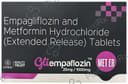
₹122.5
MRP ₹245
Empagliflozin 25mg + Metformin 1000mg
₹122.5
MRP ₹245
Empagliflozin 5mg + Metformin 1000mg
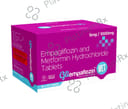
₹58.6
MRP ₹117.2
Empagliflozin 12.5mg + Metformin 500mg
₹190.1
₹94.5
MRP ₹189
Empagliflozin 5mg + Metformin 500mg
₹168.8
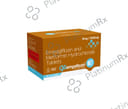
₹57.5
MRP ₹115
Empagliflozin 12.5mg + Metformin 500mg
₹154.7
₹94.5
MRP ₹189
Empagliflozin 5mg + Metformin 500mg
₹98.4
₹57.5
MRP ₹115
Empagliflozin 12.5mg + Metformin 500mg
₹178.1
₹94.5
MRP ₹189
Empagliflozin 5mg + Metformin 500mg
₹206.3
₹57.5
MRP ₹115
Empagliflozin 12.5mg + Metformin 1000mg
₹126.6
₹225
MRP ₹450
Empagliflozin 5mg + Metformin 500mg
₹168.8
₹57.5
MRP ₹115
Empagliflozin 12.5mg + Metformin 1000mg
₹445.3
₹225
MRP ₹450
Empagliflozin 12.5mg + Metformin 500mg
₹125.6
₹94.5
MRP ₹189
Empagliflozin 5mg + Metformin 500mg
₹111.6
₹57.5
MRP ₹115
Empagliflozin 12.5mg + Metformin 1000mg
₹176.3
₹225
MRP ₹450
Empagliflozin 12.5mg + Metformin 500mg
₹103.1
₹94.5
MRP ₹189
Empagliflozin 12.5mg + Metformin 1000mg
₹139.7
₹225
MRP ₹450
Empagliflozin 12.5mg + Metformin 500mg
₹130.3
₹94.5
MRP ₹189