


More About Everolimus
Quick Summary
Everolimus is a targeted prescription medicine belonging to the class of mammalian target of rapamycin (mTOR) inhibitors. In modern medicine, it serves two critical therapeutic roles: as an immunosuppressant to prevent organ rejection in kidney and liver transplant recipients, and as an antineoplastic agent in medical oncology. In cancer treatment, it is prescribed for advanced hormone receptor-positive breast cancer, progressive neuroendocrine tumors of pancreatic, gastrointestinal, or lung origin, and advanced kidney cancer (renal cell carcinoma). It is also approved to treat non-cancerous tumors and seizures linked to tuberous sclerosis complex (a rare genetic disorder causing non-cancerous growths in organs such as the brain and kidneys). By dampening abnormal cell proliferation and immune system activation, Everolimus helps control tumor growth and preserves transplanted organ function under strict medical supervision.
Detailed Description
Everolimus is an orally administered derivative of rapamycin (sirolimus) engineered to regulate cell division, growth, and immune responses. In the body, cells rely on an internal signaling pathway driven by a protein kinase known as the mammalian target of rapamycin (mTOR). When this pathway becomes overactive, it can lead to unchecked cancer cell multiplication, abnormal blood vessel development that feeds tumors, or excessive activation of immune cells that attack a transplanted organ.
By binding to an intracellular protein known as FKBP-12, Everolimus forms an active complex that specifically inhibits mTOR complex 1 (mTORC1). This action blocks downstream signaling necessary for protein synthesis, nutrient sensing, and cell cycle progression from the G1 phase into the S phase. As an immunosuppressive agent, it slows down cytokine-driven T-cell multiplication, preventing the body from mounting a destructive immune attack against a donor kidney or liver. As an anticancer therapy, it deprives tumors of growth signals, reduces cellular metabolism, and curtails the formation of new blood vessels (angiogenesis) that nourish malignant growths.
Because Everolimus significantly alters immune surveillance and metabolic pathways, therapy requires rigorous medical supervision and regular laboratory monitoring. Patients receiving Everolimus for organ transplantation often undergo therapeutic drug monitoring to maintain precise blood trough concentrations, preventing organ rejection while avoiding drug-induced kidney strain. Oncology patients also undergo routine screening for metabolic changes, lung health, and blood counts. Whether used to manage complex malignancies or to ensure long-term transplant survival, Everolimus represents an essential targeted treatment that must be taken strictly as prescribed.
Benefits of Everolimus
- Targeted Inhibition of Tumor Growth: Unlike conventional cytotoxic chemotherapy that harms rapidly dividing healthy cells throughout the body, Everolimus selectively blocks the mTOR pathway to slow down the growth and multiplication of specific cancer cells.
- Effective Organ Rejection Prophylaxis: For kidney and liver transplant recipients, Everolimus works synergistically with other immunosuppressive agents like calcineurin inhibitors, providing potent protection against graft rejection while allowing lower doses of other kidney-stressing drugs.
- Inhibition of Tumor Blood Supply: By reducing the production of vascular endothelial growth factors, Everolimus impairs angiogenesis, effectively starving tumors of the blood supply needed for further expansion.
- Specialized Control in Genetic Disorders: For individuals living with tuberous sclerosis complex (TSC), Everolimus shrinks benign brain tumors (subependymal giant cell astrocytomas), reduces kidney angiomyolipomas, and helps reduce the frequency of refractory partial-onset seizures.
- Convenient Once-Daily Oral Administration: Available as an oral tablet, Everolimus provides an outpatient treatment option that eliminates the need for frequent intravenous infusions.
Side Effects of Everolimus
Common Side Effects (Usually Mild)
- Mouth ulcers and oral inflammation (stomatitis)
- Increased susceptibility to minor respiratory infections, cold symptoms, and sinus congestion
- Skin rash, dry skin, and mild itching
- Generalized fatigue, weakness, and headache
- Nausea, diarrhea, abdominal pain, or decreased appetite
- Peripheral swelling (edema) in the ankles, feet, or hands
- Elevated blood sugar levels (hyperglycemia)
- Elevated blood cholesterol and triglyceride levels (hyperlipidemia)
- Anemia (low red blood cell count) and low blood platelet counts (thrombocytopenia)
- Joint pain (arthralgia) and muscle aches
Serious Side Effects (Seek Urgent Medical Attention)
- Non-infectious pneumonitis: Non-infectious pneumonitis is a serious drug-induced lung inflammation characterized by persistent dry cough, shortness of breath, wheezing, or chest discomfort, requiring urgent clinical evaluation.
- Severe systemic infections: Opportunistic bacterial, fungal, or viral infections resulting from immune suppression, presenting with high fever, chills, burning urination, or persistent sore throat.
- Angioedema: An acute allergic reaction causing rapid swelling beneath the skin, particularly around the face, lips, tongue, throat, or airway, which can lead to severe breathing difficulty.
- Kidney graft thrombosis: Blood clot formation in the blood vessels of a transplanted kidney, which can cause sudden graft failure and typically occurs in the early post-transplant period.
- Kidney impairment and proteinuria: Increased protein leakage in the urine and declining kidney filtration function.
- Impaired wound healing: Delayed healing of surgical wounds, wound breakdown, or fluid collection around surgical sites.
- Secondary malignancies: Long-term immune suppression increases the risk of developing secondary cancers, particularly skin cancers and lymphomas.
Directions for Use
Take Everolimus exactly as directed by your treating specialist. It should be taken once daily at the same time each day to maintain steady levels in your bloodstream. You can take Everolimus either consistently with food or consistently on an empty stomach, but you must choose one routine and stay consistent every day, as food intake alters how much medicine your body absorbs.
Swallow the whole tablet with a full glass of plain water. Do not crush, chew, split, or dissolve standard tablets, because altering the tablet structure affects how the drug is absorbed and can irritate the lining of your mouth. If you are prescribed dispersible tablets, follow the exact preparation instructions provided by your clinic, using small amounts of water in a syringe or small cup, and drink the entire mixture immediately.
Avoid grapefruit and grapefruit juice entirely while taking Everolimus, as they interfere with drug breakdown. Do not alter your dose or stop taking Everolimus on your own, even if you feel completely healthy, as abrupt discontinuation can lead to organ rejection or rapid cancer progression. Always complete the prescribed duration under your doctor's supervision.
How it works
Everolimus acts as a selective inhibitor of the mechanistic (mammalian) target of rapamycin, a key serine-threonine kinase within cells. In human physiology, the mTOR pathway acts as a central control switch that integrates signals from growth factors, nutrients, and cellular energy levels to direct cell growth, metabolism, and multiplication.
Inside the target cell, Everolimus binds with high affinity to an intracellular receptor protein known as FK506-binding protein-12 (FKBP-12). The resulting drug-protein complex then binds directly to the mTOR Complex 1 (mTORC1), inhibiting its downstream kinase activities. This inhibition prevents the phosphorylation of key regulatory proteins, specifically ribosomal protein S6 kinase 1 (S6K1) and eukaryotic initiation factor 4E-binding protein 1 (4E-BP1).
In cancer cells, blocking these downstream targets halts the translation of essential mRNAs required for cell cycle progression from the G1 phase to the S phase, effectively stopping tumor cell division. It also downregulates hypoxia-inducible factor (HIF-1) and vascular endothelial growth factor (VEGF), which restricts the formation of new blood vessels that tumors need to survive. In the immune system, mTOR inhibition halts interleukin-2 (IL-2) driven signaling in antigen-stimulated T-lymphocytes, preventing their clonal expansion and thereby blunting the immune response against transplanted organs.
Safety Advice for Everolimus

Pregnancy
Limited information
Everolimus can cause severe embryo-fetal harm and birth defects when taken during pregnancy. It carries a Boxed Warning for transplant use and explicit reproductive warnings across all indications. Females of reproductive potential must verify a negative pregnancy test before starting treatment and must use highly effective contraception during treatment and for at least 8 weeks after the final dose. Male patients with female partners of reproductive potential must use effective barrier contraception during treatment and for at least 4 weeks after the final dose.

Breastfeeding
Limited information
It is unknown whether Everolimus passes into human breast milk, but due to the potential for serious adverse reactions and immune suppression in nursing infants, breastfeeding is not recommended during treatment and for 2 weeks after the last dose.

Alcohol
Limited information
Avoid alcohol while taking Everolimus. Alcohol can worsen gastrointestinal irritation, increase the risk of liver enzyme elevation, and aggravate central nervous system side effects such as dizziness and fatigue.

Driving
Limited information
Everolimus may cause fatigue, dizziness, and general weakness in some individuals. Exercise caution when driving, operating machinery, or performing tasks that require full mental alertness until you know how the medicine affects you.

Kidney
Limited information
Use with caution. Renal function and urinary protein levels must be monitored regularly during therapy. In transplant patients taking Everolimus alongside cyclosporine, reduced doses of cyclosporine are required to avoid additive kidney toxicity.

Liver
Limited information
Everolimus is cleared predominantly by the liver via CYP3A4 enzymes. Dose reductions are necessary for patients with mild, moderate, or severe hepatic impairment, accompanied by frequent blood concentration and safety monitoring.

Children
Limited information
Approved for specific pediatric indications, including tuberous sclerosis complex-associated SEGA and refractory partial-onset seizures in patients 1 year of age and older. Dosing is strictly determined by body surface area and monitored via therapeutic blood levels. Safety in general pediatric oncology and organ transplantation has not been established.

Elderly patients
Limited information
Elderly individuals (65 years and older) may experience a higher incidence of adverse events, including infections, non-infectious pneumonitis, and fatigue. Dose selection should be cautious, typically starting at the lower end of the dosing range with close clinical supervision.
Quick Tips for Everolimus
- Take Everolimus at the exact same hour every day to keep drug levels stable.
- Maintain consistent food habits: always take it with food, or always take it on an empty stomach.
- Rinse your mouth with alcohol-free oral rinses to help soothe and prevent mouth ulcers (stomatitis).
- Avoid grapefruit, grapefruit juice, and Seville oranges throughout your course of treatment.
- Wear broad-spectrum sunscreen and protective hats or shirts when stepping outdoors to protect sensitive skin.
- Inform all healthcare providers, including your dentist, that you are taking an immunosuppressive medication before undergoing any procedure.
- Contact your doctor immediately if you develop a new or worsening dry cough, shortness of breath, or fever.
- Do not receive any live vaccines (such as MMR, yellow fever, or oral polio) while taking this medicine.
Storage Advice
Store Everolimus tablets in their original blister packaging or container to protect them from light and moisture. Keep the medicine at controlled room temperature between 20°C to 25°C (68°F to 77°F), with temporary excursions permitted between 15°C to 30°C (59°F to 86°F). Keep the container tightly closed and out of reach of children and domestic pets. Do not store this medication in humid areas such as bathroom medicine cabinets.
Drug-Food Interaction
- Grapefruit and Grapefruit Juice: Inhibit intestinal CYP3A4 enzymes, dramatically increasing the absorption and blood concentration of Everolimus, which increases the risk of severe toxicity.
- High-Fat Meals: High-fat meals significantly alter the rate and extent of drug absorption compared to the fasting state. Patients must choose either a fed or fasting routine and adhere to it strictly every day.
- St. John's Wort: An herbal supplement that strongly induces CYP3A4 and P-glycoprotein, causing a steep drop in blood levels of Everolimus and risking organ rejection or cancer progression.
Interactions with Other Drugs
- Strong CYP3A4 and P-gp Inhibitors (e.g., Ketoconazole, Itraconazole, Clarithromycin, Voriconazole): These drugs block the primary breakdown pathway of Everolimus, markedly elevating its blood levels and increasing the likelihood of life-threatening side effects. Concomitant use is generally avoided.
- Moderate CYP3A4 Inhibitors (e.g., Erythromycin, Diltiazem, Verapamil, Fluconazole): Increase systemic exposure to Everolimus. A dose reduction of Everolimus and careful clinical monitoring are required if co-administration is necessary.
- Strong CYP3A4 Inducers (e.g., Rifampicin, Carbamazepine, Phenytoin, Phenobarbital): Speed up the clearance of Everolimus, substantially decreasing its blood concentration and undermining treatment efficacy. Dose increases under blood-level guidance may be warranted.
- Calcineurin Inhibitors (Cyclosporine, Tacrolimus): When combined with Everolimus for organ transplant immunosuppression, standard doses of cyclosporine produce heightened nephrotoxicity (kidney damage). Reduced cyclosporine doses and therapeutic drug monitoring of both agents are required.
- Angiotensin-Converting Enzyme (ACE) Inhibitors (e.g., Ramipril, Enalapril): Co-administration significantly increases the risk of angioedema (sudden swelling of the face, mouth, and airway).
- Live Attenuated Vaccines: Live vaccines are contraindicated during treatment because the immunosuppressive action of Everolimus can permit vaccine-derived viral or bacterial replication, leading to active clinical infection.
Drug-Disease Interactions
- Active Infections: Because Everolimus suppresses normal immune responses, taking it in the presence of an active bacterial, viral, or fungal infection can lead to life-threatening sepsis. Pre-existing infections must be fully treated prior to initiating therapy.
- Pre-existing Lung Disease: Patients with underlying chronic obstructive pulmonary disease (COPD) or pulmonary fibrosis face heightened risks from non-infectious pneumonitis, requiring rigorous baseline and ongoing pulmonary evaluations.
- Hepatic Impairment: Liver dysfunction impairs drug clearance, causing drug accumulation and heightened systemic toxicity; rigorous dose adjustments based on Child-Pugh classification are mandatory.
- Diabetes Mellitus and Hyperglycemia: Everolimus impairs glucose tolerance and insulin sensitivity, often worsening blood sugar control and requiring intensified diabetic medication.
- Hyperlipidemia and Hypertriglyceridemia: Therapy frequently triggers marked increases in blood triglycerides and cholesterol, necessitating baseline and routine lipid screening and potential initiation of lipid-lowering therapy.
- Recent or Planned Surgery: Everolimus interferes with tissue regeneration and wound healing, heightening the risk of wound dehiscence, incisional hernias, and surgical site infections; treatment is often paused before and after elective operations.
Daily Dose
For adult oncology indications (such as advanced breast cancer, neuroendocrine tumors, and renal cell carcinoma), the standard daily dose is 10 mg taken orally once daily. In patients with tuberous sclerosis complex-associated subependymal giant cell astrocytoma (SEGA) or refractory seizures, dosing is individualized based on body surface area (often starting at 4.5 mg/m² once daily) and titrated to achieve specific therapeutic whole-blood trough levels between 5 ng/mL and 15 ng/mL.
For organ transplant rejection prophylaxis (kidney or liver), the usual initial dose is 0.75 mg orally twice daily (total 1.5 mg per day) in combination with reduced-dose calcineurin inhibitors and corticosteroids, titrated to maintain target whole-blood trough concentrations (typically 3 to 8 ng/mL). Doses must never exceed the specific regimen prescribed by your treating specialist, and therapeutic blood monitoring is required to ensure both safety and effectiveness.
Overdose
An overdose of Everolimus can cause severe suppression of the immune system, acute lung inflammation, severe stomatitis, pronounced drop in blood platelets or white blood cells, elevated liver enzymes, severe diarrhea, and acute kidney impairment.
In the event of a suspected or known overdose, contact emergency medical services or reach a hospital emergency department immediately. There is no specific chemical antidote for Everolimus intoxication. Treatment centers on immediate medical stabilization, monitoring of vital functions, continuous assessment of blood cell counts and kidney parameters, and general supportive care. Because Everolimus is not significantly removed by hemodialysis, supportive and symptomatic interventions remain the mainstay of medical management.
What If You Forget to take Everolimus?
If you forget to take your regular dose of Everolimus, act according to how much time has passed. For once-daily dosing regimens, if you remember within 6 hours of your scheduled time, take your missed tablet immediately and take your next dose at the standard time the following day. If more than 6 hours have passed since your scheduled dose, skip the missed tablet completely and resume your normal schedule with the next dose.
For twice-daily transplant dosing regimens, if you remember within 4 hours of your missed dose, take it immediately; otherwise, skip it and continue on schedule. Never take two doses at the same time or take extra medicine to make up for a missed tablet, as doubling up significantly increases your risk of severe toxicity.
When to contact doctor
Seek immediate emergency medical attention or contact your specialist right away if you develop any of the following warning signs:
- Sudden onset of breathing difficulty, shortness of breath, new or worsening cough, or chest tightness
- High fever, severe chills, persistent sore throat, or other signs of acute infection
- Swelling of your face, lips, tongue, throat, or neck causing difficulty swallowing or breathing (signs of angioedema)
- Severe, painful mouth sores that make eating, drinking, or swallowing difficult
- Unusual bruising, purple spots under the skin, or unexpected bleeding from the nose, gums, or bowels
- Yellowing of your skin or eyes (jaundice), severe right-sided upper abdominal pain, or dark-colored urine
- Sudden decrease in urination, swelling in your lower legs or ankles, or rapid weight gain
- Fresh surgical wounds that split open, drain fluid, become red, or fail to heal
References
Fact Box
Therapeutic Class
Immunosuppressive and Antineoplastic Agent
Action Class
Mammalian Target of Rapamycin (mTOR) Inhibitor
Chemical Class
Macrolide Lactone / Rapamycin Derivative
Habit Forming
No
Checkout Editorial Policy
Related Medications

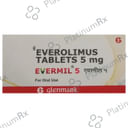
Everolimus 5mg
₹6,438.5
₹2,606.8
MRP ₹3,179
Everolimus 5mg
₹14,285.7
₹2,606.8
MRP ₹3,179
Everolimus 5mg
₹3,506
₹2,606.8
MRP ₹3,179
Everolimus 0.25mg
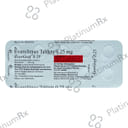
₹651.5
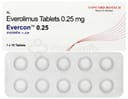
₹349.3
MRP ₹426
Everolimus 0.25mg
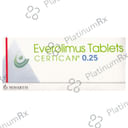
₹978
₹349.3
MRP ₹426
Everolimus 5mg
₹19,800
₹2,606.8
MRP ₹3,179
Everolimus 5mg
₹19,899
₹2,606.8
MRP ₹3,179
Everolimus 0.25mg
₹595.3
₹349.3
MRP ₹426
Everolimus 5mg
₹2,606.8
MRP ₹3,179
Everolimus 0.5mg
₹2,002
₹418.2
MRP ₹643.3
Everolimus 0.5mg
₹881
₹418.2
MRP ₹643.3
Everolimus 0.5mg
₹840.9
₹418.2
MRP ₹643.3
Everolimus 0.5mg
₹823
₹418.2
MRP ₹643.3
Everolimus 0.25mg
₹349.3
MRP ₹426
Everolimus 5mg
₹15,000
₹2,606.8
MRP ₹3,179
Everolimus 0.5mg
₹832.1
₹418.2
MRP ₹643.3
Everolimus 0.5mg
₹1,389
₹418.2
MRP ₹643.3
Everolimus 0.5mg
₹1,550
₹418.2
MRP ₹643.3
Everolimus 5mg
₹8,328.8
₹2,606.8
MRP ₹3,179
Everolimus 10mg
₹4,059.1

Everolimus 10mg
₹3,967
Everolimus 10mg
₹29,700
Everolimus 10mg
₹30,000
Everolimus 10mg
₹6,702.6
Everolimus 10mg
₹29,899