


More About Hydration & Electrolyte Balance - Electrolyte Walyte
Quick Summary
Hydration & Electrolyte Balance - Electrolyte Walyte is an oral rehydration salt (ORS) formulation commonly used to restore fluid and electrolyte balance lost due to diarrhoea, vomiting, excessive sweating, or fever. It is a balanced combination of glucose, sodium, potassium, chloride, and sometimes citrate or bicarbonate. Other than providing energy, glucose actively drives sodium and water absorption via the sodium-glucose cotransporter (SGLT1) in the intestinal wall. Hence, ORS is considered one of the most effective and life-saving oral treatments by the World Health Organisation (WHO).
Detailed Description
Hydration & Electrolyte Balance - Electrolyte Walyte is formulated in accordance with WHO’s oral rehydration salt standards, providing a precise osmolar balance of electrolytes and glucose to maximise intestinal absorption. The standard formulation of ORS by WHO contains sodium 75 mmol/L, potassium 20 mmol/L, chloride 65 mmol/L, glucose 75 mmol/L, and citrate 10 mmol/L, with a total osmolarity of 245 mOsm/L (reduced-osmolarity ORS). This hypotonic composition helps in reducing the frequency of diarrhoea and vomiting as compared to the original higher-osmolarity formula.
The small intestine has a transporter called SGLT1 that simultaneously pulls one glucose molecule and two sodium ions from the gut into the intestinal cell, which is followed by water via osmosis. Crucially, this absorption pathway remains fully functional even during severe diarrhoea, because the toxins that drive fluid loss into the gut operate through a completely separate mechanism on different intestinal cells. This is why Hydration & Electrolyte Balance - Electrolyte Walyte works even in cholera, where fluid is being lost into the gut at maximum rate, yet the SGLT1 absorption pathway continues working normally, allowing glucose and sodium to be actively absorbed and water to follow.
Potassium and citrate in the formulation replace potassium lost in stool and correct the metabolic acidosis that commonly accompanies severe diarrhoea. It must be noted that Hydration & Electrolyte Balance - Electrolyte Walyte does not stop diarrhoea but prevents and manages dehydration, electrolyte depletion, and acidosis.
Uses of Hydration & Electrolyte Balance - Electrolyte Walyte
Acute diarrhoea
Prevention and correction of dehydration in all age groups, from infants to adults.
Vomiting
Oral rehydration to replace fluid and electrolyte losses after vomiting.
Heat exhaustion and excessive sweating
Restores sodium, potassium, and fluid lost due to sweating.
Fever
Replaces insensible fluid losses during febrile illness.
Post-exercise rehydration
Restores electrolytes and fluid lost during prolonged physical activity.
Cholera and severe gastroenteritis
Manages dehydration during such health conditions
Benefits of Hydration & Electrolyte Balance - Electrolyte Walyte
- Controls the sodium-glucose cotransport mechanism, which remains functional during diarrhoea, enabling effective oral rehydration even in severe cases.
- Precisely balances osmolarity, preventing osmotic worsening of diarrhoea.
- Replaces sodium, potassium, and chloride lost in stool and vomit.
- Corrects metabolic acidosis caused by an imbalance of citrate/bicarbonate during severe dehydration.
- Safe for all ages, including infants, children, the elderly, and pregnant women.
- Non-systemic, safe, and effective — endorsed by WHO as an essential medicine.
Side Effects of Hydration & Electrolyte Balance - Electrolyte Walyte
Common side effects:
- Nausea or vomiting if consumed too quickly, drink slowly in small sips
- Bloating or mild abdominal discomfort
Uncommon side effects (usually from incorrect preparation or excessive intake):
- Hypernatraemia (high sodium levels) when too much salt is used
- Hyperkalaemia (high potassium levels), especially in patients with severe renal impairment
- Hyperglycaemia (high blood glucose), especially in diabetic patients
Serious side effects:
- Fluid overload (rare), seen in patients with renal impairment or heart failure
Directions for Use
Mix Hydration & Electrolyte Balance - Electrolyte Walyte in clean water as specified on the packaging. Use the exact amount of water as directed. Drink the solution slowly in small, frequent sips. Adults can consume up to 750 mL per hour during the initial rehydration phase, or roughly 200 to 400 mL after each loose stool during the maintenance phase. For children, administer 75 mL of ORS per kg body weight over 4 hours for moderate dehydration. Continue until diarrhoea stops and hydration is restored. Discard any unused solution after 24 hours. Do not add sugar, salt, or other substances to the prepared solution.
How it works
During diarrhoeal illness, toxins released by bacteria (such as cholera toxin or heat-labile E. coli toxin) hijack a signalling molecule inside intestinal crypt cells called cyclic AMP (cAMP). Rising cAMP levels activate a chain reaction that forces chloride channels on the intestinal wall to open, flooding the intestinal lumen with chloride. Sodium and water follow by osmosis, resulting in watery diarrhoea. This secretory process is driven by crypt cells, which line the base of the intestinal glands .
What makes ORS scientifically remarkable is that this toxin-driven secretory process only affects crypt cells, leaving a completely separate absorption pathway operating simultaneously on a different set of intestinal cells called villus cells. These absorptive cells carry a transporter called SGLT1 on their surface, which pulls 2 sodium ions and 1 glucose molecule from the intestinal lumen into the cell simultaneously. Water then follows the absorbed sodium into the bloodstream.
By providing glucose and sodium together in precisely the right concentrations, Hydration & Electrolyte Balance - Electrolyte Walyte maximises SGLT1 activity, driving sodium and water absorption directly back into the body, actively compensating for the ongoing fluid losses. Potassium replaces the substantial potassium lost in diarrhoeal stool (10–40 mmol/L). Citrate, once metabolised by the liver, generates bicarbonate, correcting the acid imbalance. The reduced-osmolarity formula (245 mOsm/L) prevents the solution from adding to the osmotic load in the intestinal lumen, which would otherwise worsen diarrhoea.
Safety Advice for Hydration & Electrolyte Balance - Electrolyte Walyte

Pregnancy
Safe
ORS is safe and recommended during pregnancy for dehydration from any cause.

Breastfeeding
Safe
Safe during breastfeeding.

Kidney
Caution
Potassium retention risk in people with severe renal failure.
Drug-Food Interaction
- Do not add extra sugar or salt to prepared ORS solution as it alters the osmolarity and can worsen dehydration or cause electrolyte imbalance.
- Avoid caffeinated beverages alongside ORS during active diarrhoea as caffeine has mild diuretic properties (causes excessive urination) that may hamper rehydration.
Interactions with Other Drugs
Digoxin
INFORMATION
Patients on digoxin experiencing diarrhoea are at high risk for digoxin toxicity due to potassium loss. ORS helps restore potassium levels.
ACE inhibitors / Potassium-sparing diuretics
CAUTION
These medicines, when combined with ORS, raise the risk of hyperkaleemia (high potassium levels) in people with renal impairment.
Lithium
INFORMATION
Sodium depletion from diarrhoea can increase the risk of lithium toxicity. ORS helps maintain sodium balance.
Antidiabetic agents
CAUTION
Glucose in ORS may affect glycaemic control. Use the glucose-free version.
Drug-Disease Interactions
- Severe renal impairment: Risk of hyperkalaemia (potassium accumulation) and fluid overload. Use only under medical supervision.
- Heart failure: Large volumes of sodium-containing ORS may result in fluid retention and worsening of cardiac symptoms.
- Diabetes mellitus: Glucose-containing ORS formulations may cause hyperglycaemia. Glucose-free electrolyte solutions may be preferable. Consult your doctor before use.
- Ileus or intestinal obstruction: Oral rehydration is contraindicated if there is bowel obstruction.
- Severe dehydration (>10% body weight loss): Oral rehydration alone is inadequate, as intravenous rehydration would be required to stabilise the patient before ORS can be used.
Overdose
Excessive intake of ORS, particularly in patients with normal or near-normal hydration status, may cause hypernatraemia (high sodium levels), hyperkalaemia, or fluid overload (oedema, hypertension, heart issues). Hypernatraemia may result in thirst, restlessness, confusion, and in severe cases, seizures. If overdose or electrolyte imbalance is suspected, seek medical attention for assessment of serum electrolytes and fluid status.
What If You Forget to take Hydration & Electrolyte Balance - Electrolyte Walyte?
Hydration & Electrolyte Balance - Electrolyte Walyte is taken as needed for rehydration and does not follow a fixed dosing schedule. If you miss a serving, resume drinking as soon as possible, especially if you’re experiencing diarrhoea or vomiting. The priority is to maintain adequate hydration. Do not attempt to compensate with a large volume at once. Drink small, frequent sips to avoid worsening nausea.
Fact Box
Therapeutic Class
Rehydration therapy
Action Class
Oral rehydration agent, electrolyte replenisher, acid-base corrector
Chemical Class
Oral rehydration solution (electrolyte & glucose)
Habit Forming
No
Checkout Editorial Policy
Related Medications

Hydration & Electrolyte Balance - Electrolyte Walyte
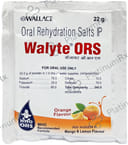
₹19.1
MRP ₹23.3
Hydration & Electrolyte Balance - Electrolyte Walyte
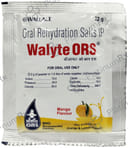
₹19.1
MRP ₹23.3
Hydration & Electrolyte Balance - Electrolyte Walyte
₹4.1
MRP ₹4.6
Hydration & Electrolyte Balance - Electrolyte Walyte
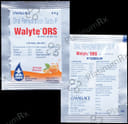
₹4.2
MRP ₹4.7
Hydration & Electrolyte Balance - Electrolyte Walyte
₹4

Hydration & Electrolyte Balance - Electrolyte Walyte
₹4
Hydration & Electrolyte Balance - Electrolyte Walyte
₹21.3
Hydration & Electrolyte Balance - Electrolyte Walyte
₹4.6