More About Lenalidomide
Quick Summary
Lenalidomide is a prescription capsule used to treat certain blood and bone marrow cancers. It belongs to a group of medicines called immunomodulatory agents, which change how the immune system behaves. Lenalidomide is a close chemical relative of thalidomide. It is mainly used with dexamethasone for multiple myeloma, a cancer of the bone marrow. It is also used for three other purposes: maintenance treatment after a stem cell transplant for multiple myeloma, a certain type of lower-risk myelodysplastic syndrome, and some lymphomas. It works by helping the bone marrow make normal blood cells and by killing abnormal cells. It can cause severe birth defects, so it is supplied only under a strict pregnancy-prevention programme.
Detailed Description
Lenalidomide is a cancer medicine taken by mouth. It treats conditions that start in the bone marrow, the soft tissue inside bones where blood cells are made.
Its main uses include:
- Multiple myeloma - a cancer of the plasma cells (a type of white blood cell that normally makes antibodies to fight infection) in the bone marrow. Lenalidomide is usually given with a steroid called dexamethasone, or on its own as maintenance after a stem cell transplant.
- Myelodysplastic syndrome (MDS) - a group of conditions where the bone marrow makes misshapen cells and too few healthy blood cells. Lenalidomide is used for anaemia that needs regular blood transfusions, caused by lower-risk (low or intermediate-1 risk) MDS with a change in chromosome 5 called "deletion 5q".
- Mantle cell lymphoma - a fast-growing cancer of immune cells. Lenalidomide is used in people already treated with bortezomib and at least one other medicine.
- Follicular lymphoma and marginal zone lymphoma (slow-growing cancers of white blood cells called B cells) - Lenalidomide is used with rituximab in people who have already been treated.
Lenalidomide works in more than one way. It attacks cancer cells directly, makes the body's own immune cells better at finding and killing cancer cells, and reduces the blood supply that tumours need to grow. Because it is a capsule, people can take it at home on a set cycle, often once a day for set days of a 28-day cycle.
This medicine needs close medical supervision. The label carries a boxed warning, the strongest kind of warning, for three main risks:
- Birth defects - Lenalidomide is related to thalidomide, which is known to cause severe and life-threatening birth defects. It must never be taken during pregnancy.
- Low blood counts - it can cause a big drop in white blood cells and platelets, which raises the risk of infection and bleeding.
- Blood clots - when taken with dexamethasone for multiple myeloma, it raises the risk of clots in the legs and lungs, heart attack and stroke.
Lenalidomide is supplied only under a strict pregnancy-prevention and safety programme. You may be asked to sign a consent form, and your doctor and pharmacist will follow special rules before each supply. Your doctor will check your blood counts, kidney, liver and thyroid function, and arrange pregnancy tests where needed. Doses are often paused or reduced based on these results. This is a normal part of treatment and does not mean the medicine has stopped working.
Benefits of Lenalidomide
- Treats several blood cancers - Lenalidomide is used for multiple myeloma and a certain type of lower-risk myelodysplastic syndrome. It is also used for mantle cell lymphoma, and for follicular and marginal zone lymphoma that has already been treated.
- Works in more than one way - It kills some cancer cells directly, strengthens immune cells that attack cancer, and cuts off the blood supply tumours need.
- Works well with partner medicines - Taken with dexamethasone, it slows myeloma cell growth more than either medicine alone. It is also combined with rituximab for some lymphomas.
- Helps the bone marrow recover - In deletion 5q myelodysplastic syndrome, it can help the bone marrow make healthier blood cells, which can reduce the need for blood transfusions.
- Taken by mouth at home - Lenalidomide is a once-daily capsule, so it does not need to be given through a drip. Regular clinic visits for blood tests are still needed.
- Helps control myeloma after a transplant - As maintenance treatment after a stem cell transplant, it can delay the return or worsening of multiple myeloma.
Side Effects of Lenalidomide
Common Side Effects (Usually Mild)
- Diarrhoea or constipation
- Tiredness and weakness
- Low red blood cells (anaemia), which can cause tiredness, pale skin and shortness of breath
- Feeling sick (nausea), stomach pain, loss of appetite and weight loss
- Muscle cramps, and joint, back or bone pain
- Swelling of the hands, feet or ankles
- Trouble sleeping
- Dizziness and shaking (tremor)
- Rash, itching and dry skin
- Cough, cold-like symptoms and sore throat
- Changes in taste, or burning or tingling in the hands or feet
Serious Side Effects (Seek Urgent Medical Attention)
- Low blood counts (neutropenia and thrombocytopenia) - Neutropenia means too few infection-fighting white blood cells. Thrombocytopenia means too few platelets, the cells that help blood clot. Get help quickly for fever, chills, sore throat, easy bruising, bleeding gums or nosebleeds. Any fever of 38°C or higher, or chills, needs urgent medical attention.
- Serious infections, including hepatitis B flare-up - Infections such as pneumonia can be serious. If you have ever had hepatitis B, the virus can become active again. Your doctor may test for it before treatment. Report yellow skin or eyes, dark urine or severe tiredness. Also report a painful, blistering rash (shingles).
- Progressive multifocal leukoencephalopathy (PML) - This is a rare, serious brain infection. Report new or worsening confusion, memory problems, weakness on one side of the body, or problems with walking, speech or vision.
- Blood clots (venous and arterial thromboembolism) - These are clots in the legs (deep vein thrombosis) or lungs (pulmonary embolism), or a heart attack or stroke. Watch for a painful, red or swollen leg or arm, shortness of breath, chest pain, or sudden weakness or numbness on one side of the body. Also watch for confusion, or trouble speaking or seeing.
- Serious skin reactions - These include Stevens-Johnson syndrome (SJS) and toxic epidermal necrolysis (TEN). Both are rare but life-threatening reactions where the skin blisters and peels, often with sores in the mouth and eyes. DRESS (drug reaction with eosinophilia and systemic symptoms) is a severe allergic-type reaction with rash, fever, swollen glands and organ problems.
- Tumour lysis syndrome (TLS) - When many cancer cells break down quickly, they release chemicals that can harm the kidneys and heart rhythm. Warning signs include reduced urine, muscle cramps, an irregular heartbeat or seizures. Some cases have been fatal.
- Tumour flare reaction - This is seen mainly in lymphoma. It causes tender, swollen lymph nodes, low fever, pain and rash, and can look like the cancer is getting worse.
- Liver damage (hepatotoxicity) - Liver failure, including deaths, has occurred, mainly when Lenalidomide was taken with dexamethasone. Signs include yellow skin or eyes, dark urine and pain in the upper right side of the belly.
- Severe allergic reaction - Angioedema (swelling of the face, lips, tongue or throat) or anaphylaxis (difficulty breathing or swallowing, hoarseness).
- New cancers (second primary malignancies) - In people with multiple myeloma, new cancers have been seen more often, especially with melphalan or a stem cell transplant. Your doctor will check for these.
- Thyroid problems - Both underactive and overactive thyroid have been reported. Report unusual tiredness, weight changes, feeling too hot or too cold, or a fast heartbeat.
- Kidney problems - Bloody, cloudy or painful urination, or passing much more or much less urine than usual.
- Heartbeat changes - A fast, slow, pounding or irregular heartbeat.
Directions for Use
- Take Lenalidomide by mouth at about the same time each day, with or without food.
- Swallow the capsules whole with water. Do not open, break or chew them.
- Handle the capsules as little as possible. If powder from a broken capsule touches your skin, wash it right away with soap and water. If it gets into your eyes, nose or mouth, rinse well with water.
- Carers who are pregnant or could become pregnant should not handle broken capsules.
- Follow the cycle your doctor gives you exactly. Many people take Lenalidomide on certain days of a 28-day cycle and then have a short break. Do not fill in the break days on your own.
- Keep all blood test and pregnancy test appointments. Your next supply may depend on them.
- Do not share Lenalidomide with anyone, even someone with the same illness.
- Do not stop or change your dose without talking to your cancer doctor. Your doctor decides how long the course lasts.
How it works
Lenalidomide is a close chemical relative of thalidomide. It acts on cancer cells and on the immune system together.
- Tagging harmful proteins for removal - Inside cells, Lenalidomide binds to a protein called cereblon. Cereblon is part of the cell's "waste disposal" system, which marks unwanted proteins for breakdown. When Lenalidomide is attached, this system starts breaking down certain proteins (called Ikaros, Aiolos and CK1-alpha) that some cancer cells depend on to survive. Without them, cancer cells such as myeloma and some lymphoma cells stop multiplying and die.
- Boosting immune cells - Lenalidomide increases the number and activity of T cells and natural killer (NK) cells. These white blood cells hunt down and destroy abnormal cells. It does this partly by raising immune messengers called interleukin-2 and interferon-gamma.
- Calming inflammation signals - It lowers chemical signals such as TNF-alpha and IL-6. Myeloma cells use these signals to grow.
- Cutting off tumour blood supply - Lenalidomide has an "anti-angiogenic" effect. This means it blocks the growth of new blood vessels that tumours need for oxygen and food.
- Teamwork with dexamethasone - In myeloma cells, the two medicines together slow cell growth more than either one alone.
Most of the medicine leaves the body unchanged in the urine. This is why kidney function matters so much for dosing.
Safety Advice for Lenalidomide

Pregnancy
Limited information
Never take during pregnancy. Lenalidomide carries a boxed warning for severe, life-threatening birth defects or death of the unborn baby. Women who can become pregnant must have two negative pregnancy tests before starting (10-14 days before, and within 24 hours before). After that they need tests weekly for the first 4 weeks, then every 4 weeks (every 2 weeks if periods are irregular). They must use two reliable forms of birth control at the same time, one of them highly effective. This applies from 4 weeks before starting, during treatment, during any breaks, and for 4 weeks after the last dose, unless they avoid sexual contact completely. Men must use a latex or synthetic condom every time they have sexual contact with a woman who is pregnant or could become pregnant. This applies even after a vasectomy, during treatment, during breaks and for 4 weeks after the last dose, because the medicine is present in semen. Men must not donate sperm during this time. No patient should donate blood during treatment, during breaks or for 4 weeks after the last dose. Stop taking it and call your doctor right away if you miss a period or think you may be pregnant. Men should tell their doctor right away if their partner becomes pregnant.

Breastfeeding
Limited information
Do not breastfeed while taking Lenalidomide, because of the possible risk of serious harm to the baby.

Alcohol
Limited information
The label does not list a specific interaction with alcohol. However, Lenalidomide can cause liver problems, dizziness and tiredness, so ask your doctor whether alcohol is safe for you.

Driving
Limited information
Lenalidomide can cause tiredness, dizziness, sleepiness, a spinning feeling and blurred vision. Do not drive or use machines if you feel affected.

Kidney
Limited information
The medicine leaves the body mainly through the kidneys. Your doctor will lower the starting dose based on your kidney function, including if you are on dialysis.

Liver
Limited information
Serious liver damage, including fatal liver failure, has been reported. Tell your doctor if you have had liver disease or hepatitis. Your liver function will be checked during treatment.

Children
Limited information
Lenalidomide has not been shown to be safe and effective in children. If a patient is under 18, a parent or guardian must sign the consent and help follow the pregnancy-prevention rules.

Elderly patients
Limited information
People over 75 had side effects more often in studies. Older adults are also more likely to have reduced kidney function, so dose and blood tests are watched more closely.
Quick Tips for Lenalidomide
- Swallow capsules whole with water, at about the same time each day.
- Keep a calendar of your "on" days and "break" days in each 28-day cycle.
- Check your temperature if you feel unwell. A fever can mean a serious infection when your white cell count is low.
- Stay away from people with infections when your blood counts are low.
- Watch for unusual bruising, bleeding gums or nosebleeds, and report them.
- Tell your doctor if you smoke, have high blood pressure or high blood fats, or have had a blood clot, as these raise the clot risk.
- Ask your doctor whether you need a blood thinner to lower the clot risk, especially if you also take dexamethasone.
- If you may need a stem cell transplant, ask early about the timing of stem cell collection. Longer use of Lenalidomide can reduce the number of stem cells collected.
- Do not donate blood during treatment or for 4 weeks after the last dose. Men should also not donate sperm during this time.
- Return unused capsules to your pharmacy or doctor instead of throwing them away.
Storage Advice
- Store below 30°C (86°F), or as stated on the pack, in a cool, dry place away from direct sunlight.
- Keep the capsules in the original container, tightly closed, away from excess heat and moisture. Do not keep them in the bathroom.
- Keep out of the sight and reach of children and pets.
- Do not open or break capsules during storage or handling.
- Return expired or unused medicine to the pharmacy, your doctor or the manufacturer.
Drug-Food Interaction
- High-fat meals - Taking Lenalidomide with a high-fat meal lowers how much of the medicine is absorbed. Even so, it may be taken with or without food. Keep your routine the same each day.
- Normal diet - Unless your doctor says otherwise, you can continue your normal diet.
- Lactose - The capsules contain lactose. Tell your doctor if you are lactose intolerant.
Interactions with Other Drugs
- Digoxin (heart medicine) - Lenalidomide can raise digoxin levels in the blood. Your doctor may check your digoxin levels from time to time.
- Erythropoietin-type medicines (epoetin alfa, darbepoetin) - These medicines boost red blood cells. Used with Lenalidomide, they may raise the risk of blood clots.
- Estrogen-containing medicines - These include hormone replacement therapy and hormonal birth control pills, patches, rings, implants or injections. They may raise the risk of blood clots. Your doctor will choose the safest birth control options with you.
- Warfarin (blood thinner) - Lenalidomide did not change warfarin levels. However, people with myeloma who take warfarin need close monitoring with blood tests that measure how long the blood takes to clot (PT/INR). This is because dexamethasone may also affect warfarin.
- Dexamethasone - It is commonly given with Lenalidomide for myeloma, but the two together increase the risk of blood clots and liver problems.
- Pembrolizumab - Adding pembrolizumab to dexamethasone and a thalidomide-type medicine led to more deaths in multiple myeloma studies. This combination is not used outside clinical trials.
- Melphalan - In multiple myeloma, using melphalan or having a stem cell transplant along with Lenalidomide may raise the risk of new cancers.
- Medicines that increase bleeding - Combined with low platelet counts, these can raise bleeding risk. Tell your doctor about every medicine, vitamin and herbal product you take.
Drug-Disease Interactions
- Pregnancy or possible pregnancy - Lenalidomide must not be used because it can cause severe birth defects.
- Previous severe allergic or skin reaction - Do not use Lenalidomide if you have ever had a severe allergic reaction to it, such as angioedema (swelling of the face, lips, tongue or throat), anaphylaxis, Stevens-Johnson syndrome, toxic epidermal necrolysis or DRESS. People who had a severe (Grade 4) rash while taking thalidomide should not take Lenalidomide. Tell your doctor about any rash you had with thalidomide.
- Kidney disease - The medicine can build up in the body, so a lower dose is needed.
- Liver disease - Past viral hepatitis or raised liver enzymes can increase the risk of liver damage.
- Past hepatitis B infection - The virus can become active again during treatment, so your doctor may test for it first.
- History of blood clots, heart attack or stroke - The risk of clots is higher, especially with dexamethasone. High blood pressure, high blood fats and smoking add to this risk.
- Low blood counts or active infection - Lenalidomide can lower white cells and platelets further.
- Thyroid disease - Both underactive and overactive thyroid have been reported, so thyroid tests are done before and during treatment.
- Large tumour load - People with a large amount of cancer in the body have a higher risk of tumour lysis syndrome and need close monitoring.
- Chronic lymphocytic leukaemia (CLL) - Deaths increased when Lenalidomide was used for this condition in a study. It is not recommended for CLL outside clinical trials.
- Lactose intolerance - The capsules contain lactose.
Daily Dose
- Lenalidomide is taken once a day, never more often.
- Capsules are available in 2.5 mg, 5 mg, 10 mg, 15 mg, 20 mg and 25 mg strengths.
- Multiple myeloma with dexamethasone - usually 25 mg once daily on days 1 to 21 of each 28-day cycle.
- Maintenance after stem cell transplant - usually 10 mg once daily on days 1 to 28 of each 28-day cycle.
- Deletion 5q MDS - usually 10 mg once daily.
- Mantle cell lymphoma - usually 25 mg once daily on days 1 to 21 of each 28-day cycle.
- Previously treated follicular or marginal zone lymphoma (with rituximab) - usually 20 mg once daily on days 1 to 21 of each 28-day cycle, for up to 12 cycles.
- Lower starting doses are used in kidney disease.
- Your doctor will set your dose based on your condition, kidney function and blood counts. They may pause or lower it if side effects occur.
- Take exactly the dose your doctor prescribes. Do not change it on your own.
Overdose
- There is no specific antidote for Lenalidomide overdose.
- In studies where healthy people took high doses, the main effects were itching, hives, rash and raised liver enzymes.
- The most important dangers at high doses are a sharp drop in white blood cells and platelets. This can lead to serious infections and bleeding.
- If you or someone else has taken too much, go to the nearest emergency department or call emergency services (112 in India) right away. Take the medicine pack with you.
- Hospital care focuses on treating symptoms and closely checking blood counts.
What If You Forget to take Lenalidomide?
- If less than 12 hours have passed since your usual time, take the missed dose as soon as you remember.
- If more than 12 hours have passed, skip the missed dose and take the next one at the usual time.
- Never take two doses at once to make up for a missed one.
- Do not add extra days to your cycle to make up for missed doses unless your doctor tells you to.
When to contact doctor
Seek medical help right away if you have:
- Fever of 38°C or higher, chills, sore throat or other signs of infection
- Easy bruising, unusual bleeding, bleeding gums or nosebleeds
- Leg pain, redness or swelling, sudden shortness of breath, chest pain or coughing
- Sudden weakness or numbness on one side, confusion, headache, or trouble with speech, vision or balance
- New or worsening memory problems, or trouble walking
- Blistering, peeling or painful skin, sores in the mouth, or a widespread rash with fever and swollen glands
- A painful, blistering rash (shingles)
- Swelling of the face, lips, tongue or throat, or difficulty breathing or swallowing
- Yellow skin or eyes, dark urine or pain in the upper right side of the belly
- Reduced urine, muscle cramps, seizures or an irregular heartbeat
- Tender, swollen lymph nodes with fever and pain (if you are treated for lymphoma)
- A missed period, unusual menstrual bleeding, or sex without the required birth control
Fact Box
Therapeutic Class
Anticancer (antineoplastic) agent
Action Class
Immunomodulatory agent (cereblon modulator) with anti-angiogenic action
Chemical Class
Thalidomide analogue (glutarimide derivative)
Habit Forming
No
Checkout Editorial Policy
Related Medications

Lenalidomide 25mg
₹7,218.8
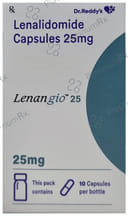
₹2,262.4
MRP ₹2,759
Lenalidomide 5mg
₹948.9

₹509.6
MRP ₹606.7
Lenalidomide 10mg
₹4,306.1

MRP ₹1,149
Lenalidomide 5mg
₹4,800
₹509.6
MRP ₹606.7
Lenalidomide 5mg
₹805
₹509.6
MRP ₹606.7
Lenalidomide 10mg
₹8,700
MRP ₹1,149
Lenalidomide 10mg
₹2,698.1
MRP ₹1,149
Lenalidomide 25mg
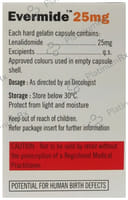
₹9,046.9
₹2,262.4
MRP ₹2,759
Lenalidomide 5mg
₹2,838.8
₹509.6
MRP ₹606.7
Lenalidomide 10mg
₹8,437.5
MRP ₹1,149
Lenalidomide 10mg
₹3,408
MRP ₹1,149
Lenalidomide 10mg
₹1,237.5
MRP ₹1,149
Lenalidomide 25mg
₹3,270
₹2,262.4
MRP ₹2,759
Lenalidomide 15mg
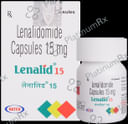
₹5,161.8
MRP ₹6,294.9
Lenalidomide 5mg
₹400
₹509.6
MRP ₹606.7
Lenalidomide 10mg
₹1,320
MRP ₹1,149
Lenalidomide 10mg
₹1,750
MRP ₹1,149
Lenalidomide 5mg
₹632
₹509.6
MRP ₹606.7
Lenalidomide 25mg
₹7,218.8
₹2,262.4
MRP ₹2,759
Lenalidomide 5mg
₹1,071.4
₹509.6
MRP ₹606.7
Lenalidomide 10mg
₹605
MRP ₹889.7
Lenalidomide 25mg
₹6,556.9
₹2,262.4
MRP ₹2,759
Lenalidomide 10mg
₹4,231.9
MRP ₹1,149
Lenalidomide 25mg
₹8,713.1
₹2,262.4
MRP ₹2,759
Lenalidomide
₹98.8