


More About Propofol
Quick Summary
Propofol is a potent, short-acting intravenous anesthetic agent used for the induction and maintenance of general anesthesia. Chemically known as an alkylphenol, it is characterized by its rapid onset of action and quick recovery period. Propofol is primarily used in hospital settings for surgical procedures and the sedation of patients requiring mechanical ventilation in intensive care units. Due to its unique formulation, it appears as a milky white emulsion and must be administered only by healthcare professionals trained in anesthesia or intensive care.
Detailed Description
Propofol is a non-barbiturate hypnotic agent that provides rapid loss of consciousness, typically within one arm-to-brain circulation time (approximately 40 seconds). Its pharmacokinetic profile is defined by a rapid distribution from the blood to the brain and other highly perfused tissues, followed by extensive metabolic clearance. This results in a "clear" recovery with a low incidence of post-operative nausea and vomiting compared to many other anesthetic agents.
The medicine is formulated as an oil-in-water emulsion because the active pharmaceutical ingredient is poorly soluble in water. It does not possess analgesic (pain-relieving) properties, so it is frequently administered alongside opioids or local anesthetics to ensure patient comfort during painful procedures.
Beyond surgical induction, Propofol is utilized for "monitored anesthesia care" during diagnostic procedures and for providing continuous sedation in critically ill patients. Strict aseptic techniques are mandatory during handling because the emulsion can support the rapid growth of microorganisms.
Uses of Propofol
Propofol may be indicated by your doctor for:
Induction of General Anesthesia
To rapidly initiate unconsciousness in adults and children before surgery.
Maintenance of General Anesthesia
To keep a patient unconscious throughout the duration of a surgical procedure.
Intensive Care Sedation
Providing sedation for intubated, mechanically ventilated adult patients in an ICU setting.
Monitored Anesthesia Care (MAC)
Providing conscious sedation for diagnostic and therapeutic procedures (e.g., colonoscopy or endoscopy).
Procedural Sedation
Short-term sedation for minor medical interventions or imaging.
Benefits of Propofol
Propofol may provide benefits such as:
- Rapid Onset: Produces a swift transition to anesthesia, reducing the time required for surgical preparation.
- Predictable Recovery: Patients typically wake up quickly and with a "clear head," facilitating faster discharge from recovery rooms.
- Anti-emetic Properties: Has a natural tendency to reduce the risk of nausea and vomiting following anesthesia.
- Ease of Titration: The depth of sedation can be precisely controlled by adjusting the infusion rate.
- Reduced Airway Irritability: Less likely to cause coughing or spasms of the airway during insertion of breathing tubes compared to some inhaled gases.
Side Effects of Propofol
Common side effects of Propofol may include
- Pain, burning, or stinging at the injection site
- Nausea or vomiting
- Headache
- Drowsiness or dizziness
Uncommon side effects of Propofol may include
- Muscle twitching or involuntary movements
- Changes in blood pressure or heart rate
- Confusion or agitation during recovery
- Rash or itching
Serious side effects that require immediate medical attention
- Severe allergic reaction (rash, hives, swelling of face/lips/tongue, difficulty breathing)
- Irregular heartbeat or chest pain
- Severe drop in blood pressure
- Trouble breathing or slowed breathing
- Seizures
- Signs of infection at the injection site (redness, swelling, pain)
- Important note: Propofol is usually given by trained healthcare professionals in hospitals or surgical centers. Because it can affect breathing, heart rate, and blood pressure, close monitoring is required during and after administration.
Directions for Use
- Propofol must only be administered by a qualified clinician trained in anesthesia or emergency airway management.
- It is delivered intravenously, either as a single slow injection (bolus) or a continuous infusion using a specialized pump.
- Continuous monitoring of heart rate, blood pressure, and oxygen saturation is mandatory during administration.
- Oxygen and resuscitation equipment must be immediately available whenever the medicine is used.
- The dosage is strictly individualized based on the patient's weight, age, and medical condition.
How it works
Propofol works by modulating the activity of the primary inhibitory neurotransmitter in the central nervous system, known as gamma-aminobutyric acid (GABA). It binds to GABA-A receptors, enhancing the effects of the neurotransmitter. This action slows down brain activity and inhibits the transmission of nerve impulses, leading to sedation and, at higher doses, a complete loss of consciousness. Because it works so quickly and is rapidly redistributed and metabolized, the depth of anesthesia can be altered almost minute-by-minute by the attending clinician.
Safety Advice for Propofol

Allergy
Unsafe
Do not use if you are allergic to propofol or any component of the formulation, including soy oil or egg lecithin. Severe allergic reactions can include rash, swelling, or breathing difficulty and require immediate emergency care.

Pregnancy
Caution
Use during pregnancy is only considered if clearly necessary in a hospital setting. Potential risks and benefits must be carefully evaluated by a healthcare professional.

Breastfeeding
Caution
Propofol is rapidly cleared from the body. Breastfeeding is usually considered safe once the patient has fully recovered from anaesthesia, but medical advice should be followed.

Driving
Unsafe
Do not drive or operate machinery for at least 24 hours after administration or until fully recovered, as sedation and impaired reflexes may persist.

Alcohol
Caution
Avoid alcohol before and after administration, as it can increase sedation and slow recovery from anaesthesia.

Liver
Caution
Use with caution in patients with liver disease, as metabolism may be affected and dose adjustment may be required in a hospital setting.

Kidney
Caution
Use with caution in patients with kidney impairment. Clinical monitoring is required during use.

Children
Caution
Can be used in paediatric anaesthesia only under stric

Elderly patients
Caution
Older adults may be more sensitive to sedative effects. Lower doses and close monitoring are usually required.
Quick Tips for Propofol
- Inform your anesthesiologist about any history of egg or soy allergies before the procedure.
- Arrange for a responsible adult to drive you home and stay with you for 24 hours after receiving this medicine.
- Expect to feel a brief "sting" or "burn" in the vein when the injection starts; this is normal and temporary.
- Avoid making any major legal or financial decisions for 24 hours post-anesthesia, as your judgment may be subtly impaired.
- Tell your doctor if you have high cholesterol or pancreatitis, as Propofol contains lipids (fats).
Storage Advice
- Propofol is stored by the hospital pharmacy, typically at room temperature (between 15°C to 22°C).
- Do not freeze the emulsion.
- Once a vial is opened, it must be used or discarded within a few hours (typically 6 to 12 hours, depending on the setting) to prevent bacterial growth.
- The medicine should not be used if the emulsion shows signs of separation (oil droplets visible).
Drug-Food Interaction
- Fasting (Mandatory): Patients must follow "nothing by mouth" (NPO) guidelines provided by their doctor before receiving Propofol to prevent aspiration.
- Egg/Soy (Unsafe): Because the medicine is formulated in an emulsion of egg lecithin and soybean oil, individuals with severe allergies to these foods are at high risk.
- General Diet (Safe): Once fully awake and cleared by medical staff, most patients can return to a normal diet.
Interactions with Other Drugs
- Opioids (Caution): When used with pain medicines like fentanyl, the risk of breathing problems and low blood pressure increases.
- Benzodiazepines (Caution): Combining with medicines like midazolam causes deeper sedation and slower recovery.
- Inhaled Anesthetics (Caution): Use with gases like sevoflurane requires dose reduction of both agents to prevent excessive anesthesia.
- Valproate (Caution): May increase the blood levels of Propofol, requiring a lower dose.
Drug-Disease Interactions
- Hyperlipidemia (Caution): Because the drug is carried in a fat emulsion, prolonged use can increase blood triglyceride levels.
- Pancreatitis (Caution): Use with care in patients with a history of pancreatitis, as the lipid load may trigger a flare-up.
- Hypovolemia (Unsafe): Patients with low blood volume or dehydration are at high risk for severe drops in blood pressure.
- Cardiac Disease (Caution): Requires careful monitoring as it can reduce heart output and blood pressure significantly.
What If You Forget to take Propofol?
Because Propofol is administered solely by healthcare professionals in a controlled clinical environment, it is not possible for a patient to miss a dose in the traditional sense. The timing and administration are managed entirely by the medical team.
Fact Box
Therapeutic Class
Anesthesiology
Action Class
Intravenous Anesthetic / Hypnotic
Chemical Class
Alkylphenol
Habit Forming
No (but high potential for misuse)
Checkout Editorial Policy
Related Medications

Propofol
MRP ₹96.2
Propofol 10mg
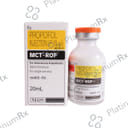
MRP ₹145.5
Propofol 10mg
MRP ₹114
Propofol 10mg
MRP ₹446.4
Propofol 10mg
MRP ₹80.4
Propofol 10mg
MRP ₹178.2
Propofol 200mg
MRP ₹158
Propofol 10mg
MRP ₹168.4
Propofol 10mg
MRP ₹366.8
Propofol 10mg
MRP ₹88.2
Propofol 10mg
MRP ₹75.9
Propofol 20mg
MRP ₹162
Propofol 10mg
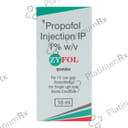
MRP ₹146.7
Propofol 10mg
MRP ₹482
Propofol 10mg
MRP ₹306.4
Propofol 1%
MRP ₹185
Propofol 10mg
MRP ₹79
Propofol 10mg
MRP ₹180
Propofol 200mg
MRP ₹178.2
Propofol 50mg
MRP ₹405
Propofol 10mg
MRP ₹189.5
Propofol 200mg
₹138.8

Propofol 200mg
MRP ₹290
Propofol 10mg
MRP ₹121.2
Propofol 100mg
₹93.6