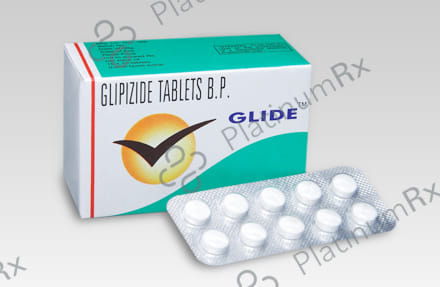
Glide 1mg Tablet 10s
Glide 1mg Tablet is a medicine used to treat type 2 diabetes mellitus in adults. It belongs to a group of medicines called sulfonylureas and helps control blood sugar levels in people with diabetes. This helps to prevent serious complications of diabetes like kidney damage and blindness.Glide 1mg Tablet may be used by itself or along with other medicines. It should be taken on an empty stomach. Take it regularly at the same time each day to get the most benefit. Your doctor will decide what dose is best for you and this may change from time to time according to how it is working.Keep taking this medicine, even if you feel well or your blood sugar levels are controlled. If you stop it without consulting your doctor, your blood sugar levels could rise and put you at risk of kidney damage, blindness, nerve problems, and loss of limbs. Remember that it is only part of a treatment program that should also include a healthy diet, regular exercise, and weight reduction as advised by your doctor. Your lifestyle plays a big part in controlling diabetes.The most common side effects of taking this medicine include diarrhea, nervousness, tremor, and flatulence. It can also sometimes cause low blood glucose levels (hypoglycemia). Make sure you recognize the signs of having low blood glucose levels, such as sweating, dizziness, headache, and shaking, and know how to deal with it. To prevent this, it's important to have regular meals and always carry a fast-acting source of glucose such as sugary food or fruit juice with you. Drinking alcohol can also increase your risk of low blood sugar levels and should be avoided. Some people may find that they put on weight with this medicine.You should not take it if you have type 1 diabetes mellitus, if you have diabetic ketoacidosis (high levels of acid in your blood), or if you have severe kidney or liver disease. Before taking this medicine, tell your doctor if you have ever had heart disease, thyroid disease, or some hormonal conditions. It may not be suitable. Pregnant or breastfeeding women should also consult their doctor before taking it. Your blood sugar levels should be checked regularly and your doctor may also advise blood tests to monitor your blood cell counts and liver function.
Written by: Shubham Kumar Singh, B pharmacy
Reviewed by: Dr. Jay Faldu, MBBS
Last updated on: 31-05-2025
Franco-Indian Pharmaceuticals Pvt. Ltd.
Delivery by
...
WHO GMP Certified
Long Expiry (>8 Months)
15 Days Easy Returns
General Information
Genuine Medicine
Pay On Delivery
Secure Payment

LegitScript Certified Online Pharmacy


More About Glide 1mg Tablet 10s
Quick Summary
Glide 1mg Tablet is a medicine used to treat type 2 diabetes mellitus in adults. It belongs to a group of medicines called sulfonylureas and helps control blood sugar levels in people with diabetes. This helps to prevent serious complications of diabetes like kidney damage and blindness.Glide 1mg Tablet may be used by itself or along with other medicines. It should be taken on an empty stomach. Take it regularly at the same time each day to get the most benefit. Your doctor will decide what dose is best for you and this may change from time to time according to how it is working.Keep taking this medicine, even if you feel well or your blood sugar levels are controlled. If you stop it without consulting your doctor, your blood sugar levels could rise and put you at risk of kidney damage, blindness, nerve problems, and loss of limbs. Remember that it is only part of a treatment program that should also include a healthy diet, regular exercise, and weight reduction as advised by your doctor. Your lifestyle plays a big part in controlling diabetes.The most common side effects of taking this medicine include diarrhea, nervousness, tremor, and flatulence. It can also sometimes cause low blood glucose levels (hypoglycemia). Make sure you recognize the signs of having low blood glucose levels, such as sweating, dizziness, headache, and shaking, and know how to deal with it. To prevent this, it's important to have regular meals and always carry a fast-acting source of glucose such as sugary food or fruit juice with you. Drinking alcohol can also increase your risk of low blood sugar levels and should be avoided. Some people may find that they put on weight with this medicine.You should not take it if you have type 1 diabetes mellitus, if you have diabetic ketoacidosis (high levels of acid in your blood), or if you have severe kidney or liver disease. Before taking this medicine, tell your doctor if you have ever had heart disease, thyroid disease, or some hormonal conditions. It may not be suitable. Pregnant or breastfeeding women should also consult their doctor before taking it. Your blood sugar levels should be checked regularly and your doctor may also advise blood tests to monitor your blood cell counts and liver function.
Benefits of Glide 1mg Tablet 10s
Treatment of Type 2 diabetes mellitus
In Treatment of Type 2 diabetes mellitus : Glide 1mg Tablet works by increasing the amount of insulin your body produces (in the pancreas). The insulin then works to lower your blood glucose level. It is usually taken once a day. You should keep taking it for as long as it is prescribed.Lowering blood glucose levels is an essential part of managing diabetes. If you can control the level you will reduce the risk of getting any of the serious complications of diabetes such as kidney damage, eye damage, nerve problems, and loss of limbs. Taking this medicine regularly along with proper diet and exercise will help you live a normal, healthy life.
Side Effects of Glide 1mg Tablet 10s
Side effects of Glide Tablet The majority of side effects typically do not necessitate medical intervention. and disappear as your body adjusts to the medicine. Doctor consultation is advised if they persist or if you�re worried about them Common side effects of Glide Hypoglycemia (low blood glucose level)Nausea Vomiting Flatulence Abdominal discomfort Diarrhea Headache Dizziness Nervousness Tremors Weight gain Abnormal sensation
Directions for Use
How to use Glide Tablet Follow your doctor's guidance regarding the dose and duration of this medication. Ingest it without breaking or crushing. Do not chew, crush or break it. Glide 1mg Tablet is to be taken empty stomach.
How it works
How Glide Tablet works Glide 1mg Tablet is an antidiabetic medication. It works by increasing the amount of insulin released by the pancreas in order to lower blood glucose.

Alcohol
Unsafe: Avoid consuming alcohol with Glide 1mg Tablet as it is deemed unsafe.

Pregnancy
Glide 1mg Tablet may be unsafe to use during pregnancy. Although there are limited studies in humans, animal studies have shown harmful effects on the developing baby. Your doctor will weigh the benefits and any potential risks before prescribing it to you. Doctor consultation is advised.

Breast feeding
Glide 1mg Tablet should be used with caution during breastfeeding. Breastfeeding should be held until the treatment of the mother is completed and the drug is eliminated from her body.

Driving
Your ability to drive may be affected if your blood sugar is too low or too high. Do not drive if these symptoms occur.

Kidney
Glide 1mg Tablet should be used with caution in patients with severe kidney disease. Dose adjustment of Glide 1mg Tablet may be needed. Doctor consultation is advised.These patients can experience very low blood sugar levels with this medicine, which may take a long time to come back to normal

Liver
Glide 1mg Tablet should be used with caution in patients with severe liver disease. Dose adjustment of Glide 1mg Tablet may be needed. Doctor consultation is advised.
What If You Forget to take Glide 1mg Tablet 10s?
If a dose of Glide 1mg Tablet is missed, take it promptly. However, if your next dose is approaching, skip the missed dose and resume your regular schedule. Avoid doubling the dose.
Storage Advice
Store in a cool and dry place, and keep the temperature below 30�C
Quick Tips for Glide 1mg Tablet 10s
Take it shortly before or with the first main meal of the day (usually breakfast). Avoid skipping meals. Be careful while driving or operating machinery until you know how Glide 1mg Tablet affects you. It can cause hypoglycemia (low blood sugar level) when used with other antidiabetic medicines, alcohol or if you delay or miss a meal. Always carry some sugary food or fruit juice with you in case you experience hypoglycemic symptoms such as cold sweats, cool pale skin, tremor and anxiety. Your doctor may check your liver function regularly. Inform your doctor if you develop symptoms, such as abdominal pain, loss of appetite, or yellowing of the eyes or skin (jaundice).
Manufacturer Address
20, Dr. E. Moses Road, Mahalaxmi, Mumbai - 400 011
FAQ
Disclaimer
PlatinumRx is committed to providing reliable and accurate information to support informed customer decisions. However, all information made available on the Platform, including product descriptions, comparisons, and other content, is provided solely for general informational purposes. Such information is not intended to diagnose, prevent, treat, or cure any medical condition, nor should it be relied upon as a substitute for professional medical advice, diagnosis, or treatment.

Customers also bought




Health Articles


More Medicines By Manufacturer
More Medicines With Salt
Top Selling Medicines
Top Selling Devices