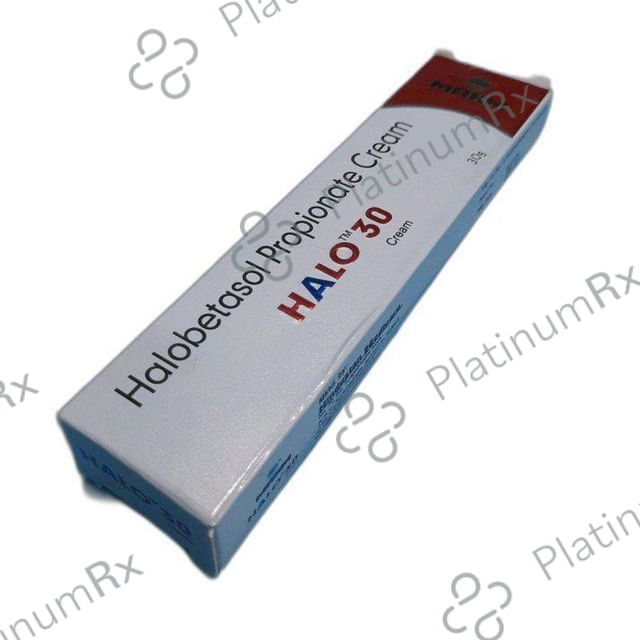
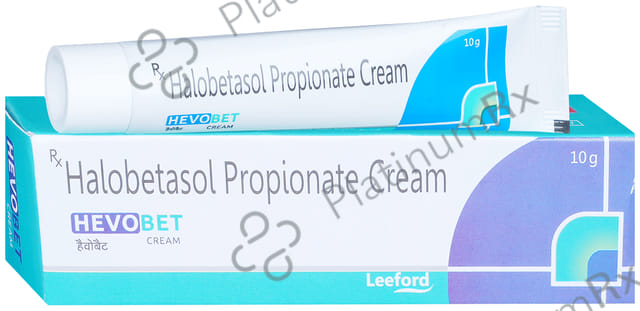
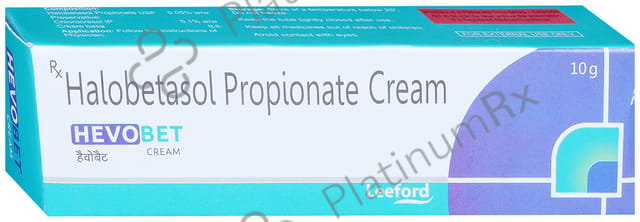
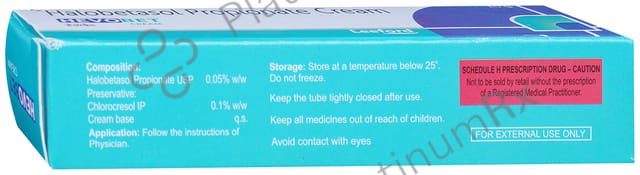
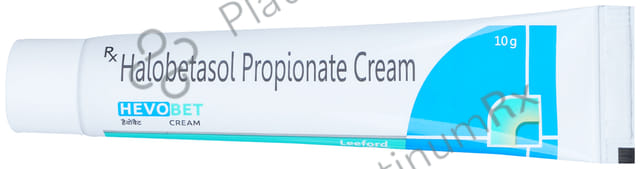
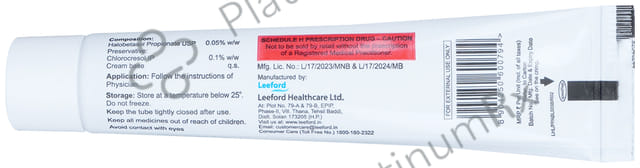
Halo 0.05% Cream 30gm

Halo 0.05% Cream 30gm is a synthetic corticosteroid used superficially for the treatment of inflammatory and pruritic (itchy) skin conditions. It belongs to Class I (highly potent) topical corticosteroids. Halo 0.05% Cream 30gm is used to reduce redness, swelling, itching, and discomfort in patients diagnosed with plaque psoriasis, lichen planus, and corticosteroid-responsive dermatoses. It works by inhibiting the inflammatory cascade, suppressing immune cell activity, and causing vasoconstriction of superficial skin blood vessels.
Delivery by
...

WHO GMP Certified
Long Expiry (>8 Months)
15 Days Easy Returns
Medicine Comparison

Genuine Medicine
Pay On Delivery
Secure Payment

LegitScript Certified Online Pharmacy


More About Halo 0.05% Cream 30gm
Quick Summary
Halo 0.05% Cream 30gm is a synthetic corticosteroid used superficially for the treatment of inflammatory and pruritic (itchy) skin conditions. It belongs to Class I (highly potent) topical corticosteroids. Halo 0.05% Cream 30gm is used to reduce redness, swelling, itching, and discomfort in patients diagnosed with plaque psoriasis, lichen planus, and corticosteroid-responsive dermatoses. It works by inhibiting the inflammatory cascade, suppressing immune cell activity, and causing vasoconstriction of superficial skin blood vessels.
Detailed Description
Halo 0.05% Cream 30gm is a synthetic corticosteroid used topically. As a Class I corticosteroid, it is among the most potent topical steroids available, typically recommended for conditions that do not respond well to less potent agents.
Halobetasol propionate binds to intracellular glucocorticoid receptors and suppresses multiple components of the inflammatory response. It reduces production of pro-inflammatory cytokines, prostaglandins, and leukotrienes. It also inhibits the migration of immune cells (neutrophils, macrophages, lymphocytes) into inflamed tissue, and causes contraction of dermal blood vessels, lowering redness and oedema (swelling due to fluid buildup).
Halo 0.05% Cream 30gm is available as cream, ointment, lotion, and foam formulations. Due to its super-potency, it must be used for the shortest effective duration, which is not more than 2 consecutive weeks. It should not be applied to the face, axillae, or groin without consulting a doctor.
Uses of Halo 0.05% Cream 30gm
Plaque psoriasis
Reduces the thick and scaly red plaques
Atopic dermatitis (eczema)
Provides rapid relief from severe inflammatory flares that are otherwise unresponsive to lower-potency steroids
Lichen planus and lichen simplex chronicus
Manages intense itching and thickening of skin
Contact dermatitis
Reduces allergic or irritant-triggered skin inflammation
Other corticosteroid-responsive dermatoses
Including discoid lupus erythematosus and nummular dermatitis
Benefits of Halo 0.05% Cream 30gm
- Extremely high potency provides rapid and significant relief from severe inflammatory skin conditions.
- Effectively reduces redness, swelling, scaling, and intense pruritus (itching).
- Available in multiple formulations like cream, ointment, lotion & foam to suit different skin types and areas.
- Foam and lotion formulations are particularly useful for hairy or large body surface areas.
- Visible improvement in psoriatic plaques could be seen within 1–2 weeks of treatment.
Side Effects of Halo 0.05% Cream 30gm
Common side effects
- Burning, stinging, or itching at the application site
- Drying and peeling of skin
- Folliculitis (inflammation of the hair follicle)
- Skin atrophy (thinning of skin), seen with prolonged use
Uncommon side effects
- Striae (stretch marks), especially in skin folds
- Telangiectasia (visible superficial blood vessels)
- Hypopigmentation or skin discolouration
- Perioral dermatitis (rash encircling the mouth) or acneiform eruptions (small pustules and papules) with facial use
Serious side effects requiring immediate attention
- Hypothalamic-pituitary-adrenal (HPA) axis suppression (reduced cortisol production), especially with prolonged use or application over large areas
- Cushing's syndrome features such as weight gain, increased fat around the base of the neck, easy bruising & wide purple stretch
- Glaucoma and cataracts with periocular application (application around the eyes)
- Severe allergic contact dermatitis to the formulation itself
Directions for Use
Apply a thin layer to the affected skin area once or twice daily as directed by the doctor. Gently rub in until absorbed. Do not apply to the face, underarms, or groin unless specifically instructed. Do not use under occlusive dressings unless directed by the doctor. Wash your hands after application. Treatment should not exceed 2 consecutive weeks. Do not use more than 50 g per week. For foam/lotion formulations, apply directly to the affected area and allow to dry.
How it works
Skin inflammation occurs when allergens, irritants, or the body's own antigens activate local immune cells, like Langerhans cells, T-lymphocytes, and mast cells. These cells release pro-inflammatory (inflammation–causing) signalling proteins called cytokines and trigger the breakdown of arachidonic acid into prostaglandins and leukotrienes. Together, these chemicals cause the blood vessels to widen, fluid to leak into tissue, immune cells to flood the area, and the skin to itch.
Halobetasol propionate passes through the skin cell membrane and attaches to glucocorticoid receptors sitting in the cell's cytoplasm. This drug-receptor complex then travels into the cell nucleus and binds to specific DNA sequences, changing which genes are switched on or off. It first switches on genes that produce anti-inflammatory proteins like lipocortin-1 and cuts off the supply of arachidonic acid, stopping production of prostaglandin and leukotriene. Then, it directly switches off genes that produce the pro-inflammatory cytokines (IL-1, IL-6, TNF-alpha, GM-CSF) and adhesion molecules that would otherwise recruit more immune cells into the skin.
The two halogen atoms, fluorine and chlorine, present in halobetasol's structure increase its binding affinity for glucocorticoid receptors and make it more resistant to being broken down by local skin enzymes, making it super-potent. Halobetasol also narrows the small blood vessels in the dermis (middle layer of the skin) by suppressing vasodilatory prostaglandins and directly activating alpha-receptors on vascular smooth muscle, helping reduce redness (erythema) and limit further immune cell entry into the inflamed tissue.
Safety Advice for Halo 0.05% Cream 30gm

Pregnancy
Caution
Avoid use over large areas or for prolonged periods. Potential risk of foetal growth restriction. Consult your doctor before use.

Breastfeeding
Caution
Avoid applying to the breast area. Use the minimum effective dose for the shortest duration after consulting your doctor.

Children
Caution
Children are more susceptible to systemic absorption and HPA axis suppression due to a higher skin surface area-to-body weight ratio. Use after consulting your doctor.
Drug-Food Interaction
There are no clinically significant food interactions of Halo 0.05% Cream 30gm at recommended doses. Systemic absorption is usually minimal with correct use.
Interactions with Other Drugs
Other topical corticosteroids
Caution
Concurrent use of multiple topical steroids increases total steroid load and systemic absorption risk.
Antifungals (topical)
Safe
Often co-prescribed with halobetasol when secondary fungal infection is present; not a harmful interaction.
CYP3A4 inhibitors (ketoconazole, ritonavir)
Caution
May reduce systemic metabolism of any absorbed halobetasol, increasing the risk of systemic corticosteroid effects.
Immunosuppressants
Caution
Additive immune suppression increases infection risk, particularly with systemic absorption.
Drug-Disease Interactions
Skin infections (bacterial, fungal, viral): Halobetasol suppresses local immune defences and must not be used on infected skin without concurrent antimicrobial treatment. It can mask and worsen infections.
Diabetes mellitus: Systemic absorption, especially with prolonged use or occlusion, may raise blood glucose levels.
Glaucoma: Periocular application increases the risk of intraocular pressure. Thus, avoid application near the eyes.
Cushing's syndrome: Pre-existing adrenal suppression makes patients more vulnerable to further HPA axis suppression.
Atrophic skin conditions: Avoid in areas of pre-existing skin atrophy, as halobetasol worsens skin thinning.
Overdose
Topical overdose (excessive application or prolonged use) can cause HPA axis suppression, which can present as fatigue, weight gain, moon face, and high blood glucose. Stopping the medication abruptly may cause adrenal insufficiency. If systemic effects are suspected, consult a doctor immediately. Treatment involves gradual dose tapering under medical supervision.
What If You Forget to take Halo 0.05% Cream 30gm?
If you miss an application, apply for it as soon as you remember. If it is nearly time for the next application, skip the missed dose and resume your normal schedule. Do not apply a double dose to compensate. Since this is a topical medicine, missing a single application is generally not critical.
FAQ
References
- https://www.accessdata.fda.gov/drugsatfda_docs/label/2004/19967s010lbl.pdf
- https://dailymed.nlm.nih.gov/dailymed/lookup.cfm?setid=1b3fd144-9ebd-46b0-b240-8bca47d101cd
- https://www.accessdata.fda.gov/drugsatfda_docs/label/2018/209355s000lbl.pdf
- https://pubmed.ncbi.nlm.nih.gov/19217694/
- https://pubmed.ncbi.nlm.nih.gov/25396122/
- https://pubmed.ncbi.nlm.nih.gov/9854452/
- https://pubmed.ncbi.nlm.nih.gov/1757605/
Fact Box
Therapeutic Class
Topical corticosteroid for inflammatory dermatoses
Action Class
Anti-inflammatory, antipruritic, & vasoconstrictive
Chemical Class
Halogenated synthetic glucocorticoid (pregnane derivative)
Habit Forming
No
Disclaimer
PlatinumRx is committed to providing reliable and accurate information to support informed customer decisions. However, all information made available on the Platform, including product descriptions, comparisons, and other content, is provided solely for general informational purposes. Such information is not intended to diagnose, prevent, treat, or cure any medical condition, nor should it be relied upon as a substitute for professional medical advice, diagnosis, or treatment.

Customers also bought

Health Articles


More Medicines By Manufacturer
More Medicines With Salt
Top Selling Medicines
Top Selling Devices