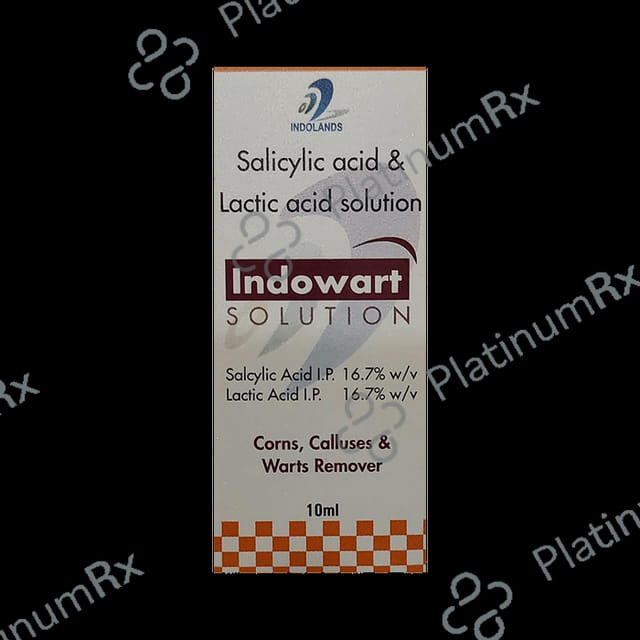
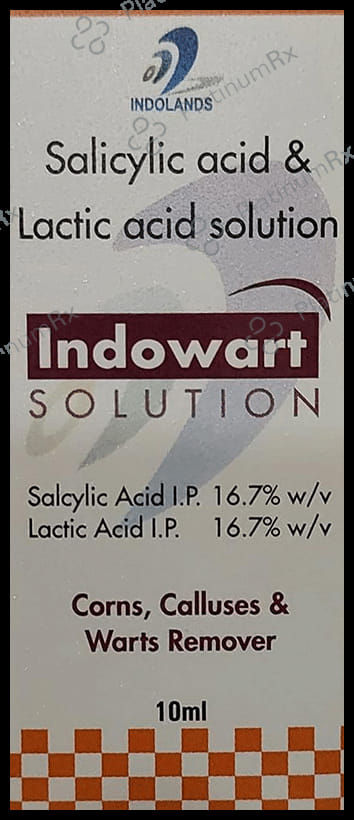
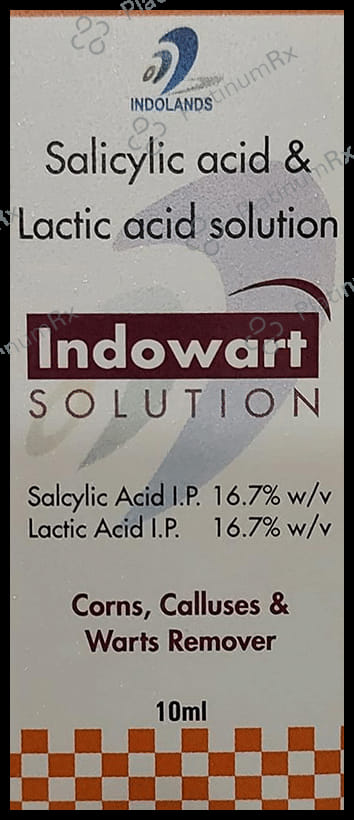
Indowart Solution

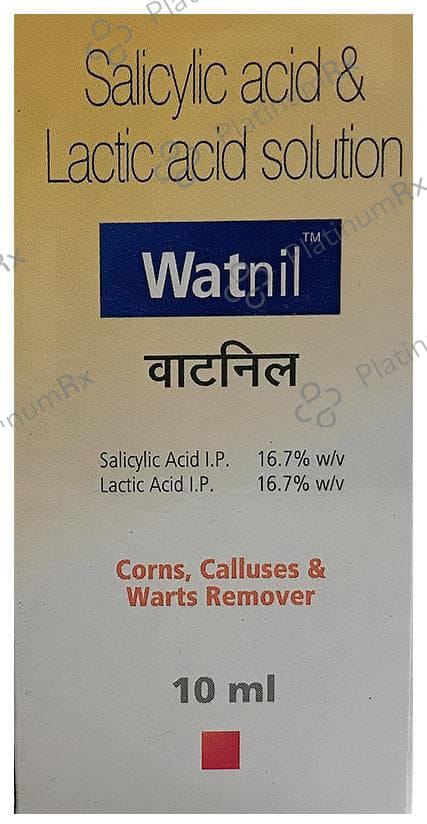
Indowart Solution is a topical keratolytic combination often used for the removal of common warts (verruca vulgaris), plantar warts (verruca plantaris), corns, calluses, and other hyperkeratotic skin conditions. Salicylic acid (beta-hydroxy acid) softens and dissolves thickened, abnormally keratinised skin, while lactic acid is an alpha-hydroxy acid that supports exfoliation and softens the stratum corneum (outermost layer of the skin).
Written by: Syed Jommy Abbas, B. Pharma
Reviewed by: Dr. Devika Rani, MBBS
Last updated on: 20-05-2026
Delivery by
...

WHO GMP Certified
Long Expiry (>8 Months)
15 Days Easy Returns
Medicine Comparison

Genuine Medicine
Pay On Delivery
Secure Payment

LegitScript Certified Online Pharmacy


More About Indowart Solution
Quick Summary
Indowart Solution is a topical keratolytic combination often used for the removal of common warts (verruca vulgaris), plantar warts (verruca plantaris), corns, calluses, and other hyperkeratotic skin conditions. Salicylic acid (beta-hydroxy acid) softens and dissolves thickened, abnormally keratinised skin, while lactic acid is an alpha-hydroxy acid that supports exfoliation and softens the stratum corneum (outermost layer of the skin).
Detailed Description
Keratinisation is the process by which soft, living skin cells fill with keratin protein and transform into the tough, flat, dead cells that make up the skin's protective outer layer. Excessive keratinisation produces the thickened skin of warts, corns, and calluses. Indowart Solution is one of the common treatments for cutaneous warts and hyperkeratotic skin. Salicylic acid is the established first-line topical agent for non-genital cutaneous warts, supported by clinical evidence showing significantly higher cure rates than placebo.
Lactic acid is added as a humectant that softens dense keratin so salicylic acid can penetrate more effectively, and has its own mild keratolytic action.
It is not appropriate for facial, anogenital, or mucosal lesions, moles, birthmarks, or warts with hair growing from them. [MEDICATION_NAME] should not be used by people with diabetes or those with impaired peripheral circulation due to the risk of skin breakdown.
Uses of Indowart Solution
Common warts (verruca vulgaris)
First-line self-treatment for non-genital, non-facial common warts on hands, fingers, knees, and elbows.
Plantar warts (verruca plantaris)
Treatment of warts on the soles of the feet.
Corns and calluses
Softening and gradual removal of thickened, hyperkeratotic skin caused by friction or pressure.
Hyperkeratotic skin conditions
Adjunct in conditions involving abnormal keratinisation, such as keratosis pilaris and palmoplantar keratoderma, under medical supervision.
Mosaic warts
Clusters of plantar warts where individual treatment is inefficient.
Benefits of Indowart Solution
- Effective first-line treatment for cutaneous warts.
- Can be applied by oneself at home, reducing discomfort.
- Combines salicylic acid for keratin dissolution and lactic acid for skin softening.
- Minimal systemic absorption when used as directed on small areas.
- Painless compared with cryotherapy or curettage, as no local anaesthesia is required.
Side Effects of Indowart Solution
Common
- Mild skin irritation, redness, or stinging at the application site
- Dryness, peeling, or flaking of the treated area
- White discolouration or maceration (breaking) of the surrounding skin if the product spreads
- Mild burning sensation after application
Uncommon
- Contact dermatitis
- Skin discolouration (hyperpigmentation or hypopigmentation) after healing
- Localised pain
- Small ulceration or skin breakdown if applied beyond the lesion
Serious side effects requiring immediate attention
- Severe allergic reactions, which may present as rash, hives, swelling of the face, lips, or tongue, difficulty breathing
- Salicylate toxicity (rare), which may present as ringing in the ears, nausea, vomiting, dizziness, confusion, rapid breathing
- Severe skin reactions, deep ulceration, or secondary infection Chemical burn from accidental contact with the eyes, mouth, or mucous membranes
Directions for Use
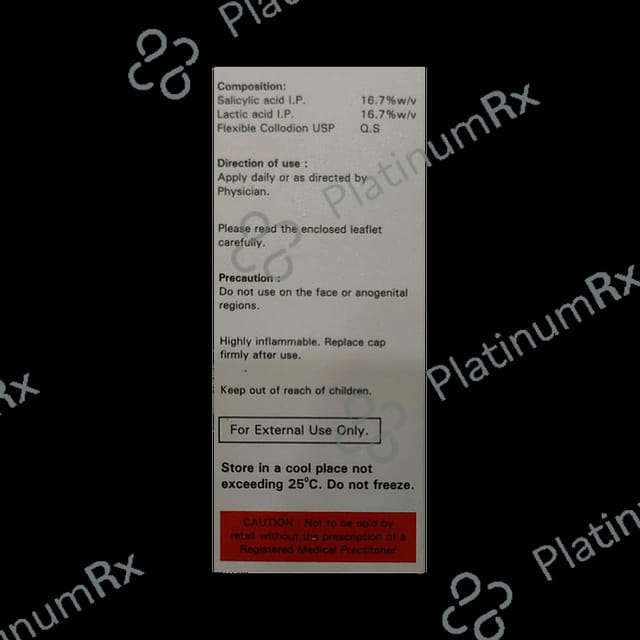
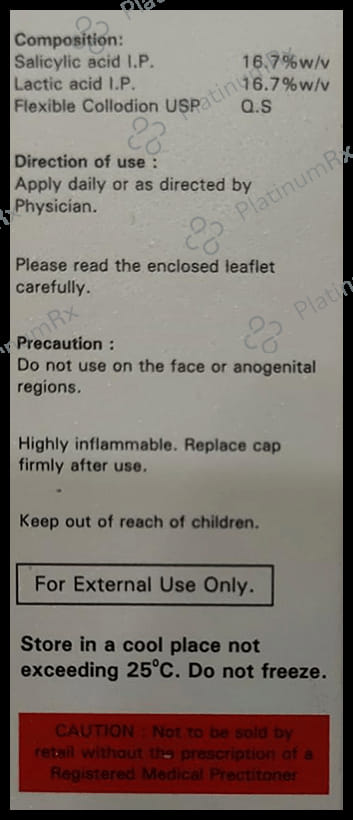
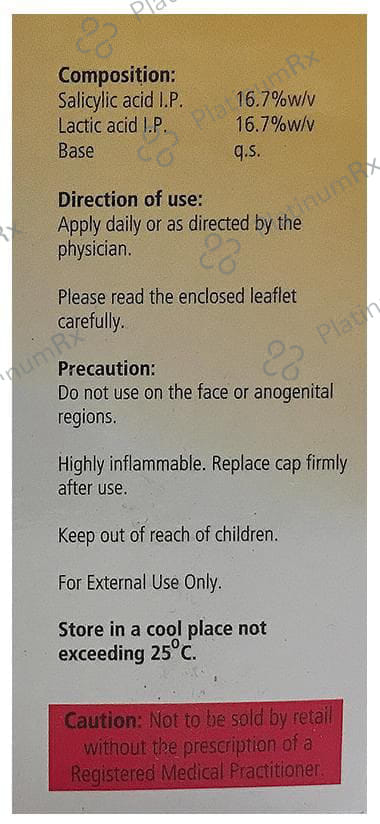
Wash and dry the affected area before each application. Soak the lesion in warm water for 5 minutes beforehand to soften the skin and improve penetration. Protect surrounding healthy skin with petroleum jelly. Using the applicator brush, apply 1 drop at a time directly onto the lesion only. Do not let it spread onto normal skin. Allow it to dry, forming a clear film. Apply once or twice daily as directed. Between applications, gently file off the softened white layer of dead skin with an emery board or pumice stone before reapplying. Continue daily for up to 12 weeks for warts and up to 2 weeks for corns and calluses. Wash your hands thoroughly after each application. If the lesion doesn’t improve after the recommended duration, or irritation worsens, consult a doctor.
How it works
Warts are caused by HPV infection of basal keratinocytes, while corns and calluses result from chronic mechanical pressure or friction. Indowart Solution addresses these through complementary actions of its two active ingredients.
Salicylic acid is a beta-hydroxy acid that causes a keratolytic effect by dissolving the intercellular cement holding keratinised cells together. As these bridges break, the abnormal keratin layer softens and gradually sloughs off. With repeated daily application, salicylic acid progressively thins the wart or callus until it is removed. In case of warts, this also strips away HPV-infected cells and may trigger a localised immune response that helps clear residual virus.
Lactic acid is an alpha-hydroxy acid acting as a humectant, drawing water into the stratum corneum to soften keratin. It also improves salicylic acid penetration and works as a mild keratolytic that loosens corneocyte (dead cells on the outermost layer of the skin) bonds by lowering surface pH. Together, they produce gradual, controlled chemical removal of affected tissue while sparing deeper, healthy layers.
Safety Advice for Indowart Solution

Pregnancy
Caution
Topical use on small areas is generally considered low risk, but salicylates can be absorbed. Hence, avoid extensive use.

Breastfeeding
Unsafe
Avoid application on the breast or nipple area.

Driving
Safe
Does not affect alertness, vision, or reaction time.
Drug-Food Interaction
- Food: No clinically relevant food interactions.
- Alcohol: No interaction with topical use.
Interactions with Other Drugs
Topical retinoids (tretinoin, adapalene, tazarotene)
MODERATE
Simultaneous use on the same area significantly increases skin irritation, dryness, and peeling.
Benzoyl peroxide (topical)
MODERATE
Increases irritation and dryness when used together.
Other topical keratolytics (urea, glycolic acid, lactic acid creams)
MODERATE
Increases the keratolytic effect, damaging skin, when used together.
Topical corticosteroids
CAUTION
May reduce the effectiveness of medication by suppressing the local inflammatory response.
Oral salicylates / aspirin
CAUTION
Additional systemic salicylate exposure with extensive topical application
Anticoagulants (warfarin, DOACs)
CAUTION
Extensive application of high-strength salicylate could increase bleeding risk.
Photosensitising drugs (tetracyclines, thiazides, fluoroquinolones)
CAUTION
Increased photosensitivity.
Drug-Disease Interactions
- Diabetes mellitus (AVOID): Impaired wound healing increases the risk of severe ulceration and secondary infection from chemical exfoliation.
- Peripheral vascular disease (AVOID): Reduced blood supply impairs healing.
- Salicylate / NSAID hypersensitivity (AVOID): High risk of cross-reactivity.
- Atopic dermatitis (USE WITH CAUTION): Localised irritation is more likely.
- Active skin infection at the application site (AVOID): Avoid application of chemicals on active skin infection.
- Renal or hepatic impairment (USE WITH CAUTION): Not a concern at usual topical doses on small areas; however, avoid extensive application.
Overdose
Topical overdose may present as severe local irritation, redness, burning, blistering, or chemical burn, especially if the product spreads onto healthy skin. Systemic salicylate toxicity from topical use is rare but possible with extensive application, especially in children, on broken skin, or following accidental ingestion. Symptoms may include tinnitus, nausea, vomiting, headache, dizziness, hyperventilation, confusion, and, in severe cases, metabolic acidosis. Management includes discontinuing the use, washing off residual product with soap and water, and seeking emergency medical care.
What If You Forget to take Indowart Solution?
If you miss an application, apply Indowart Solution as soon as you remember on the same day. If it is close to the time for the next dose, skip the missed application and continue with your normal schedule. Do not apply two doses at once, as it may cause irritation, burning, or skin breakdown. Missing an occasional dose does not affect the overall outcome, but skipping doses for several days may slow progress.
FAQ
References
- https://www.accessdata.fda.gov/drugsatfda_docs/omuf/monographs/OTCMonograph_M028-WartRemoverDrugProductsforOTCHumanUse10012021.pdf
- https://www.ncbi.nlm.nih.gov/pmc/articles/PMC1855297/
- https://pubmed.ncbi.nlm.nih.gov/22196053/
- https://www.sciencedirect.com/topics/biochemistry-genetics-and-molecular-biology/keratinization
- https://www.cochranelibrary.com/cdsr/doi/10.1002/14651858.CD001781.pub3/full
- https://onlinelibrary.wiley.com/doi/10.1111/bjd.13310
Fact Box
Action Class
Topical keratolytic
Chemical Class
Beta-hydroxy acid (salicylic acid) + alpha-hydroxy acid (lactic acid)
Habit Forming
No
Disclaimer
PlatinumRx is committed to providing reliable and accurate information to support informed customer decisions. However, all information made available on the Platform, including product descriptions, comparisons, and other content, is provided solely for general informational purposes. Such information is not intended to diagnose, prevent, treat, or cure any medical condition, nor should it be relied upon as a substitute for professional medical advice, diagnosis, or treatment.

Customers also bought
Health Articles






More Medicines By Manufacturer
More Medicines With Salt
Top Selling Medicines
Top Selling Devices