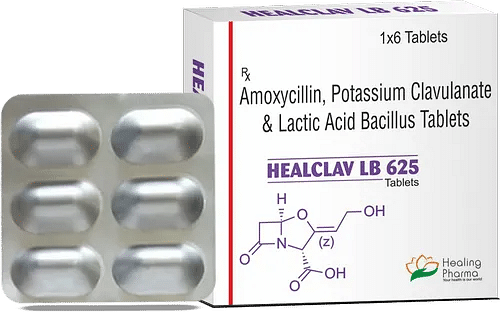
Pdlin Plus 500/125mg Tablet 10s

Amoxicillin 500mg + Clavulanic Acid 125mg + Lactic Acid (Lactobacillus) 60M is a fixed-dose combination tablet used for bacterial infections. It combines amoxicillin, a penicillin-class antibiotic, with clavulanic acid, a beta-lactamase inhibitor that helps amoxicillin work against bacteria that would otherwise resist it, and Lactic Acid Bacillus (Lactobacillus), a probiotic added to support gut bacteria during antibiotic treatment [1][2]. Doctors prescribe this combination for infections of the respiratory tract, ear, sinus, skin, and urinary tract, among others, caused by bacteria sensitive to amoxicillin-clavulanate [2]. The probiotic component does not treat the infection itself; it is included to help offset the disruption that antibiotics can cause to normal gut flora [4][5].
Written by: Syed Jommy Abbas, B. Pharma
Reviewed by: Dr. Rohit Kolhe, MBBS
Last updated on: 16-09-2026
Delivery by
...

WHO GMP Certified
Long Expiry (>8 Months)
15 Days Easy Returns
Medicine Comparison

Genuine Medicine
Pay On Delivery
Secure Payment

LegitScript Certified Online Pharmacy

More About Pdlin Plus 500/125mg Tablet 10s
Quick Summary
Amoxicillin 500mg + Clavulanic Acid 125mg + Lactic Acid (Lactobacillus) 60M is a fixed-dose combination tablet used for bacterial infections. It combines amoxicillin, a penicillin-class antibiotic, with clavulanic acid, a beta-lactamase inhibitor that helps amoxicillin work against bacteria that would otherwise resist it, and Lactic Acid Bacillus (Lactobacillus), a probiotic added to support gut bacteria during antibiotic treatment [1][2]. Doctors prescribe this combination for infections of the respiratory tract, ear, sinus, skin, and urinary tract, among others, caused by bacteria sensitive to amoxicillin-clavulanate [2]. The probiotic component does not treat the infection itself; it is included to help offset the disruption that antibiotics can cause to normal gut flora [4][5].
Detailed Description
This tablet brings together three ingredients that work in different ways. Amoxicillin is a semisynthetic penicillin that kills susceptible bacteria by stopping them from building their cell walls [2]. On its own, amoxicillin can be broken down by an enzyme called beta-lactamase that some bacteria produce as a defence mechanism. Clavulanic acid blocks this enzyme, which is why it is described as having "minimal antimicrobial activity but prevents bacterial degradation of beta-lactams," effectively widening the range of bacteria amoxicillin can act against [2][3]. Together, amoxicillin and clavulanate are used for infections of the lower respiratory tract, middle ear, sinuses, skin and skin structures, and urinary tract [2].
The third ingredient, Lactic Acid Bacillus (Lactobacillus), is a probiotic. Antibiotics do not only act on the bacteria causing an infection; they can also reduce the population of helpful bacteria that normally live in the gut, which is one reason diarrhoea and stomach upset are common during antibiotic courses [2][3]. Research reviewed by the U.S. National Institutes of Health has found that certain Lactobacillus-containing probiotics, taken during antibiotic treatment, have a protective effect against antibiotic-associated diarrhoea in both children and adults, although this effect depends on the specific strain and dose used [4][5][6]. This tablet's Lactobacillus content of 60 million spores is included with that supportive purpose in mind.
This is a prescription combination and should be used only for the infection and duration a doctor has assessed, based on the type of infection and, where relevant, culture or sensitivity findings. Because it contains a penicillin, anyone with a known penicillin allergy needs to tell their doctor before starting it [1][2]. People with liver or kidney disease, or those who have previously developed jaundice or liver problems while taking amoxicillin or amoxicillin-clavulanate, also need medical supervision before use [1][3].
Composition
This tablet contains three active ingredients, each contributing a distinct role:
- Amoxicillin 500mg: A semisynthetic penicillin-class antibiotic. It is the component that directly kills susceptible bacteria, by stopping them from building their cell walls [2].
- Clavulanic Acid 125mg: A beta-lactamase inhibitor. On its own it has minimal antibacterial activity, but it blocks the beta-lactamase enzyme that some bacteria use to break down amoxicillin, which widens the range of bacteria the combination can act against [2][3].
- Lactic Acid Bacillus (Lactobacillus) 60 million spores: A probiotic ingredient. It does not act against the infection; it is included to support the population of normal gut bacteria that antibiotic treatment can disrupt [4][5][6].
Together, the amoxicillin-clavulanate pairing provides the antibacterial effect, while the Lactobacillus component is a supportive addition aimed at the gut-related side effects that can accompany antibiotic use [2][4].
Uses of Pdlin Plus 500/125mg Tablet 10s
Bacterial infections treated with amoxicillin-clavulanate
This combination is prescribed for infections caused by bacteria sensitive to amoxicillin-clavulanate, including:
- Respiratory tract infections, such as bacterial bronchitis and pneumonia [2]
- Ear infections (otitis media) [2]
- Sinus infections (sinusitis) [2]
- Skin and skin structure infections [2]
- Urinary tract infections [2]
Support during antibiotic treatment
The Lactic Acid Bacillus (Lactobacillus) component does not treat the infection itself. It is included to help support the population of normal gut bacteria that antibiotic treatment can disrupt, addressing a common cause of on-treatment stomach upset [4][5][6].
This combination should be used only for the specific bacterial infection a doctor has diagnosed. The choice of antibiotic and the length of treatment depend on the organism involved and, where relevant, culture or sensitivity testing, so this tablet should not be used for a new illness episode without a doctor's assessment.
Benefits of Pdlin Plus 500/125mg Tablet 10s
- Broader antibacterial coverage. Clavulanic acid protects amoxicillin from being inactivated by beta-lactamase-producing bacteria, so the combination can act against organisms that plain amoxicillin alone may not clear [2][3].
- Coverage across several common infection sites. The amoxicillin-clavulanate combination is used for infections of the respiratory tract, ear, sinus, skin, and urinary tract, which means one prescription can address several common bacterial infection types depending on diagnosis [2].
- Built-in gut support. The addition of Lactic Acid Bacillus is intended to help counter the disruption to gut bacteria that antibiotics can cause, addressing a common source of on-treatment stomach discomfort [2][4][5].
- Established mechanism. The cell-wall-inhibiting action of amoxicillin and the enzyme-blocking action of clavulanic acid are well-characterised mechanisms described in standard pharmacology and prescribing references [2][3].
Side Effects of Pdlin Plus 500/125mg Tablet 10s
Common Side Effects (Usually Mild and may lessen with continued use)
- Diarrhoea or loose stools, reported in around 9 percent of patients in prescribing data for amoxicillin-clavulanate [2]
- Nausea, reported in around 3 percent of patients [2]
- Skin rash or hives, reported in around 3 percent of patients [2]
- Upset stomach, vomiting [1]
- Vaginal itching or discharge (thrush) [1][3]
Serious Side Effects (Seek Urgent Medical Attention)
- Signs of an anaphylactic or severe allergic reaction, such as difficulty breathing, swelling of the face or throat, or widespread hives, which need immediate emergency treatment [2]
- Watery or bloody diarrhoea with stomach cramps and fever, during treatment or for up to two months or more afterward, which can signal Clostridium difficile-associated colitis [1][2]
- Severe vomiting occurring 1 to 4 hours after a dose [1]
- Yellowing of the skin or eyes, unusual tiredness, or loss of appetite, which can point to liver problems such as cholestatic jaundice [1][2]
- Peeling, blistering, or shedding of the skin [1]
- Signs of kidney inflammation such as a marked drop in urine output, which can indicate interstitial nephritis [2]
Directions for Use
- Swallow the tablet whole with a full glass of plain water. Do not crush, chew, or break it unless the doctor or pharmacist has specifically said the formulation allows it [1].
- Take the dose with a meal or snack, or right after eating. This is how the combination is generally taken, and it can help reduce nausea while also improving absorption of the clavulanate component [1][2].
- Keep doses evenly spaced through the day, for example every 8 to 12 hours depending on what the doctor has prescribed, and try to take each dose around the same time daily so the antibiotic level in the body stays steady [1][3].
- Stay consistent with food intake around each dose, either always with food or as specifically directed, since this keeps absorption predictable through the course.
- Complete the full course exactly as prescribed, even if symptoms improve after a few days. Stopping early can allow surviving bacteria to multiply again and may contribute to antibiotic resistance [1].
- Do not use this tablet for a new episode of illness or share it with another person without consulting a doctor first, since the correct antibiotic and duration depend on the specific infection being treated.
How it works
Amoxicillin is a beta-lactam penicillin antibiotic. It works by binding to penicillin-binding proteins on the bacterial cell wall and blocking an enzyme called DD-transpeptidase (the enzyme that cross-links strands of peptidoglycan, the mesh-like material that forms the bacteria's protective outer wall) [2]. Without an intact cell wall, susceptible bacteria cannot survive, and this leads to bacterial cell lysis, meaning the bacteria breaks apart [2].
Clavulanic acid does not kill bacteria on its own in any meaningful way. Instead, it binds to and deactivates beta-lactamase, an enzyme that certain bacteria produce specifically to break down and inactivate penicillins like amoxicillin. By neutralising this enzyme, clavulanic acid preserves amoxicillin's ability to act against bacteria that would otherwise be resistant to it [2][3].
Lactic Acid Bacillus (Lactobacillus) works through a different route entirely. It is a probiotic, meaning it supplies live, beneficial bacteria that are meant to support the population of normal gut flora. Antibiotic treatment can reduce this population as a side effect of clearing the target infection, and probiotics such as Lactobacillus are included to help offset that disruption, with clinical review data showing a protective effect against antibiotic-associated diarrhoea for specific well-studied strains [4][5][6].
Safety Advice for Pdlin Plus 500/125mg Tablet 10s

Pregnancy
Limited information
Amoxicillin-clavulanate is generally considered usable in pregnancy, but a doctor should always confirm suitability for the individual's situation before it is prescribed [1][3].

Breastfeeding
Limited information
Ampicillin-class antibiotics pass into breast milk, so caution is advised while nursing; a breastfed infant should be watched for diarrhoea, thrush, rash, poor feeding, or unusual tiredness, and a doctor should be informed [1][2][3].

Alcohol
Limited information
Prescribing information for co-amoxiclav does not describe a specific interaction with alcohol, but feeling unwell on antibiotics is a reasonable reason to limit drinking during a course [3].

Driving
Limited information
This medicine is not expected to affect driving or the ability to operate machinery for most people; however, if it causes dizziness, driving or using machinery should be avoided until this passes [3].

Kidney
Limited information
People with kidney disease need a doctor's review before starting this combination, since amoxicillin-clavulanate dosing depends on kidney function; severely reduced kidney function (GFR under 30 mL/min) requires specific adjustment and certain higher-strength formulations should be avoided [1][2][3].

Liver
Limited information
This combination should not be used by anyone with a history of jaundice or liver problems linked to amoxicillin or amoxicillin-clavulanate use, and liver function should be monitored in people with existing liver impairment [1][2][3].

Children
Limited information
Suspected glandular fever (infectious mononucleosis) is a reason to avoid this antibiotic, since a rash can occur; use in children and elderly patients should be guided by a doctor's assessment of the infection and any other health conditions [1][3].
Quick Tips for Pdlin Plus 500/125mg Tablet 10s
- Take doses with food and a full glass of plain water.
- Keep dosing times evenly spaced across the day as advised by the doctor.
- Finish the entire course, even once symptoms improve.
- Watch for diarrhoea that is watery, bloody, or accompanied by fever, and contact a doctor if this happens.
- Tell the doctor about any known penicillin allergy before the first dose.
- Mention any liver or kidney condition before starting treatment.
- Report new rash, breathing difficulty, or swelling right away.
navigation_tabs.precautions_for
Before starting this combination, tell the doctor or pharmacist about the following, so they can judge whether it is appropriate:
- Any allergy history: not only to penicillins, but to any medication, food, or other substance, since this helps the doctor assess the overall risk of a reaction [1].
- All other medicines being taken: prescription and non-prescription medications, vitamins, nutritional supplements, and herbal products should all be disclosed, since several of them can interact with this combination [1].
- Existing or past medical conditions: including kidney disease, liver disease, asthma, hay fever, hives, or a history of mononucleosis, so the doctor can weigh these against the antibiotic being prescribed [1][3].
- Pregnancy or breastfeeding status: tell the doctor if pregnant, planning to become pregnant, or breastfeeding, and call the doctor promptly if pregnancy occurs during treatment [1].
- Any past reaction to an antibiotic: including skin rash or swelling of the face and throat after taking co-amoxiclav or any other antibiotic, since this is relevant even if the earlier reaction seemed minor [3].
- Upcoming procedures: mention this medicine to any doctor, dentist, or surgeon involved in planned treatment, since it should be factored into their assessment before the procedure.
These precautions are about what to disclose before treatment starts; they do not replace the doctor's own review of suitability, and the tablet should be taken only as prescribed.
Storage Advice
Store the tablets at room temperature, between 20°C and 25°C (68°F to 77°F), in a tightly closed, light-resistant container, away from moisture [2]. Keep the medicine out of reach and sight of children and pets. Do not use tablets beyond their printed expiry date.
Drug-Food Interaction
Food does not reduce amoxicillin absorption, and taking the tablet with a meal is commonly advised because it can lessen nausea and improves absorption of the clavulanate portion [2]. No specific restriction on particular foods, fruit juices, or caffeine is described in the amoxicillin-clavulanate prescribing information reviewed for this article [1][2][3].
Interactions with Other Drugs
- Probenecid: can increase and prolong blood levels of amoxicillin, so combined use needs a doctor's supervision [2].
- Allopurinol: taking it together with ampicillin-class antibiotics has been linked to a higher chance of skin rash [2].
- Oral contraceptives: amoxicillin-clavulanate may reduce the effectiveness of hormonal birth control pills, so backup contraception is advisable during treatment [1].
- Warfarin and other anticoagulants: co-amoxiclav can affect anticoagulant control, so this combination needs medical monitoring [3].
- Methotrexate: should only be combined with this antibiotic under medical guidance, as interactions have been reported [3].
Drug-Disease Interactions
- Penicillin allergy: a documented allergic reaction to any penicillin is a reason to avoid this combination altogether [2][3].
- Prior amoxicillin/clavulanate-associated liver injury: a history of jaundice or hepatic dysfunction linked to this combination is a contraindication to using it again [1][2][3].
- Kidney disease: reduced kidney function changes how the drug is cleared from the body and needs dose review by a doctor [1][2][3].
- Liver disease: existing liver impairment calls for monitoring of liver function during treatment [2][3].
- Suspected glandular fever (infectious mononucleosis): amoxicillin-type antibiotics are best avoided in this setting because of a higher chance of skin rash [3].
- Compromised immune function: because the tablet contains a live probiotic organism, people with severely weakened immune systems or serious underlying illness should only use it under medical supervision, since the NIH National Center for Complementary and Integrative Health notes that the risk of harm from probiotics is greater in people with severe illness or a compromised immune system [4].
Daily Dose
Consumer prescribing information for amoxicillin and clavulanic acid describes typical adult dosing as one dose taken every 8 to 12 hours, depending on the strength and the infection being treated [1][2]. The exact frequency, strength, and total duration of this tablet must be set by the prescribing doctor based on the type of infection, its severity, and the patient's kidney and liver function. This information is general background and is not a substitute for the doctor's prescription.
Overdose
Reported effects of amoxicillin-clavulanate overdose mainly involve the stomach and gut, along with disturbances in the body's fluid and salt balance. Management is supportive, and maintaining adequate fluid intake and urine output is recommended to help prevent crystals forming in the urine (crystalluria) [2]. In severe cases, haemodialysis can help remove both amoxicillin and clavulanate from the body [2]. Anyone who has taken more than the prescribed dose, or who shows symptoms such as persistent vomiting, severe stomach pain, or reduced urination, should seek emergency medical care immediately.
What If You Forget to take Pdlin Plus 500/125mg Tablet 10s?
If a dose is missed, take it as soon as it is remembered. If it is almost time for the next scheduled dose, skip the missed one and continue with the regular dosing schedule. Do not take two doses together to make up for the one that was missed [1].
When to contact doctor
Contact a doctor immediately if any of the following occur:
- Difficulty breathing, swelling of the face, lips, or throat, or widespread hives [2]
- Watery or bloody diarrhoea with stomach cramps or fever, whether during treatment or in the weeks after finishing it [1][2]
- Yellowing of the skin or eyes, dark urine, or unusual tiredness [1][2]
- Skin that blisters, peels, or sheds [1]
- Severe or persistent vomiting [1]
- A significant drop in urine output [2]
- Symptoms that do not improve, or that get worse, after a few days of treatment
This article is for informational purposes only and is not a substitute for professional medical advice. Always consult a registered medical practitioner before starting, stopping, or changing any medicine.
FAQ
References
- 1. MedlinePlus, National Library of Medicine, NIH. "Amoxicillin and Clavulanic Acid."
- 2. StatPearls, NCBI Bookshelf, NIH. "Amoxicillin Clavulanate."
- 3. NHS. "Co-amoxiclav."
- 4. National Center for Complementary and Integrative Health (NCCIH), NIH. "Probiotics: Usefulness and Safety."
- 5. Office of Dietary Supplements (ODS), NIH. "Probiotics for the Prevention and Treatment of Antibiotic-Associated Diarrhea."
- 6. PMC, NCBI, NIH. "Probiotics for the prevention of antibiotic-associated diarrhoea: a systematic review and meta-analysis."
Fact Box
Therapeutic Class
Antibacterial (systemic), with a probiotic adjunct for gut flora support
Action Class
Beta-lactam antibiotic + beta-lactamase inhibitor + probiotic (Lactic Acid Bacillus)
Chemical Class
Aminopenicillin (amoxicillin) combined with a clavam beta-lactamase inhibitor (clavulanic acid) and Lactobacillus spores
Habit Forming
No
Disclaimer
PlatinumRx is committed to providing reliable and accurate information to support informed customer decisions. However, all information made available on the Platform, including product descriptions, comparisons, and other content, is provided solely for general informational purposes. Such information is not intended to diagnose, prevent, treat, or cure any medical condition, nor should it be relied upon as a substitute for professional medical advice, diagnosis, or treatment.

Customers also bought





Health Articles


More Medicines By Manufacturer
More Medicines With Salt
Top Selling Medicines
Top Selling Devices