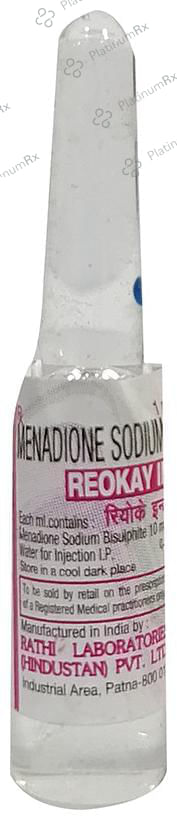
Reokay Injection

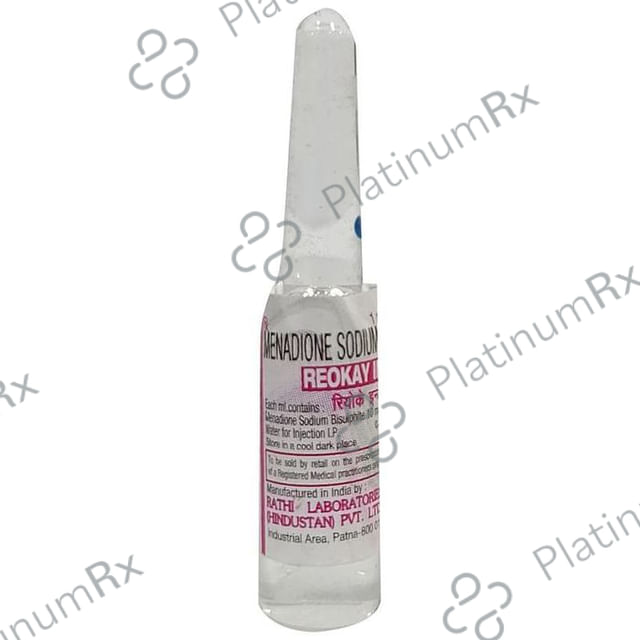
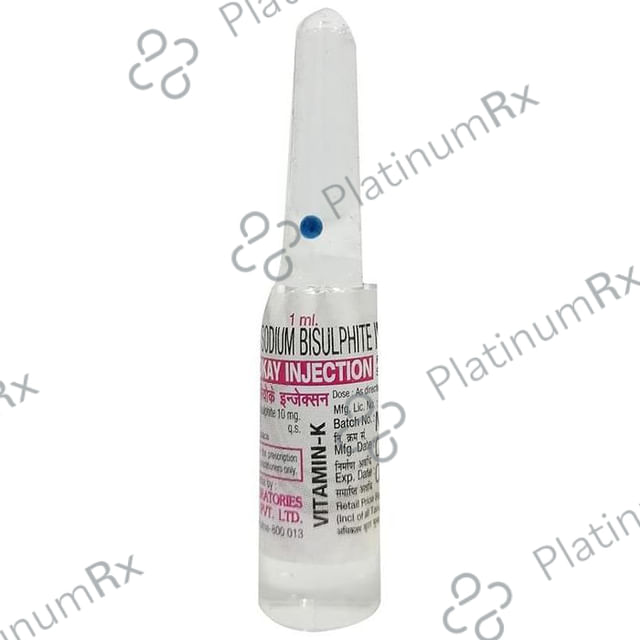
Reokay Injection is an injectable vitamin K preparation used to help restore normal blood clotting in people with vitamin K deficiency or certain clotting disorders. It supports the production of clotting factors in the liver, which are needed to help control bleeding. The medicine is administered under medical supervision, particularly when clotting function requires prompt correction or oral treatment is not appropriate.
Written by: Syed Jommy Abbas, B. Pharma
Reviewed by: Dr. Rohit Kolhe, MBBS
Last updated on: 03-06-2026

WHO GMP Certified
Long Expiry (>8 Months)
15 Days Easy Returns
General Information

Genuine Medicine
Pay On Delivery
Secure Payment

LegitScript Certified Online Pharmacy

More About Reokay Injection
Quick Summary
Reokay Injection is an injectable vitamin K preparation used to help restore normal blood clotting in people with vitamin K deficiency or certain clotting disorders. It supports the production of clotting factors in the liver, which are needed to help control bleeding. The medicine is administered under medical supervision, particularly when clotting function requires prompt correction or oral treatment is not appropriate.
Detailed Description
Reokay Injection is an injectable form of vitamin K3 (menadione), used in medical settings to help restore normal blood clotting when vitamin K levels are low or clotting function is impaired. Vitamin K plays an essential role in the production of several clotting factors made by the liver.
Doctors may prescribe this medicine for conditions associated with prolonged bleeding or an increased risk of bleeding due to vitamin K deficiency. This can occur in people with poor nutrient absorption, liver disorders, prolonged antibiotic use, or other conditions that interfere with normal vitamin K activity.
After you receive Reokay Injection, your body is able to make the proteins it needs for blood to clot properly. These proteins, called clotting factors, are essential to stop bleeding. As they are restored, the risk of abnormal or prolonged bleeding is reduced.
Because clotting disorders can be serious, treatment is always provided under close medical supervision. Your doctor will decide the right dose based on your condition, your risk of bleeding, and the results of blood tests. During therapy, you may need regular monitoring to check how well your blood is clotting. This helps ensure the medicine is working safely and effectively.
Uses of Reokay Injection
Reokay Injection is a clinical nutritional injection that may be prescribed by a doctor for:
Treatment of Vitamin K Deficiency
Rapidly replenishing vitamin K stores when systemic levels are severely depleted due to illness, prolonged poor intake, or intestinal absorption failure.
Prevention and Control of Bleeding
Stabilizing clotting mechanisms to stop or prevent internal and external bleeding episodes caused by a lack of functional coagulation proteins.
Hypoprothrombinemia
Correcting deficiencies in prothrombin (Factor II) and other vitamin K-dependent clotting factors to restore normal blood coagulation times.
Benefits of Reokay Injection
Reokay Injection may provide benefits such as:
- Supports normal blood clotting: Helps restore vitamin K levels, which the liver needs to produce clotting factors that control bleeding.
- Useful when oral intake is not suitable: It is helpful when oral vitamin K may be ineffective or inappropriate.
- Helps in vitamin K deficiency states: Used to support treatment of bleeding risk linked to low vitamin K or reduced clotting factor production.
- Clinically administered for reliable action: Administered by a doctor to ensure appropriate dosing and monitoring.
Side Effects of Reokay Injection
Reokay Injection is administered under strict clinical supervision. However, some individuals may experience side effects.
Common side effects of Reokay Injection are generally mild and include
- Injection Site Reactions: Temporary pain, redness, mild swelling, or irritation at the spot where the injection was given.
- Flushing Sensations: A brief feeling of systemic warmth, sweating, or redness in the face shortly after administration.
- Transient Alterations in Taste: An unusual or metallic taste in the mouth immediately following the injection.
Uncommon side effects of Reokay Injection may include
- Mild Headache or Dizziness: Brief lightheadedness as systemic circulation dynamics adjust.
- Nausea: Occasional mild stomach queasiness or a brief wave of abdominal discomfort.
Rare but serious side effects that require immediate medical attention
- Hemolytic Anemia and Hyperbilirubinemia: Accelerated breakdown of red blood cells leading to jaundice (yellowing of the skin or eyes), particularly in infants or individuals with specific genetic metabolic conditions.
- Severe Hypersensitivity Reactions: Sudden skin hives, severe rash, swelling of the face, lips, tongue, or throat, chest tightness, or acute difficulty breathing.
Inform your clinician or nurse immediately if you notice any unusual symptoms during or after the administration of Reokay Injection.
Directions for Use
- Reokay Injection is a clinical injectable prescription and must only be administered by a qualified doctor (a doctor or nurse) in a clinical or hospital setting. Do not attempt to self-administer this medication.
- The injection is typically given via the intramuscular (IM) or subcutaneous (SC) route, or intravenously (IV) when rapid clinical correction is deemed mandatory by the physician.
- Your medical team will calculate the exact dose and frequency based on your underlying diagnosis, the severity of your bleeding risk, and baseline prothrombin time (PT/INR) test results.
- Regular blood monitoring will be conducted by your healthcare provider to track clotting efficiency and adjust the duration of medication accordingly.
How it works
Reokay Injection is used to help support normal blood clotting in conditions associated with vitamin K deficiency. Vitamin K is needed for the production of several clotting factors that help control bleeding.
Menadione (vitamin K3) works by supporting the liver’s production of vitamin K–dependent clotting factors, including factors II, VII, IX, and X. These clotting proteins require vitamin K for activation before they can function properly in the blood coagulation process.
By helping restore normal clotting factor activity, Reokay Injection supports proper blood clot formation and reduces the risk of bleeding associated with low vitamin K levels.
Safety Advice for Reokay Injection

Allergy
Unsafe
Reokay Injection should not be used in patients with known allergy to menadione or any ingredient in the formulation. Seek urgent medical attention if rash, swelling, or breathing difficulty occurs.

Breastfeeding
Limited information
Limited safety information is available regarding the use of Reokay Injection during breastfeeding. It should only be used if clearly prescribed by a doctor.

Pregnancy
Caution
Reokay Injection should be used during pregnancy only if the potential benefit outweighs possible risks. Menadione is not routinely preferred for vitamin K supplementation during pregnancy.

Driving
Safe
Reokay Injection is not generally expected to affect alertness or the ability to drive or operate machinery.

Alcohol
Caution
Excessive alcohol intake may worsen vitamin K deficiency and underlying liver dysfunction, which can affect treatment response.

Liver
Caution
Patients with liver disease may require careful monitoring during treatment with Reokay Injection, particularly when bleeding or clotting disorders are present.

Kidney
Caution
Patients with severe kidney impairment should use Reokay Injection cautiously, as serious illness may increase the risk of adverse effects.

Children
Unsafe
Reokay Injection is generally not recommended in newborns and young infants because menadione has been associated with hemolytic anemia, hyperbilirubinemia, and kernicterus.

Elderly patients
Caution
Older adults should use Reokay Injection cautiously, especially if they have liver disease, bleeding disorders, or are receiving anticoagulant therapy.
Quick Tips for Reokay Injection
- Only given by professionals: This medicine must be injected by a trained doctor or nurse. It is not safe for self‑use because the dose has to be carefully controlled.
- Close monitoring is essential: Your blood clotting ability will be checked regularly with tests such as Prothrombin Time (PT) or International Normalized Ratio (INR). These tests show whether the medicine is working safely.
- Not suitable for infants: Vitamin K3 can cause serious side effects in newborns, including damage to red blood cells and the liver. For babies, doctors prefer Vitamin K1 instead.
- Tell your doctor about all medicines: If you are taking blood thinners (like warfarin), Vitamin K3 can reduce their effect. Always share your full medication list, so your treatment can be adjusted safely.
- Watch the injection site: Some mild soreness or redness is normal. If you notice severe pain, swelling, or spreading redness, contact your healthcare provider immediately.
- Safer alternatives exist: In most cases, Vitamin K1 (phylloquinone) is the preferred treatment for vitamin K deficiency. Vitamin K3 is used only in special situations where other options are not suitable.
Storage Advice
- Store injection vials or ampoules at controlled room temperature and keep them away from heat, freezing, and moisture.
- Protect from light by keeping the medicine in its original carton until it is prepared for use.
- Inspect the solution before administration and discard immediately if it appears cloudy, discolored, or contains particles.
- Keep all supplies out of reach of children and pets.
Drug-Food Interaction
- General Diet (Safe): Normal meals and beverages do not interfere with Vitamin K3, as it is administered by injection and bypasses the digestive system.
Interactions with Other Drugs
- Oral Anticoagulants/Coumarin Derivatives (Caution): Vitamin K3 can reduce the effects of these drugs. Doctors may use it to treat severe bleeding caused by an overdose of blood thinners, but the dose must be carefully controlled to avoid reversing treatment completely.
- Salicylates / High-Dose Aspirin (Caution): Chronic or excessive use of salicylates can lower plasma prothrombin levels, potentially requiring closer monitoring and dose adjustments of your vitamin K therapy.
Drug-Disease Interactions
- G6PD Deficiency (Unsafe): People with this genetic condition can develop a serious breakdown of red blood cells (hemolytic anemia) if given Vitamin K3. Safer alternatives such as Vitamin K1 are recommended.
- Severe Liver Disease (Caution): In advanced cirrhosis or liver failure, the liver may not respond well to Vitamin K3. In these cases, clotting factors may need to be replaced directly with a plasma transfusion.
- Kidney Disease (Caution): Chronic kidney problems can change how vitamins are processed in the body. Patients with kidney disease may require closer monitoring when receiving Vitamin K3.
What If You Forget to take Reokay Injection?
Because this medication is scheduled and administered directly by doctors within a hospital or clinic setting, missing a scheduled dose is highly unlikely.
However, if you believe a scheduled treatment session was overlooked, inform your attending physician or nursing staff immediately to maintain therapeutic consistency.
FAQ
Fact Box
Therapeutic Class
Hemostatic agents / hematinic and vitamin supplements
Action Class
Cofactor for hepatic synthesis of vitamin K–dependent clotting factors
Chemical Class
Synthetic naphthoquinone derivative (Vitamin K3)
Habit Forming
No
Disclaimer
PlatinumRx is committed to providing reliable and accurate information to support informed customer decisions. However, all information made available on the Platform, including product descriptions, comparisons, and other content, is provided solely for general informational purposes. Such information is not intended to diagnose, prevent, treat, or cure any medical condition, nor should it be relied upon as a substitute for professional medical advice, diagnosis, or treatment.

Customers also bought


Health Articles


More Medicines By Manufacturer
More Medicines With Salt
Top Selling Medicines
Top Selling Devices