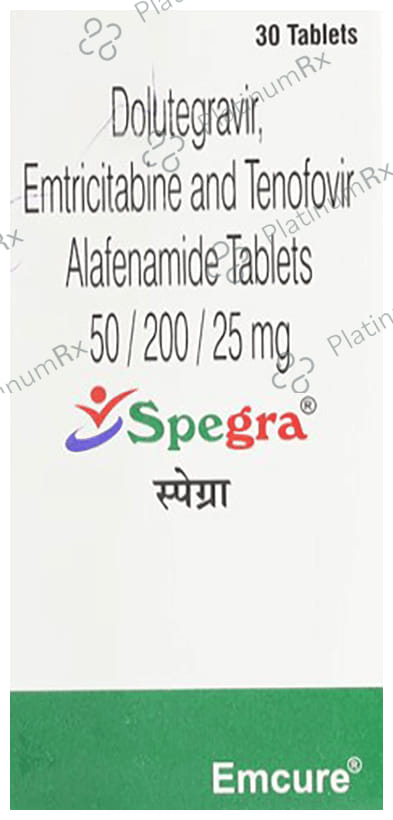
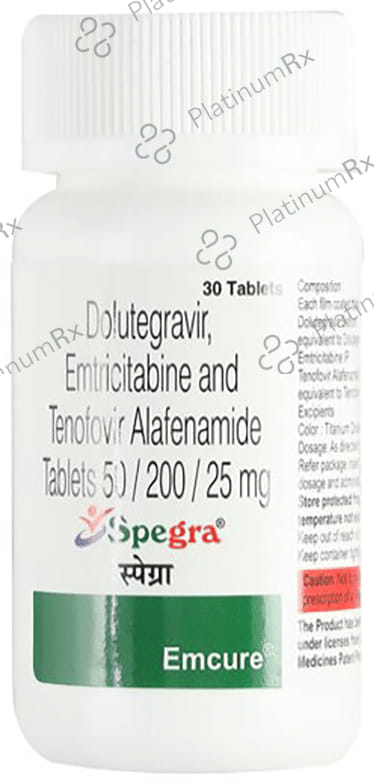
Spegra Tablet 30s

Spegra Tablet 30s (Dolutegravir + Emtricitabine + Tenofovir Alafenamide) is a complete, fixed-dose combination (FDC) antiretroviral therapy (ART) used for the treatment of Human Immunodeficiency Virus Type 1 (HIV-1) infection. This single-tablet regimen combines three potent antiviral agents from two different classes: Dolutegravir, an Integrase Strand Transfer Inhibitor (INSTI), and two Nucleoside Reverse Transcriptase Inhibitors (NRTIs), Emtricitabine and Tenofovir Alafenamide. This combination is designed to suppress the viral load to undetectable levels, preserve immune function (CD4 count), and prevent the progression of HIV to AIDS. It is highly regarded for its high genetic barrier to resistance, potency, and improved safety profile, specifically regarding bone and kidney health, compared to older Tenofovir-based regimens.
Written by: Srishti Bhukta, B. Pharma
Reviewed by: Dr. Varinderjeet Kaur, MBBS
Last updated on: 19-05-2026
Delivery by
...

WHO GMP Certified
Long Expiry (>8 Months)
15 Days Easy Returns
General Information

Genuine Medicine
Pay On Delivery
Secure Payment

LegitScript Certified Online Pharmacy


View content in
 English
Quick Summary
Spegra Tablet 30s (Dolutegravir + Emtricitabine + Tenofovir Alafenamide) is a complete, fixed-dose combination (FDC) antiretroviral therapy (ART) used for the treatment of Human Immunodeficiency Virus Type 1 (HIV-1) infection. This single-tablet regimen combines three potent antiviral agents from two different classes: Dolutegravir, an Integrase Strand Transfer Inhibitor (INSTI), and two Nucleoside Reverse Transcriptase Inhibitors (NRTIs), Emtricitabine and Tenofovir Alafenamide. This combination is designed to suppress the viral load to undetectable levels, preserve immune function (CD4 count), and prevent the progression of HIV to AIDS. It is highly regarded for its high genetic barrier to resistance, potency, and improved safety profile, specifically regarding bone and kidney health, compared to older Tenofovir-based regimens.
Detailed Description
Spegra Tablet 30s provides a simplified "one-pill, once-a-day" solution for managing a chronic viral infection. It targets multiple stages of the HIV life cycle, making it difficult for the virus to replicate and mutate.
The Three-Component System
- Dolutegravir (INSTI): This component represents the modern backbone of ART. It inhibits the HIV integrase enzyme, which the virus needs to insert its own genetic material into the DNA of the host's immune cells. Dolutegravir is known for its "high genetic barrier," meaning it is harder for the virus to develop resistance against this drug compared to many older HIV medications.
- Emtricitabine (NRTI): A nucleoside analogue that interferes with the HIV reverse transcriptase enzyme. By acting as a faulty building block, it stops the virus from converting its RNA into DNA, effectively halting viral replication early in the cycle.
- Tenofovir Alafenamide (TAF) (NRTI): TAF is a targeted prodrug of Tenofovir. Unlike the older version (Tenofovir Disoproxil Fumarate), TAF delivers the active drug more efficiently into the cells where HIV replicates. This allows for a much lower dose (25mg vs. 300mg), resulting in significantly lower concentrations of Tenofovir in the bloodstream, which reduces the risk of long-term side effects on the kidneys and bone mineral density.
Uses of Spegra Tablet 30s
Spegra Tablet 30s (Dolutegravir + Emtricitabine + Tenofovir Alafenamide) is indicated for:
Treatment of HIV-1 Infection:
As a complete regimen for adults and pediatric patients (weighing at least 35kg) who are new to treatment (treatment-naive) or to replace a current stable regimen in those who are virologically suppressed.
Viral Suppression:
Maintaining an undetectable viral load to prevent transmission and immune system decline.
Benefits of Spegra Tablet 30s
High Potency and Resistance Barrier:
Dolutegravir ensures the virus remains suppressed even if the patient occasionally struggles with perfect adherence.
Improved Safety Profile:
Tenofovir Alafenamide (TAF) offers superior bone and renal safety compared to older HIV medications.
Convenience:
A single-tablet, once-daily regimen significantly improves treatment adherence and quality of life.
Rapid Viral Load Reduction:
Clinical trials show that this combination brings viral loads down to undetectable levels more quickly than many other regimens.
Side Effects of Spegra Tablet 30s
Common Side Effects:
- Insomnia (difficulty sleeping)
- Headache and Dizziness
- Nausea and Diarrhoea
- Fatigue or Tiredness
- Weight gain (commonly observed with modern INSTI-based regimens)
Serious Side Effects (Seek urgent medical attention):
- Hepatotoxicity (Liver Injury): Symptoms include yellowing of the skin/eyes (jaundice), dark urine, or pain in the upper right abdomen.
- Severe Allergic Reactions: Rash, blisters, swelling of the face, or difficulty breathing.
- Lactic Acidosis: A rare but life-threatening buildup of acid in the blood; symptoms include unusual weakness, fast breathing, or cold hands/feet.
- Immune Reconstitution Inflammatory Syndrome (IRIS): When the immune system recovers and reacts strongly to hidden infections.
- Worsening of Hepatitis B (HBV): For patients co-infected with HBV, stopping this medication abruptly can cause a severe "flare-up" of Hepatitis B.
Directions for Use
- Dosing Schedule: Take one tablet once daily at the same time every day.
- Administration: Swallow the tablet whole with water. It can be taken with or without food.
- Strict Adherence: It is critical not to skip doses. Skipping doses increases the risk of the virus developing resistance to the medication.
- Do Not Stop Abruptly: Never stop taking this medication without consulting your healthcare provider, especially if you have Hepatitis B.
How it works
The medication blocks HIV replication at two distinct steps:
- Chain Termination: Emtricitabine and Tenofovir Alafenamide act as "decoy" building blocks. When the virus tries to build new DNA, it incorporates these decoys, which cause the DNA chain to break, stopping the virus from reproducing.
- Integration Blockade: Dolutegravir binds to the integrase enzyme. Without this enzyme, the virus cannot "paste" its genetic code into the human cell's DNA. Because the virus cannot integrate, it cannot take over the cell to make more copies of itself.
Safety Advice for Spegra Tablet 30s

Pregnancy
Caution
Dolutegravir is now generally considered safe for use throughout pregnancy, but a risk-benefit assessment by a specialist is mandatory.

Breastfeeding
Caution
In many regions, breastfeeding is discouraged for mothers with HIV to prevent transmission to the infant; follow local clinical guidelines.

Driving
Caution
May cause dizziness or insomnia in some patients; ensure you know how the drug affects you before operating vehicles.

Liver
Caution
Monitor liver enzymes regularly; patients with Hepatitis B or C are at higher risk for hepatotoxicity.

Kidney
Caution
While TAF is safer for the kidneys, renal function (creatinine/eGFR) should be monitored periodically during therapy.

Alcohol
Caution
Avoid excessive alcohol as it can increase the risk of liver strain and may worsen side effects like dizziness.
Quick Tips for Spegra Tablet 30s
- Consistency is Key: Set an alarm on your phone to take your pill at the exact same time every day.
- Check for HBV: Your doctor must test you for Hepatitis B before starting this drug.
- Monitor Weight: Modern ART can lead to weight gain; maintain a healthy diet and exercise routine.
- Interactions: Tell your doctor if you take antacids, iron, or calcium supplements, as they can prevent the absorption of Dolutegravir.
Storage Advice
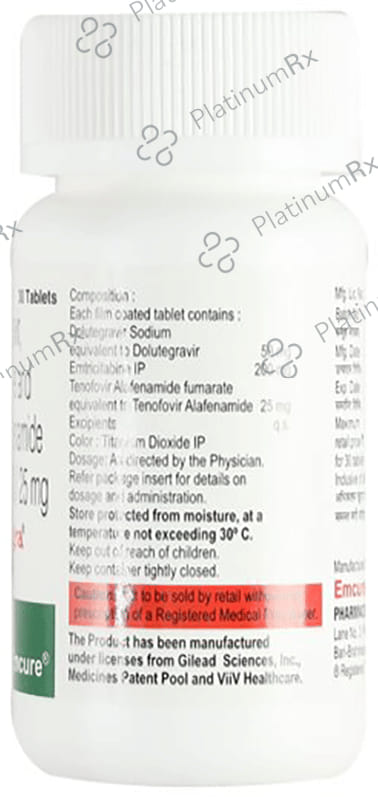
- Store in the original container to protect from moisture.
- Keep at room temperature (below 30 °C).
- Keep the bottle tightly closed and store it out of reach of children.
Interactions with Other Drugs
- Antacids & Supplements: Magnesium, aluminium, calcium, or iron can block Dolutegravir. Take this medication 2 hours before or 6 hours after such supplements.
- Metformin: Dolutegravir can increase Metformin levels in the blood; dose adjustment may be needed.
- Rifampin: This tuberculosis medication can significantly reduce the levels of Dolutegravir.
Daily Dose
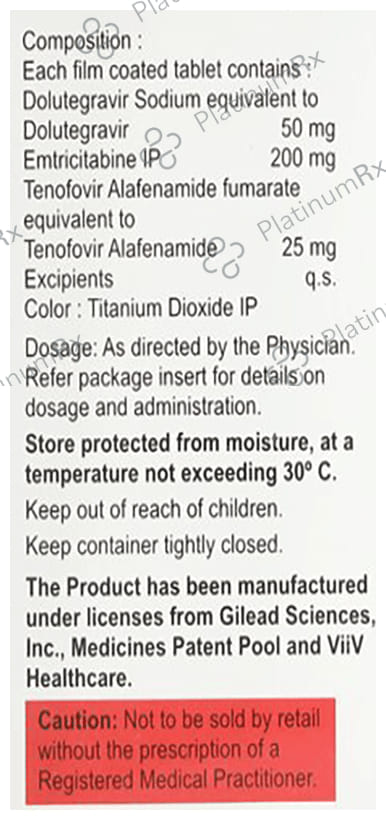
The recommended dose is one tablet (50mg/200mg/25mg) orally once daily.
Overdose
In case of an overdose, contact a poison control centre or emergency room immediately. Symptoms may include severe dizziness or exaggerated side effects. Treatment is generally supportive.
What If You Forget to take Spegra Tablet 30s?
- If you remember within 12 hours: Take the missed dose immediately and continue with your regular schedule.
- If you remember after 12 hours: Skip the missed dose and take the next dose at the usual time.
- Do not double-dose: Never take two tablets at once to make up for a missed one.
FAQ
References
- https://pubmed.ncbi.nlm.nih.gov/33010240/
- https://www.accessdata.fda.gov/drugsatfda_docs/pepfar/213681PI.pdf
- https://www.efda.gov.et/wp-content/uploads/2023/12/Dolutegravir-Emtricitabine-Tenofovir-Alafenamide-Tablets-50-mg-200-mg-25-mg.pdf
- https://www.mayoclinic.org/drugs-supplements/dolutegravir-oral-route/description/drg-20061287
Fact Box
Therapeutic Class
Antiretroviral (HIV-1)
Action Class
Integrase and Reverse Transcriptase Inhibitors
Chemical Class
INSTI + NRTI + NRTI
Habit Forming
No
Disclaimer
PlatinumRx is committed to providing reliable and accurate information to support informed customer decisions. However, all information made available on the Platform, including product descriptions, comparisons, and other content, is provided solely for general informational purposes. Such information is not intended to diagnose, prevent, treat, or cure any medical condition, nor should it be relied upon as a substitute for professional medical advice, diagnosis, or treatment.

Customers also bought



Health Articles


More Medicines By Manufacturer
More Medicines With Salt
Top Selling Medicines
Top Selling Devices