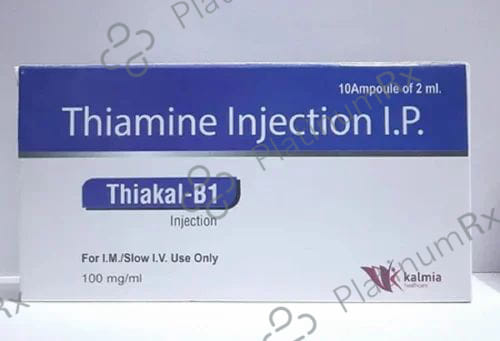
Thiakal B1 100mg Injection 2ml

Thiakal B1 100mg Injection 2ml contains thiamine (vitamin B1), a water-soluble B vitamin essential for carbohydrate metabolism, energy production, and neurological function. It is used in the prevention and treatment of thiamine deficiency and its associated conditions including beriberi and Wernicke's encephalopathy. Always use Thiakal B1 100mg Injection 2ml exactly as directed by your doctor.
Written by: Syed Jommy Abbas, B. Pharma
Reviewed by: Dr. Rohit Kolhe, MBBS
Last updated on: 03-06-2026
Delivery by
...

WHO GMP Certified
Long Expiry (>8 Months)
15 Days Easy Returns
General Information

Genuine Medicine
Pay On Delivery
Secure Payment

LegitScript Certified Online Pharmacy

More About Thiakal B1 100mg Injection 2ml
Quick Summary
Thiakal B1 100mg Injection 2ml contains thiamine (vitamin B1), a water-soluble B vitamin essential for carbohydrate metabolism, energy production, and neurological function. It is used in the prevention and treatment of thiamine deficiency and its associated conditions including beriberi and Wernicke's encephalopathy. Always use Thiakal B1 100mg Injection 2ml exactly as directed by your doctor.
Detailed Description
Thiakal B1 100mg Injection 2ml contains thiamine, an essential water-soluble vitamin that the human body cannot synthesise and must obtain through dietary intake or supplementation.
Thiamine is converted intracellularly to its active coenzyme form, thiamine pyrophosphate (TPP), which serves as an essential cofactor for key enzymes in carbohydrate and energy metabolism including pyruvate dehydrogenase, alpha-ketoglutarate dehydrogenase, and transketolase. These enzymes are critical for glucose oxidation and the production of adenosine triphosphate via the citric acid cycle.
Neurological and cardiac tissue are particularly dependent on thiamine-mediated energy metabolism due to their high metabolic demands. Deficiency impairs cellular energy production, causing the neurological damage seen in beriberi and the acute encephalopathy of Wernicke's syndrome. Populations at highest risk include chronic alcohol users, patients with malnutrition, those undergoing bariatric surgery, and individuals with prolonged vomiting or malabsorption.
Uses of Thiakal B1 100mg Injection 2ml
The uses of Thiakal B1 100mg Injection 2ml are as follows:
Thiamine Deficiency
Thiakal B1 100mg Injection 2ml is used to treat and prevent thiamine deficiency in individuals with inadequate dietary intake or increased requirements.
Beriberi
It is used to treat both wet beriberi, characterised by cardiac involvement, and dry beriberi, characterised by peripheral neuropathy.
Wernicke's Encephalopathy
High-dose parenteral thiamine is used urgently to prevent and treat this acute neurological emergency associated with thiamine deficiency.
Alcoholic Neuropathy
It is used to address thiamine deficiency-related peripheral nerve damage in chronic alcohol users.
Nutritional Support
It is used in patients with malabsorption, prolonged vomiting, or following bariatric surgery to prevent deficiency states.
Benefits of Thiakal B1 100mg Injection 2ml
Here are the benefits of Thiakal B1 100mg Injection 2ml:
- Essential for Energy Metabolism: Thiamine pyrophosphate is indispensable for glucose oxidation and ATP production in all cells, particularly neurological and cardiac tissue.
- Prevents Severe Neurological Complications: Timely supplementation prevents the irreversible neurological damage of Wernicke's encephalopathy and beriberi neuropathy.
- Supports Cardiac Function: Correction of thiamine deficiency reverses the high-output cardiac failure characteristic of wet beriberi.
- Well Tolerated: Oral thiamine is generally very well tolerated with a wide safety margin at standard supplementation doses.
- Addresses Deficiency in High-Risk Populations: Particularly beneficial in alcohol-dependent, malnourished, and post-surgical patients.
Side Effects of Thiakal B1 100mg Injection 2ml
Like all medicines, Thiakal B1 100mg Injection 2ml may cause side effects in some individuals.
Common Side Effects
- Mild Gastrointestinal Discomfort: Nausea or stomach upset may occur with oral formulations, particularly at higher doses.
Uncommon Side Effects
- Skin Rash or Pruritus: Mild hypersensitivity reactions may occur in sensitive individuals.
- Headache: Mild headache has been occasionally reported.
Serious Side Effects (Require Immediate Medical Attention)
- Severe Allergic Reaction: Anaphylaxis has been rarely reported with intravenous thiamine administration. Facilities for managing anaphylaxis should be available during parenteral use.
- Injection Site Reactions: Pain, irritation, or localised reactions may occur with parenteral formulations.
Always consult your doctor if side effects persist or worsen.
Directions for Use
To ensure safe use:
- Use exactly as prescribed by your doctor.
- Oral formulations may be taken with or without food.
- Parenteral formulations must be administered by a healthcare professional.
- Take at the same time each day for consistent benefit.
- Do not exceed the prescribed dose without medical advice
How it works
Thiamine is phosphorylated intracellularly to thiamine pyrophosphate, its active coenzyme form. TPP acts as an essential cofactor for three key metabolic enzyme complexes: pyruvate dehydrogenase, which converts pyruvate to acetyl-CoA for entry into the citric acid cycle; alpha-ketoglutarate dehydrogenase, which is a rate-limiting step within the cycle; and transketolase, which is essential for the pentose phosphate pathway supporting nucleic acid synthesis and NADPH production.
Deficiency of TPP impairs these pathways, leading to accumulation of pyruvate and lactate, reduced ATP production, and cellular energy failure. Tissues with the highest metabolic demands, particularly the brain and myocardium, are the first to manifest functional impairment, explaining the neurological and cardiac features of thiamine deficiency syndromes.
Safety Advice for Thiakal B1 100mg Injection 2ml

Allergy
Caution
Inform your doctor of any known allergy to thiamine or other B vitamins before use. Anaphylaxis has been rarely reported with intravenous administration.

Breastfeeding
Safe
Thiamine is generally considered safe during breastfeeding at recommended doses. Consult your doctor for guidance on appropriate dosing.

Pregnancy
Safe
Thiamine is essential during pregnancy and supplementation is safe at recommended doses. Use as directed by your doctor.

Driving
Safe
No significant impairment expected under normal use.

Alcohol
Caution
Chronic alcohol use depletes thiamine stores and is the most common cause of deficiency. Alcohol should be reduced or avoided during treatment.

Liver
Caution
Hepatic impairment may affect thiamine metabolism and storage. Monitoring may be advisable in severe liver disease.

Kidney
Safe
No significant renal concerns expected at recommended oral doses.

Children
Safe
Thiamine supplementation is safe in children at appropriate doses. Dosing should be confirmed by a doctor based on age and clinical indication.

Elderly patients
Caution
Elderly patients are at higher risk of thiamine deficiency due to reduced dietary intake and absorption. Regular monitoring of nutritional status is advisable.
Quick Tips for Thiakal B1 100mg Injection 2ml
A few practical measures can help improve treatment outcomes and ensure safe use of Thiakal B1 100mg Injection 2ml:
- Address alcohol intake: In alcohol-dependent patients, thiamine replacement must be initiated before glucose administration to prevent precipitating Wernicke's encephalopathy.
- Do not delay treatment in Wernicke's encephalopathy: This is a medical emergency requiring immediate high-dose parenteral thiamine; oral supplementation alone is not sufficient.
- Maintain a thiamine-rich diet: Foods rich in thiamine include wholegrains, legumes, nuts, and lean meats; dietary improvements complement supplementation.
- Monitor in high-risk groups: Patients post-bariatric surgery, with prolonged vomiting, or on parenteral nutrition require regular thiamine monitoring.
Storage Advice
Proper storage is important to maintain the stability and effectiveness of Thiakal B1 100mg Injection 2ml:
- Store at room temperature: Keep away from heat, moisture, and direct sunlight.
- Keep in original packaging: Protects thiamine from light-induced degradation.
- Keep out of reach of children: Store safely to prevent accidental ingestion.
- Check expiry before use: Do not use after the expiry date printed on the packaging.
Drug-Food Interaction
Thiakal B1 100mg Injection 2ml may generally be taken without strict dietary restrictions. However:
- Avoid excessive alcohol: Alcohol impairs thiamine absorption, increases renal excretion, and depletes hepatic thiamine stores, directly worsening deficiency.
- Raw fish and certain teas contain thiaminase: Thiaminase enzymes in raw fish and some teas degrade thiamine; excessive consumption may worsen deficiency states.
Interactions with Other Drugs
Thiakal B1 100mg Injection 2ml may interact with the following medicines:
- Diuretics (Furosemide): Loop diuretics increase urinary thiamine excretion and may worsen deficiency with prolonged use.
- Antacids: May reduce thiamine absorption from the gastrointestinal tract with regular concomitant use.
- 5-Fluorouracil: This chemotherapy agent inhibits thiamine phosphorylation, potentially inducing thiamine deficiency and requiring monitoring.
Drug-Disease Interactions
Thiakal B1 100mg Injection 2ml should be used carefully in the following conditions:
- Chronic Alcoholism: The most common cause of thiamine deficiency; supplementation is essential but must be managed carefully to avoid precipitating Wernicke's encephalopathy with glucose administration.
- Malabsorption Syndromes: Conditions such as Crohn's disease or coeliac disease may impair thiamine absorption, requiring higher or parenteral doses.
- Bariatric Surgery: Post-surgical patients are at significant risk of thiamine deficiency due to reduced dietary intake and altered absorption.
Daily Dose
Dose depends on the clinical indication and severity of deficiency. Oral supplementation doses vary from prophylactic to therapeutic levels as directed by your doctor. High-dose parenteral administration is required in Wernicke's encephalopathy and must be given by a healthcare professional.
What If You Forget to take Thiakal B1 100mg Injection 2ml?
If a dose is missed, take it as soon as remembered. Do not double the dose to make up for a missed one.
FAQ
Fact Box
Therapeutic Class
Nutritional Supplement / Vitamin
Action Class
Coenzyme in Carbohydrate and Energy Metabolism
Chemical Class
Water-Soluble B Vitamin
Habit Forming
No
Disclaimer
PlatinumRx is committed to providing reliable and accurate information to support informed customer decisions. However, all information made available on the Platform, including product descriptions, comparisons, and other content, is provided solely for general informational purposes. Such information is not intended to diagnose, prevent, treat, or cure any medical condition, nor should it be relied upon as a substitute for professional medical advice, diagnosis, or treatment.

Customers also bought


Health Articles


More Medicines By Manufacturer
More Medicines With Salt
Top Selling Medicines
Top Selling Devices