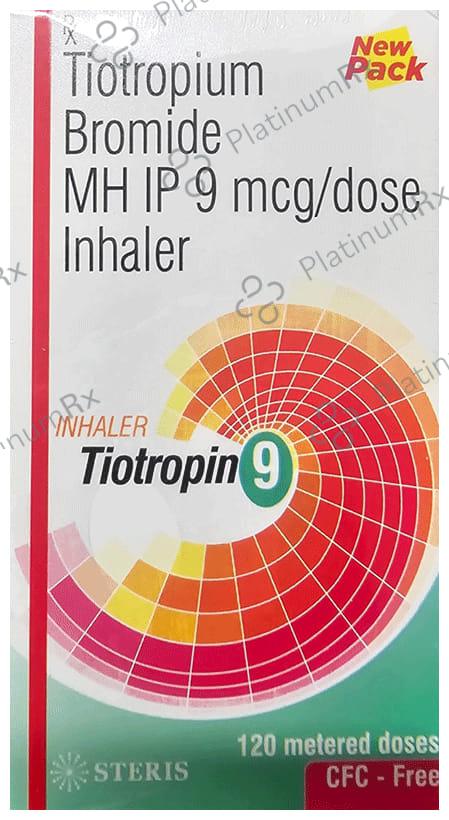
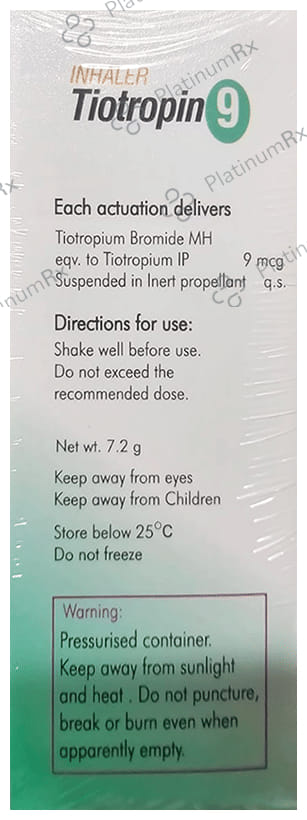
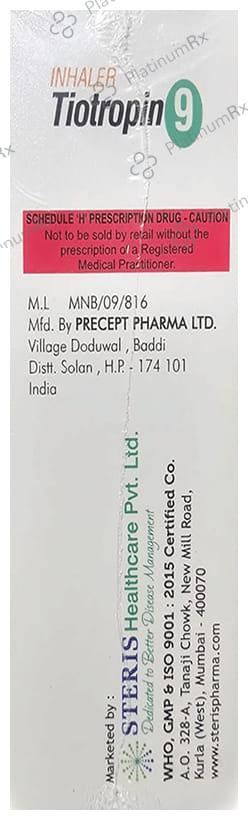
Tiotropin 9mcg Inhaler 120MDI

Tiotropin 9mcg Inhaler 120MDI contains Tiotropium, a long-acting antimuscarinic bronchodilator indicated for the maintenance treatment of chronic obstructive pulmonary disease (COPD) and asthma. It works by blocking muscarinic receptors in the airway smooth muscle, leading to sustained bronchodilation and improved airflow. Your doctor may prescribe it to help control symptoms such as breathlessness, wheezing, and chest tightness. It is not suitable for the relief of acute bronchospasm or sudden breathing episodes.
Written by: Syed Jommy Abbas, B. Pharma
Reviewed by: Dr. Devika Rani, MBBS
Last updated on: 16-05-2026
Delivery by
...

WHO GMP Certified
Long Expiry (>8 Months)
15 Days Easy Returns
General Information

Genuine Medicine
Pay On Delivery
Secure Payment

LegitScript Certified Online Pharmacy


More About Tiotropin 9mcg Inhaler 120MDI
Quick Summary
Tiotropin 9mcg Inhaler 120MDI contains Tiotropium, a long-acting antimuscarinic bronchodilator indicated for the maintenance treatment of chronic obstructive pulmonary disease (COPD) and asthma. It works by blocking muscarinic receptors in the airway smooth muscle, leading to sustained bronchodilation and improved airflow. Your doctor may prescribe it to help control symptoms such as breathlessness, wheezing, and chest tightness. It is not suitable for the relief of acute bronchospasm or sudden breathing episodes.
Detailed Description
Tiotropin 9mcg Inhaler 120MDI contains Tiotropium, a long-acting antimuscarinic bronchodilator used to manage chronic respiratory conditions. It works by blocking muscarinic receptors in the airway smooth muscles. This prevents bronchoconstriction and allows the airways to remain open for a longer duration. As a result, breathing becomes easier, and symptoms are better controlled over time.
It is commonly prescribed for the maintenance treatment of chronic obstructive pulmonary disease (COPD) and, in some cases, asthma. It helps reduce symptoms such as shortness of breath, wheezing, and chest tightness. Regular use may also lower the risk of exacerbations and improve overall lung function and daily activity levels. However, it is not suitable for the relief of sudden breathing problems or acute attacks.
Tiotropin 9mcg Inhaler 120MDI is designed for inhaled use, allowing the medicine to act directly in the lungs with minimal absorption into the bloodstream. Its long duration of action supports once-daily dosing in most patients, helping maintain consistent bronchodilation throughout the day.
The medicine is generally well-tolerated when used as prescribed. Common side effects may include dry mouth, throat irritation, or cough. It should be used under medical supervision, and patients are advised to follow the prescribed routine carefully to achieve the best therapeutic effect.
Uses of Tiotropin 9mcg Inhaler 120MDI
Tiotropin 9mcg Inhaler 120MDI may be indicated by your doctor for:
Chronic Obstructive Pulmonary Disease (COPD)
Long-term maintenance treatment of airflow obstruction in patients with chronic bronchitis and emphysema.
Asthma Management
For the long-term, once-daily maintenance treatment of asthma in patients who require additional control.
Chronic Lung Diseases
To manage persistent shortness of breath and wheezing associated with chronic lung diseases.
Reduction of Exacerbations
To lower the frequency and severity of sudden respiratory flare-ups.
Benefits of Tiotropin 9mcg Inhaler 120MDI
Tiotropin 9mcg Inhaler 120MDI may provide benefits such as:
- Provides sustained bronchodilation that lasts for a long time with a single dose.
- Improves lung function measurements (such as FEV1) over time with regular use.
- Significantly reduces the likelihood of hospital visits due to COPD flare-ups.
- Helps improve the ability to perform physical activities and daily chores with less breathlessness.
- Reduces the overall need for "rescue" inhalers throughout the day.
- Targeted delivery to the lungs minimises common systemic side effects like a racing heart or tremors.
Side Effects of Tiotropin 9mcg Inhaler 120MDI
Tiotropin 9mcg Inhaler 120MDI is generally well-tolerated, though it can cause some side effects.
Common side effects of Tiotropin 9mcg Inhaler 120MDI may include
- Dry mouth (most common)
- Sore throat or hoarseness
- Cough or mild sinus irritation
- Constipation
- Upper respiratory tract infection
Uncommon side effects of Tiotropin 9mcg Inhaler 120MDI may include
- Dizziness
- Rapid or irregular heartbeat (palpitations)
- Blurred vision
- Urinary retention (difficulty passing urine)
Serious side effects that may require immediate medical attention include
- Paradoxical Bronchospasm: Sudden, severe wheezing or gasping immediately after using the inhaler.
- Acute Narrow-Angle Glaucoma: Redness of the eye, eye pain, or seeing "halos" around lights.
- Severe Allergic Reaction: Swelling of the tongue, lips, or face; difficulty swallowing; or a widespread itchy rash.
- Serious Urinary Issues: Complete inability to empty the bladder.
- Always consult your doctor if you notice any persistent or concerning reactions while using Tiotropin 9mcg Inhaler 120MDI.
Directions for Use
Use Tiotropin 9mcg Inhaler 120MDI exactly as directed by your doctor based on the prescribed form.
- Use the inhaler at the same time every day to keep your airways open consistently.
- Follow the specific instructions for your device (e.g., loading a capsule into a dry powder inhaler or priming a mist inhaler).
- Do not swallow the capsules meant for inhalation; they must only be used with the specialised inhaler device.
- Breathe out fully before placing the mouthpiece in your mouth, then inhale deeply and steadily.
- Hold your breath for about 5 to 10 seconds after inhaling to allow the medicine to settle in the lungs.
- Always keep the mouthpiece and device clean and dry as per the manufacturer's guidelines.
How it works
Tiotropin 9mcg Inhaler 120MDI works by acting as a competitive muscarinic receptor antagonist. In the lungs, the parasympathetic nervous system releases a chemical called acetylcholine, which binds to M3 receptors on the smooth muscles of the airways, causing them to constrict (narrow). Tiotropium blocks these M3 receptors, preventing acetylcholine from binding. This results in long-lasting relaxation of the bronchial smooth muscles. By keeping the airways dilated (open), it improves airflow and prevents the air-trapping that causes shortness of breath in chronic respiratory conditions.
Safety Advice for Tiotropin 9mcg Inhaler 120MDI

Pregnancy
Limited information
use only if the benefit to the mother outweighs the potential risk to the fetus.

Breastfeeding
Caution
It is not known if tiotropium passes into breast milk. Medical supervision is advised.

Driving
Safe
Generally safe, but avoid driving if you experience blurred vision or dizziness after use.

Liver
Safe
Generally does not require dose adjustments as it is primarily cleared through other pathways.

Kidney
Caution
Use with care in patients with moderate to severe kidney impairment, as levels of the drug may increase in the body.

Alcohol
Safe
No direct interaction is expected, though alcohol can worsen dehydration or dry mouth.
Quick Tips for Tiotropin 9mcg Inhaler 120MDI
- This medicine is a maintenance "preventer" and will not stop an ongoing, acute breathing attack. Always have your "rescue" inhaler (like salbutamol) with you.
- To manage dry mouth, try rinsing your mouth with water, chewing sugarless gum, or sipping water frequently.
- If you have a history of prostate issues or glaucoma, inform your doctor before starting this medication.
- Ensure you are trained on the correct inhaler technique by a pharmacist or nurse, as improper use is the most common cause of treatment failure.
- Do not let the powder or mist get into your eyes, as it can cause temporary blurred vision and pupil dilation.
Storage Advice
- Store at room temperature in a cool, dry place.
- Protect from moisture; do not store the inhaler or capsules in a damp bathroom.
- Keep capsules in their original blister pack until immediately before use.
- Keep the inhaler cap closed when not in use to prevent dust accumulation.
- Keep out of the reach of children and pets.
Drug-Food Interaction
- General Diet (NO CLINICALLY RELEVANT INTERACTION): Standard food and drinks do not affect the performance of inhaled Tiotropin 9mcg Inhaler 120MDI.
Interactions with Other Drugs
- Other Anticholinergics (SEVERE): Do not use with other drugs like Ipratropium or Aclidinium, as this increases the risk of side effects.
- Cimetidine/Ranitidine (MILD): Certain medications may theoretically interfere with kidney clearance, though significant interactions are rare with inhaled forms.
Drug-Disease Interactions
- Narrow-Angle Glaucoma (CAUTION): May worsen the condition by increasing pressure within the eye.
- Prostate Hyperplasia/Bladder Obstruction (CAUTION): May increase the difficulty of passing urine or cause urinary retention.
- Kidney Disease (CONSULT YOUR DOCTOR): Patients with significant renal impairment require close monitoring for increased side effects.
Overdose
An overdose of inhaled Tiotropin 9mcg Inhaler 120MDI may increase the severity of side effects, such as extreme dry mouth, blurred vision, or significant difficulty urinating. If you suspect someone has inhaled too much or accidentally swallowed the medication capsules, contact a healthcare provider immediately.
What If You Forget to take Tiotropin 9mcg Inhaler 120MDI?
What if You Forget to Take Tiotropin 9mcg Inhaler 120MDI?
If you miss a dose, take it as soon as you remember. If it is almost time for your next scheduled dose, skip the missed one and continue with your regular once-daily routine. Do not take two doses at the same time or use the inhaler more than once in 24 hours.
FAQ
Fact Box
Therapeutic Class
Bronchodilator
Action Class
Long-Acting Muscarinic Antagonist (LAMA)
Chemical Class
Quaternary Ammonium Anticholinergic
Habit Forming
No
Disclaimer
PlatinumRx is committed to providing reliable and accurate information to support informed customer decisions. However, all information made available on the Platform, including product descriptions, comparisons, and other content, is provided solely for general informational purposes. Such information is not intended to diagnose, prevent, treat, or cure any medical condition, nor should it be relied upon as a substitute for professional medical advice, diagnosis, or treatment.

Customers also bought





Health Articles


More Medicines By Manufacturer
More Medicines With Salt
Top Selling Medicines
Top Selling Devices