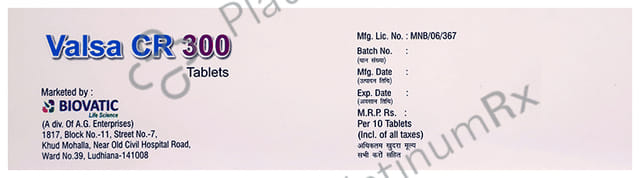
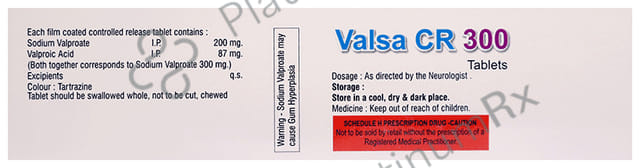
Valsa CR 300 Tablet 10s

Valsa CR 300 Tablet 10s is a prescription medication containing a combination of sodium valproate and valproic acid. It is primarily used to treat various types of epilepsy, manic episodes associated with bipolar disorder, and to prevent migraine headaches. By combining the salt and acid forms of the medication, these tablets provide a stable and gradual release of the active medicine into the bloodstream, which helps maintain consistent levels and may reduce the frequency of side effects.
Written by: Syed Jommy Abbas, B. Pharma
Reviewed by: Dr. Rohit Kolhe, MBBS
Last updated on: 05-06-2026

Delivery by
...

WHO GMP Certified
Long Expiry (>8 Months)
15 Days Easy Returns
Medicine Comparison

Genuine Medicine
Pay On Delivery
Secure Payment

LegitScript Certified Online Pharmacy

More About Valsa CR 300 Tablet 10s
Quick Summary
Valsa CR 300 Tablet 10s is a prescription medication containing a combination of sodium valproate and valproic acid. It is primarily used to treat various types of epilepsy, manic episodes associated with bipolar disorder, and to prevent migraine headaches. By combining the salt and acid forms of the medication, these tablets provide a stable and gradual release of the active medicine into the bloodstream, which helps maintain consistent levels and may reduce the frequency of side effects.
Detailed Description
Valsa CR 300 Tablet 10s is a prescription medicine that contains sodium valproate and valproic acid. Both belong to the group of antiepileptic drugs and are widely used to manage epilepsy, bipolar disorder, and migraine prevention. The combination of these two forms allows the medicine to be absorbed in a steady way, helping to keep blood levels consistent.
It works mainly by increasing the activity of gamma‑aminobutyric acid (GABA), a chemical messenger in the brain that calms overactive nerve signals. By boosting GABA, Valsa CR 300 Tablet 10s reduces abnormal electrical activity that can trigger seizures, mood swings, or migraine attacks. It also helps stabilize nerve cell membranes by regulating sodium and calcium movement, which further supports balanced brain activity.
Because of its broad effectiveness, doctors often prescribe Valsa CR 300 Tablet 10s for patients who need long‑term treatment. Regular medical supervision is essential, as the medicine can affect liver function, blood counts, and sometimes weight. Routine blood tests are usually recommended to ensure safe and effective use.
Uses of Valsa CR 300 Tablet 10s
Valsa CR 300 Tablet 10s may be indicated by your doctor for:
Epilepsy (seizure disorders)
Helps control different types of seizures by calming abnormal electrical activity in the brain.
Bipolar disorder
Management of mood swings, particularly to reduce episodes of mania and help maintain emotional stability.
Migraine prevention
Reduction in the frequency of migraine headaches when other treatments are not effective or suitable.
Other neurological conditions
Supportive therapy in selected cases where abnormal electrical activity in the brain needs to be controlled.
Benefits of Valsa CR 300 Tablet 10s
Valsa CR 300 Tablet 10s may provide benefits such as:
- Helps reduce the frequency and severity of seizures by stabilizing abnormal electrical activity in the brain.
- Supports mood stabilization in patients with bipolar disorder, particularly during manic episodes.
- May help decrease the frequency of migraine headaches in individuals requiring preventive treatment.
- Provides sustained therapeutic activity that may help maintain more consistent symptom control over time.
- Gradual absorption of the medicine may improve gastrointestinal tolerability in some patients.
- May simplify ongoing treatment schedules for patients requiring long-term therapy.
Side Effects of Valsa CR 300 Tablet 10s
Common side effects
- Nausea or stomach discomfort
- Drowsiness or feeling tired
- Dizziness
- Tremor (shaking)
- Weight gain
- Hair thinning or hair loss
Less common but important side effects
- Changes in liver function (may be detected on blood tests)
- Changes in blood cell counts
- Increased bruising or bleeding tendency
- Confusion or mood changes
Rare but serious side effects
- Liver inflammation or liver injury
- Pancreatitis (inflammation of the pancreas)
- Severe allergic skin reactions
Directions for Use
- Take Valsa CR 300 Tablet 10s exactly as prescribed by your doctor. Do not change the dose or stop suddenly without medical advice.
- The medicine is usually taken by mouth. It can be taken with food to help reduce stomach upset.
- Swallow tablets or capsules whole with water. Do not crush or chew unless your doctor specifically instructs you.
- Try to take Valsa CR 300 Tablet 10s at the same time each day to keep steady levels in your body.
- Blood tests may be needed during treatment to check liver function, blood counts, and medicine levels.
- Always follow the instructions given by your healthcare provider, as the exact regimen may vary depending on your condition and overall health.
How it works
Valsa CR 300 Tablet 10s increases the activity of gamma‑aminobutyric acid (GABA), a natural chemical in the brain that helps reduce excessive nerve activity. By boosting GABA, the medicine calms overactive electrical signals that can lead to seizures or mood instability.
It also acts on sodium and calcium channels, which play a role in how nerve cells send signals. By slowing down the rapid firing of these cells, Valsa CR 300 Tablet 10s helps reduce abnormal brain activity that may contribute to seizures, manic episodes, and migraine attacks.
In clinical practice, these combined effects make Valsa CR 300 Tablet 10s useful for managing epilepsy, bipolar disorder, and migraine prevention.
Safety Advice for Valsa CR 300 Tablet 10s

Allergy
Unsafe
Do not take if you are allergic to sodium valproate or any of its ingredients.

Breastfeeding
Caution
Small amounts may pass into breast milk. Your doctor will advise whether to continue or adjust treatment.

Pregnancy
Unsafe
Generally not recommended in pregnancy due to risk of harm to the developing baby. Discuss safer alternatives with your doctor.

Driving
Caution
May cause drowsiness, dizziness, or slowed reaction. Avoid driving until you know how it affects you.

Alcohol
Caution
Alcohol can increase drowsiness and side effects. It is best avoided.

Liver
Caution
Can affect liver function, especially in the first months of treatment. Blood tests may be needed to monitor this.

Kidney
Limited information
Usually does not require dose adjustment, but use with caution in severe kidney problems.

Children
Caution
Can be used in children, but dosing must be carefully adjusted and monitored by a doctor.

Elderly patients
Caution
Older adults may be more sensitive to side effects such as drowsiness and tremor. Careful dosing is needed.
Quick Tips for Valsa CR 300 Tablet 10s
- Take with food: Swallow the tablets or capsules whole, ideally with meals. This can ease nausea or stomach discomfort.
- Stay consistent: Try to take your dose at the same time each day. Keeping a routine helps maintain steady medicine levels in your body.
- Do not stop suddenly: Stopping on your own can bring back seizures or mood swings. Always check with your doctor before making changes.
- Regular monitoring: Blood tests are often needed to keep track of liver function, platelet counts, and medication levels.
- Watch for side effects: If you notice unusual tiredness, stomach pain, mood changes, or easy bruising, let your doctor know right away.
- Avoid alcohol: Drinking alcohol can make you more drowsy and may interfere with seizure control.
- Pregnancy caution: Women who are pregnant or planning pregnancy should discuss risks with their doctor. Valproate can cause serious harm to an unborn baby.
- Drug interactions: Tell your doctor about all medicines you take, especially other anti‑seizure drugs, blood thinners, or antibiotics.
- Medical ID: Carrying a medical ID card that shows you are taking Valsa CR 300 Tablet 10s for epilepsy or bipolar disorder can be very useful in emergencies.
Storage Advice
- Store Valsa CR 300 Tablet 10s at room temperature, away from excessive heat and moisture.
- Keep the Valsa CR 300 Tablet 10s in their original packaging.
- Keep out of the reach and sight of children and pets.
- Do not use the medication after the expiry date shown on the pack.
Drug-Food Interaction
- General diet (Safe): No specific foods are known to interfere with Valsa CR 300 Tablet 10s. Taking it with meals can help reduce nausea or stomach upset.
Interactions with Other Drugs
- Other anti-seizure medicines (Caution): Medicines such as Carbamazepine, Phenytoin, and Lamotrigine can interact with valproate, leading to changes in blood levels of one or both medicines. This may affect seizure control or increase the likelihood of side effects, and treatment is usually monitored and adjusted as needed.
- Blood thinners (Caution): Combining Valsa CR 300 Tablet 10s with anticoagulants such as Warfarin may increase the risk of bleeding. Doctors may recommend regular monitoring of blood clotting parameters during treatment.
- Aspirin (Caution): Aspirin may increase the amount of valproate in the bloodstream and raise the likelihood of side effects. This combination should be used under medical supervision.
- Carbapenem antibiotics (Unsafe): Antibiotics such as Meropenem and Imipenem can significantly reduce the effectiveness of valproate medicines and may increase the risk of seizure recurrence. These medicines are generally not recommended for use together.
- Sedatives and alcohol (Caution): Medicines that cause drowsiness, including sedatives or sleeping tablets, may enhance dizziness, sleepiness, or impaired alertness when taken with Valsa CR 300 Tablet 10s.
Drug-Disease Interactions
- Liver disease (Unsafe): Should not be used in patients with significant liver problems, as it can worsen liver function.
- Pancreatitis (Unsafe): Avoid in people with a history of pancreatitis, since it may trigger recurrence.
- Bleeding disorders (Caution): May lower platelet counts or affect clotting. Doctors usually monitor blood tests closely.
- Urea cycle disorders (Unsafe): Contraindicated because of the risk of serious metabolic complications.
What If You Forget to take Valsa CR 300 Tablet 10s?
If you miss a dose, take it as soon as you remember. If it is almost time for your next scheduled dose, skip the missed one and continue with your regular routine. Do not take a double dose to make up for a missed tablet.
FAQ
References
- https://www.ncbi.nlm.nih.gov/books/NBK559112/
- https://www.mayoclinic.org/drugs-supplements/valproic-acid-oral-route/description/drg-20072931
- https://medlineplus.gov/druginfo/meds/a682412.html
- https://www.nhs.uk/medicines/sodium-valproate/
- https://www.medicinesforchildren.org.uk/medicines/sodium-valproate-for-preventing-seizures/
- https://pubchem.ncbi.nlm.nih.gov/compound/Sodium-Valproate
- https://go.drugbank.com/drugs/DB00313
Fact Box
Therapeutic Class
Neurology / Psychiatry
Action Class
Antiepileptic / Mood Stabilizer
Chemical Class
Valproate salts and valproic acid (fatty acid–derived antiepileptic compound)
Habit Forming
No
Disclaimer
PlatinumRx is committed to providing reliable and accurate information to support informed customer decisions. However, all information made available on the Platform, including product descriptions, comparisons, and other content, is provided solely for general informational purposes. Such information is not intended to diagnose, prevent, treat, or cure any medical condition, nor should it be relied upon as a substitute for professional medical advice, diagnosis, or treatment.

Customers also bought







Health Articles


More Medicines By Manufacturer
More Medicines With Salt
Top Selling Medicines
Top Selling Devices