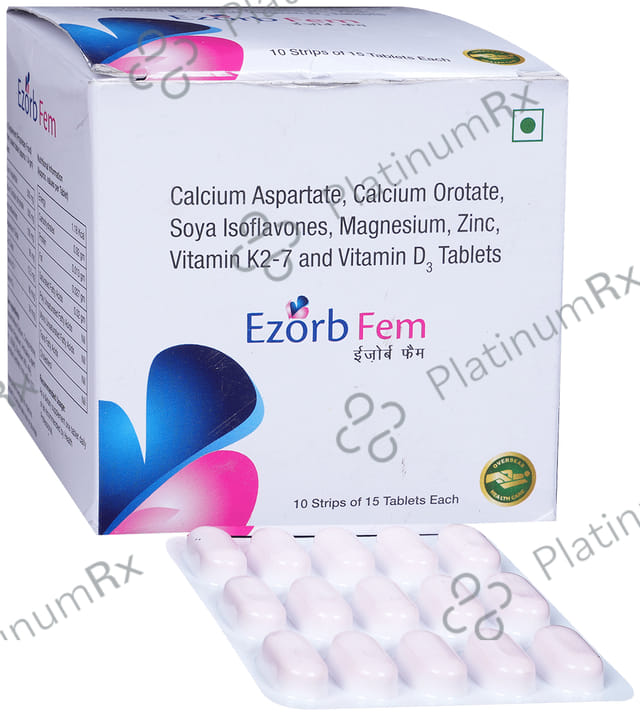
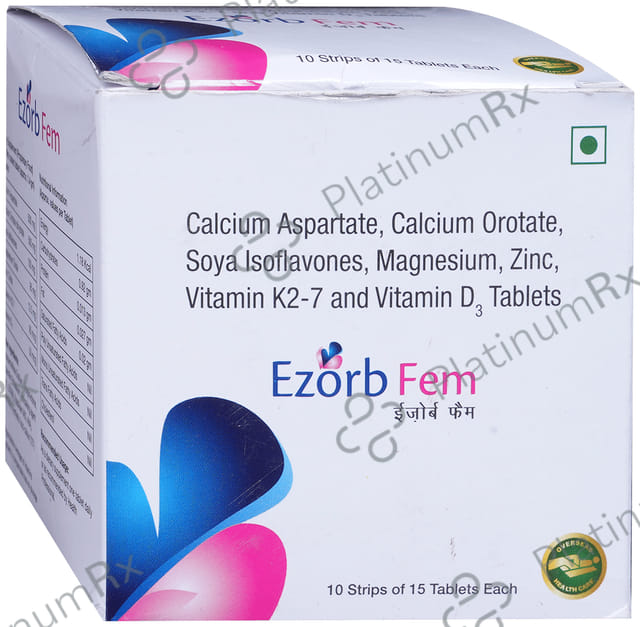
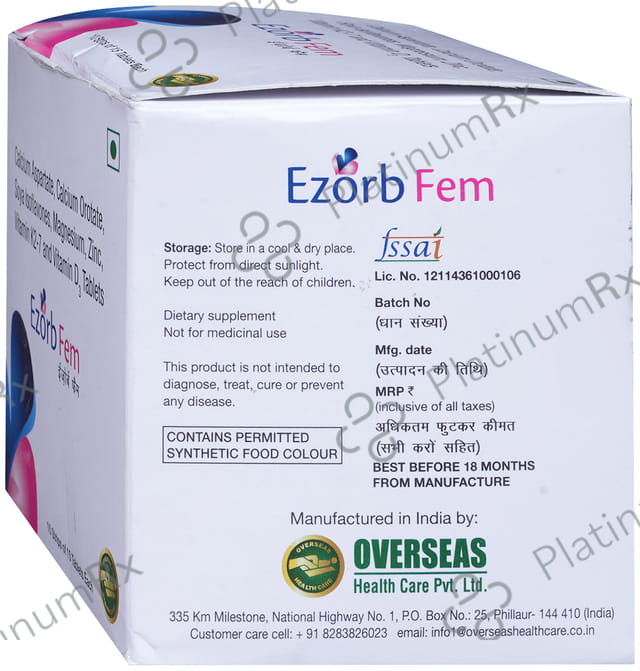
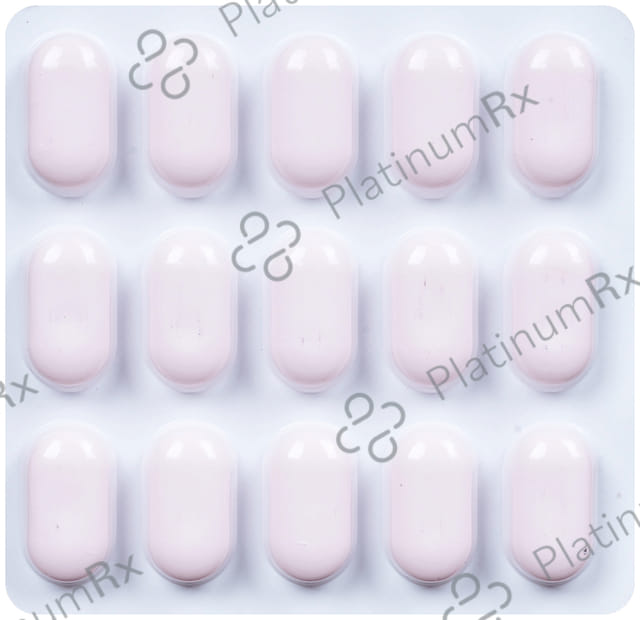
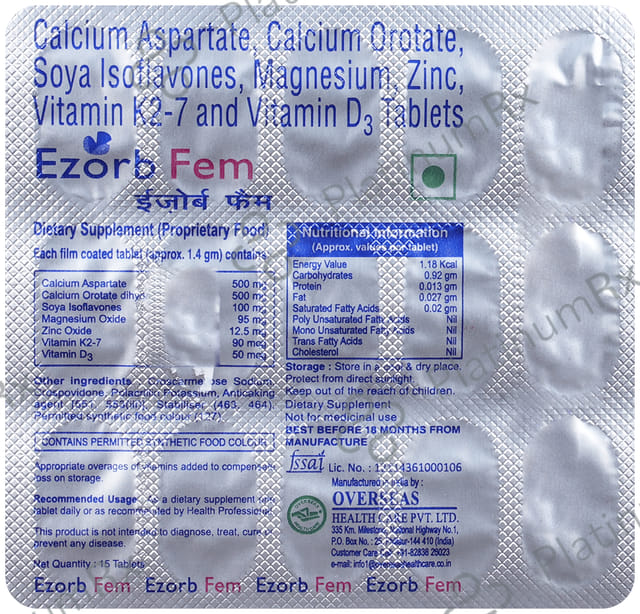
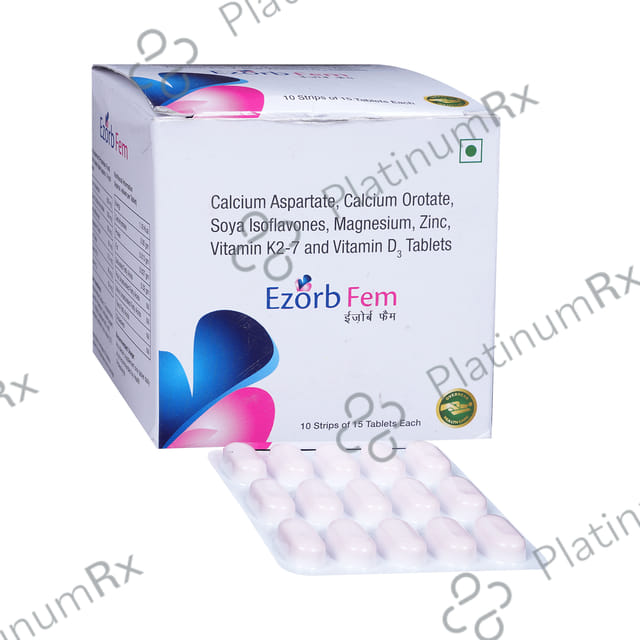
Ezorb Fem Tablet 15s

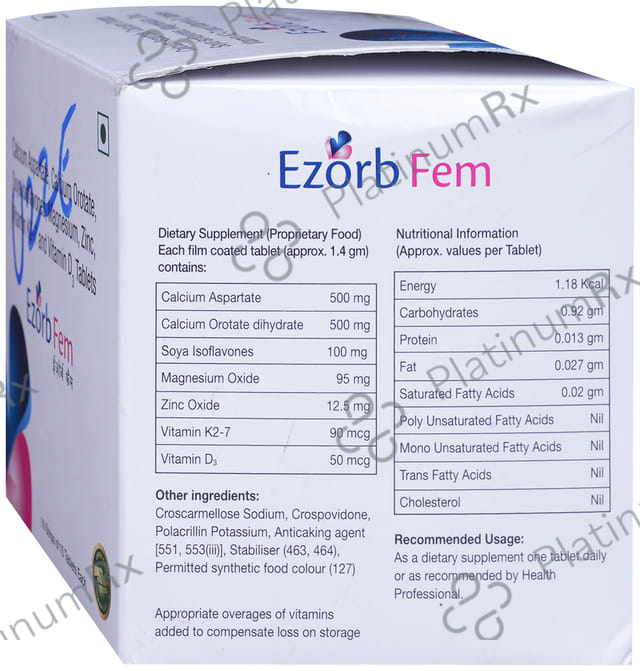
Ezorb Fem Tablet 15s is a multi-nutrient supplement that contains two organic calcium salts (calcium aspartate and calcium orotate), magnesium hydroxide, soya isoflavones (plant-derived phytoestrogens), Vitamin D3 (cholecalciferol), Vitamin K2 (menaquinone), and zinc. Ezorb Fem Tablet 15s helps support skeletal health and is often prescribed after menopause as declining oestrogen levels accelerate bone loss. Together, these components supply minerals to the bones, enable their absorption, modulate bone turnover through phytoestrogen activity, and support the enzymes responsible for bone formation.
Written by: Syed Jommy Abbas, B. Pharma
Reviewed by: Dr. Rohit Kolhe, MBBS
Last updated on: 02-06-2026
Delivery by
...
WHO GMP Certified
Long Expiry (>8 Months)
15 Days Easy Returns
General Information

Genuine Medicine
Pay On Delivery
Secure Payment

LegitScript Certified Online Pharmacy

More About Ezorb Fem Tablet 15s
Quick Summary
Ezorb Fem Tablet 15s is a multi-nutrient supplement that contains two organic calcium salts (calcium aspartate and calcium orotate), magnesium hydroxide, soya isoflavones (plant-derived phytoestrogens), Vitamin D3 (cholecalciferol), Vitamin K2 (menaquinone), and zinc. Ezorb Fem Tablet 15s helps support skeletal health and is often prescribed after menopause as declining oestrogen levels accelerate bone loss. Together, these components supply minerals to the bones, enable their absorption, modulate bone turnover through phytoestrogen activity, and support the enzymes responsible for bone formation.
Detailed Description
Human bone constantly breaks down by osteoclasts and is rebuilt by osteoblasts. Around menopause, the fall in oestrogen accelerates osteoclast activity, leading to a measurable loss of bone density and an increased risk of fracture.
Calcium aspartate and calcium orotate are organic calcium salts. Calcium aspartate is calcium bound to aspartic acid, while calcium orotate is calcium bound to orotic acid. Organic calcium salts are generally well absorbed and may be better tolerated than inorganic salts in people with low stomach acid.
Magnesium hydroxide supplies elemental magnesium, which is required for vitamin D activation, parathyroid hormone function, and the structural integrity of bone. About half of the body's magnesium is stored in bone.
Soya isoflavones (predominantly genistein, daidzein, and glycitein) are plant-derived compounds known as phytoestrogens. They have a chemical structure similar to oestrogen and can bind weakly to oestrogen receptors. Research on soya isoflavones for postmenopausal bone health has produced mixed findings, with some trials suggesting modest benefits on bone mineral density and others showing no significant effect.
Vitamin D3 (cholecalciferol) is converted to calcitriol in the body and is essential for active calcium absorption from the gut. Vitamin K2 (menaquinone) activates two key bone proteins, osteocalcin (which binds calcium into the bone matrix), and matrix Gla protein (which helps prevent calcium deposition in soft tissues like arteries).
Zinc activates alkaline phosphatase to drive bone mineralisation, supports osteoblast maturation, and strengthens the collagen framework that gives bone its tensile strength. Zinc deficiency is common in older adults and can impair bone formation.
Together, the seven components provide a layered approach to postmenopausal and age-related bone health.
Uses of Ezorb Fem Tablet 15s
- Supports bone health after menopause, along with other lifestyle measures and prescribed treatment.
- Prevents and manages combined calcium, magnesium, vitamin D, vitamin K, and zinc deficiency in adults at risk of bone loss.
- As an adjunct to nutritional management in osteopenia and osteoporosis.
- Support nutritional needs during the perimenopausal and postmenopausal years.
Benefits of Ezorb Fem Tablet 15s
- Two well-absorbed organic calcium salts provide combined calcium delivery.
- Vitamin D3 enables active intestinal calcium absorption.
- Vitamin K2 activates osteocalcin to incorporate calcium into bone matrix and matrix Gla protein to help prevent vascular calcification.
- Magnesium supports vitamin D activation and parathyroid hormone function.
- Zinc supports bone matrix formation and the activity of mineralisation enzymes.
- Soya isoflavones have been investigated for their possible role in supporting bone mineral density during the menopausal transition.
- Single multi-nutrient supplement supports adherence to a comprehensive bone-health regimen.
Side Effects of Ezorb Fem Tablet 15s
Common
- Mild gastrointestinal upset (nausea, bloating, gas)
- Constipation (due to calcium) or loose stools (due to magnesium)
- Metallic taste
- Mild headache
Uncommon
- Loss of appetite
- Mild rash or itching
- Tenderness in the breast (sometimes; due to isoflavone-containing products)
- Menstrual changes in perimenopausal women
Serious side effects requiring immediate attention
- Hypercalcaemia (high serum calcium), which may manifest as nausea, vomiting, excessive thirst, confusion, irregular heartbeat
- Vitamin D toxicity from chronic high-dose use
- Kidney stones in those predisposed
- Severe allergic reaction (especially in people with soya allergy)
Directions for Use
Take Ezorb Fem Tablet 15s orally once or twice daily as prescribed, with or just after a meal containing some fat, as this improves absorption of fat-soluble vitamins D3 and K2. Swallow whole with water. Single doses of calcium (500 mg or less) are absorbed more efficiently than larger boluses. If your total daily calcium intake is high, splitting it across two meals is helpful. Maintain hydration and combine the supplement with a balanced diet, adequate protein intake, and regular weight-bearing activity. Tell your doctor about any new medicines, supplements, or symptoms during treatment.
How it works
Calcium from calcium aspartate and calcium orotate is absorbed in the small intestine through an active vitamin-D-dependent transport system (when lower doses are taken) and a passive paracellular route (when higher doses are taken). Absorbed calcium is used by osteoblasts to form hydroxyapatite, the crystalline mineral that gives bone its strength.
Vitamin D3 is converted in the liver to 25-hydroxyvitamin D and in the kidney to calcitriol. Calcitriol binds the vitamin D receptor in intestinal cells, switching on calcium-binding proteins and channels that significantly enhance active calcium absorption. It also supports renal calcium reabsorption and modulates bone remodelling and immune function.
Vitamin K2 (menaquinone) acts as a cofactor for the enzyme gamma-glutamyl carboxylase, which adds carboxyl groups to specific glutamate residues on vitamin-K-dependent proteins. Two of these proteins are critical for bone health: osteocalcin (which binds calcium into the bone matrix) and matrix Gla protein (which helps prevent calcium deposition in arterial walls), as described in a clinical study on vitamin K2 and bone health. Without adequate vitamin K2, these proteins remain inactive and cannot perform their roles.
Magnesium is required for the enzymatic conversion of vitamin D to its active form, for normal parathyroid hormone secretion, and as a structural component of bone matrix. Zinc is a cofactor for alkaline phosphatase (involved in bone mineralisation) and supports osteoblast differentiation and collagen synthesis. It also slows down osteoclast activity.
Soya isoflavones bind preferentially to oestrogen receptor beta, which is the predominant oestrogen receptor in bone. By weakly mimicking oestrogen, they may slow the increase in osteoclast activity that follows the menopausal fall in oestrogen.
Safety Advice for Ezorb Fem Tablet 15s

Allergy
Unsafe
Avoid in known hypersensitivity to any component, including soya allergy (relevant to isoflavone content).

Breastfeeding
Caution
Isoflavone-containing supplements are typically avoided during breastfeeding without medical advice; calcium and D3 are generally safe at recommended doses.

Pregnancy
Caution
Routine multi-nutrient formulations with isoflavones are not typically recommended in pregnancy; use only if specifically prescribed.

Driving
Safe
No known effect on alertness or driving.

Alcohol
Caution
Heavy alcohol reduces calcium and vitamin D absorption and worsens bone health.

Liver
Caution
Severe liver disease can impair vitamin D and K activation; dosing may need adjustment.

Kidney
Caution
In CKD, supplementation must be tailored due to the risk of hypercalcaemia and vascular calcification.

Children
Unsafe
Not intended for paediatric use due to isoflavone content.

Elderly patients
Safe
Often beneficial due to reduced intake, absorption, and sun exposure; review interactions with prescribed medicines.
Drug-Food Interaction
- High-oxalate foods (spinach, rhubarb) (CAUTION): May reduce calcium absorption. Avoid the intake of these foods while taking Ezorb Fem Tablet 15s.
- Bran and high-phytate foods (CAUTION): May reduce calcium, magnesium, and zinc absorption. Consult with your doctor for alternatives.
- Caffeine and alcohol (CAUTION): Excess increases urinary calcium loss. Avoid intake while taking these medicines.
- Foods with healthy fats (BENEFICIAL): Improve absorption of vitamins D3 and K2. Take Ezorb Fem Tablet 15s with fat-rich foods.
- Soya-rich diet (CAUTION): May add to total isoflavone intake. Avoid intake while taking these supplements.
Interactions with Other Drugs
- Warfarin (SEVERE): Vitamin K2 affects warfarin's anticoagulation effect. Monitoring of INR (time taken for blood to clot) and dose adjustment may be required.
- Levothyroxine (SEVERE): Calcium, magnesium, and zinc reduce absorption. Separate both doses by at least 4 hours.
- Tetracyclines and fluoroquinolones (SEVERE): Bound by calcium, magnesium, and zinc; separate by 2–4 hours.
- Bisphosphonates (SEVERE): Multivalent cations reduce absorption. It is advised to take the bisphosphonate after waking up in the morning, and then the supplement at least 2 hours later.
- Iron supplements (CAUTION): Calcium and zinc compete with iron absorption. Separate both by at least 2 hours.
- Thiazide diuretics (CAUTION): They lower calcium excretion, increasing the risk of hypercalcaemia. Consult with your doctor before use.
- Digoxin (CAUTION): Hypercalcaemia from over-supplementation increases the risk of digoxin toxicity.
- Tamoxifen and aromatase inhibitors (CONSULT YOUR DOCTOR): Possible interaction with soya isoflavones; discuss with your oncology team.
- Corticosteroids and orlistat (CAUTION): Reduce calcium and vitamin D absorption.
Drug-Disease Interactions
–Disease Interactions of Ezorb Fem Tablet 15s
- Hypercalcaemia or primary hyperparathyroidism (CONTRAINDICATED): Additional calcium worsens hypercalcaemia (increased calcium levels).
- Sarcoidosis and other granulomatous diseases (CONTRAINDICATED): Risk of vitamin D-induced hypercalcaemia.
- Hormone-sensitive cancers (breast, uterine, ovarian) (CONSULT YOUR DOCTOR): Isoflavone-containing supplements should not be used without consulting your oncologist.
- Endometriosis or uterine fibroids (CAUTION): Isoflavone use should be reviewed with your gynaecologist.
- History of calcium-based kidney stones (CAUTION): Hydrate yourself adequately and only after proper dietary review.
- Chronic kidney disease (CAUTION): Increased risk of hypercalcaemia, hypermagnesaemia, and vascular calcification.
Overdose
Acute or chronic overdose of Ezorb Fem Tablet 15s can cause hypercalcaemia (high calcium levels in blood), which may present as nausea, vomiting, abdominal pain, constipation, excessive thirst, increased urination, weakness, confusion and irregular heartbeat. It can also cause hypermagnesaemia (high magnesium levels in blood), which manifests as muscle weakness, low blood pressure, and slow heartbeat. Other symptoms of overdosing may include vitamin D toxicity with kidney injury and soft-tissue calcification, copper deficiency with chronic high-dose zinc, and excessive isoflavone exposure. Suspected overdose requires medical evaluation with measurement of calcium, magnesium, vitamin D, kidney function, and clinical assessment.
What If You Forget to take Ezorb Fem Tablet 15s?
If you miss a dose, take it as soon as you remember on the same day with a meal. If it is close to the next dose, skip the missed dose and continue with your regular schedule. Do not double the dose.
FAQ
References
- https://ods.od.nih.gov/factsheets/Calcium-HealthProfessional/
- https://ods.od.nih.gov/factsheets/VitaminD-HealthProfessional/
- https://ods.od.nih.gov/factsheets/VitaminK-HealthProfessional/
- https://ods.od.nih.gov/factsheets/Zinc-HealthProfessional/
- https://www.ncbi.nlm.nih.gov/books/NBK536983/
- https://www.nccih.nih.gov/health/soy
- https://www.nhs.uk/conditions/osteoporosis/
- https://www.hopkinsmedicine.org/health/conditions-and-diseases/osteoporosis
Fact Box
Action Class
Multi-nutrient bone health supplement with phytoestrogen component
Chemical Class
Organic calcium salts; inorganic magnesium hydroxide; isoflavonoid phytoestrogens; secosteroid (cholecalciferol); menaquinone (vitamin K2); divalent trace mineral (zinc)
Habit Forming
No
Disclaimer
PlatinumRx is committed to providing reliable and accurate information to support informed customer decisions. However, all information made available on the Platform, including product descriptions, comparisons, and other content, is provided solely for general informational purposes. Such information is not intended to diagnose, prevent, treat, or cure any medical condition, nor should it be relied upon as a substitute for professional medical advice, diagnosis, or treatment.
Customers also bought

Health Articles


More Medicines By Manufacturer
More Medicines With Salt
Top Selling Medicines
Top Selling Devices
